


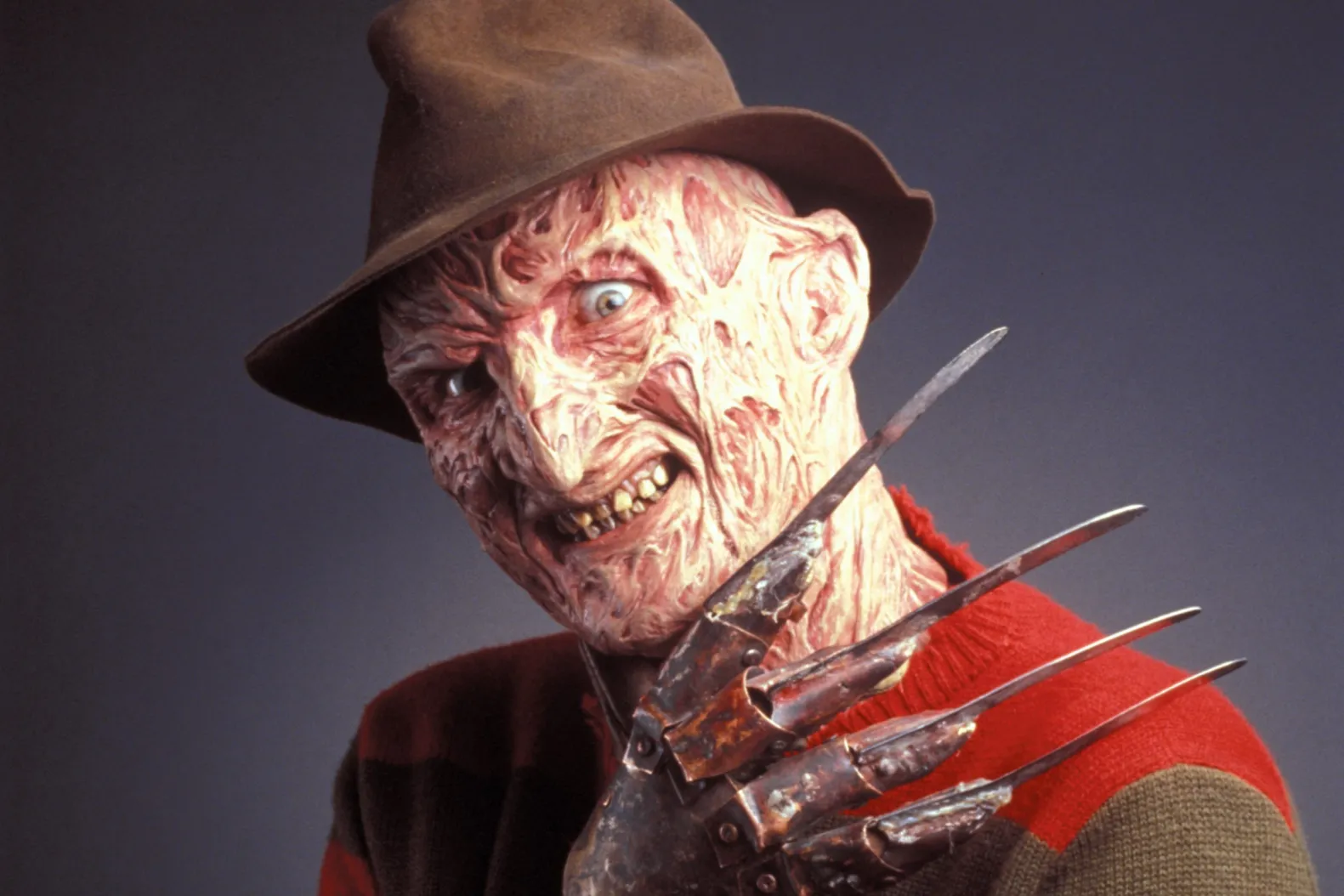
A Nightmare on Elm Street was among the first independent films in the genre to achieve major commercial success, transforming New Line into what fans call “the house that Freddy built.”
The mid-1980s marked the golden age of the slasher genre, and any great film released during that period had a good chance of gaining attention. Its budget, which was over one million dollars, gave it an advantage over many contemporaries, most of which cost far less to produce.
The director Wes Craven already had experience crafting terror, which further elevated the project. Still, these factors alone cannot explain why the film stood out so profoundly.
What defined A Nightmare on Elm Street was not the timing, budget, or even its technical execution, but rather its central figure, Freddy Krueger, and the eerie mythology built around him.
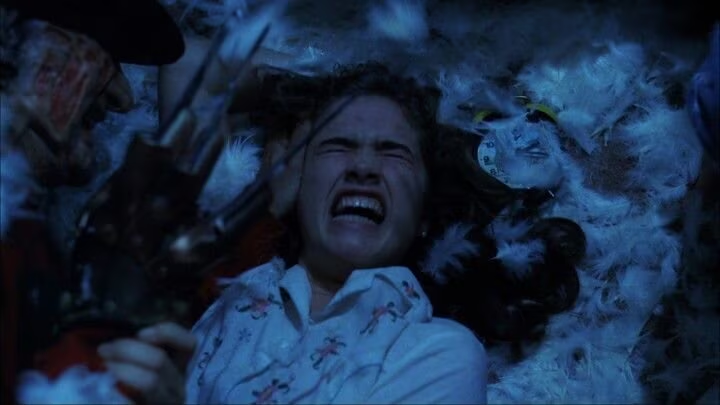
He was not merely a killer who stalked streets and alleys, but a supernatural being who claimed dominion over dreams themselves. He made his home in the one space every person must eventually enter, no matter how far they run.
The dream world became his hunting ground, and he renders his victims powerless.
Each film struggled to balance its mythic invincibility with the need for closure. Audiences needed to see him fall, yet the story demanded that he always return.
Across the franchise, Freddy is known to be an unstoppable, eternal force, but each time, he is often defeated by ordinary teenagers. His demise usually comes through clever twists or psychological awakenings rather than physical conquest. But these victories never last.
He always finds his way back, revealing a tension between narrative necessity and thematic truth. The endings that show his return are not simply hooks for sequels; they are part of his design. Freddy exists in the subconscious, and the subconscious has no true ending.
Freddy as Fear, Trauma, and Reflection
So long as nightmares exist, Freddy exists. His presence does not fade with death or defeat; it lingers.
Freddy’s power is drawn from fear, and whenever that fear is denied, he momentarily loses his grip. This is why Nancy’s story is so vital in understanding him. By refusing to fear him, she strips him of power, causing him to fade away.
Each film becomes more about the characters than about Freddy himself. He does not drive the story; their fears, traumas, and buried guilt do. Freddy is the reflection of what they hide. He is the dream given shape. Every time a character confronts him, they are confronting themselves. In this light, Freddy becomes more than a monster. He is a metaphor for unresolved trauma, shame, and fear.
This psychological truth is what gives his legend such longevity, painting him as the very concept of nightmares, endless, repetitive, and deeply human. As long as people dream, Freddy exists.
His connection to trauma is also reflected in the film’s broader symbolism. Many of the characters are maltreated, with some being haunted by the sins of their parents in the lynching of Freddy.
Freddy, being a manifestation, could hold more truth than most think. His existence extends far beyond the metaphysical forces or psychological states of others and is deeply rooted in his own backstory and ancestry.
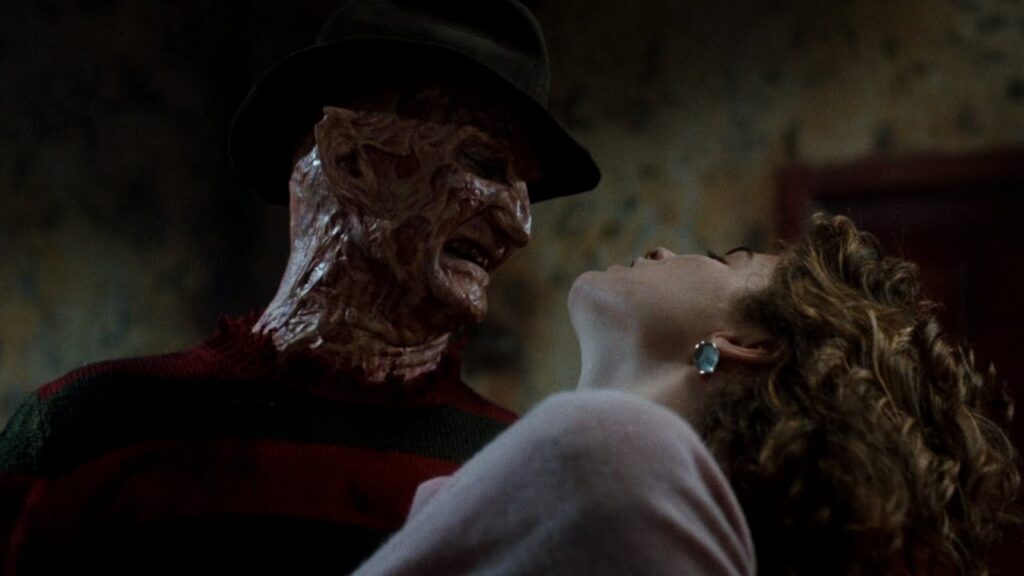
The timeline of his life is soaked in trauma, from his horrifying conception, when his mother was brutally assaulted by hundreds of mentally unstable patients, each one already burdened with psychological torment.
This inherited darkness continued through his formative years, marked by relentless cycles of abuse and torment. He endured ridicule and pain from others, inflicted harm upon himself, and eventually became the inflictor of suffering. It is as if he was destined, almost bred, for possession by whatever supernatural force later inhabited him, shaping him into a living embodiment of terror that found its home in the dream world’s 1428 Elm Street.
The fifth film strips him further, reducing him to the innocence of an unborn child, peaceful, unaware, and untouched by the world’s horrors. In a poetic reversal of his origins, where his mother’s trauma condemned him to darkness, it is his own daughter who releases him, exercising the demons that have long bound his soul and granting him peace in death.
The Endless Return and the Power of Myth
After nearly a decade and five installments of Freddy’s relentless returns, the sixth film— Freddy’s Dead: The Final Nightmare, arrives as an attempt at closure. By this time, the audience has watched him fall again and again, Nancy’s psychological breakthrough in the first film, Jesse’s internal struggle in Freddy’s Revenge, the purification of his remains in Dream Warriors, his psychological implosion in The Dream Master, and finally, his symbolic “unbirthing” in The Dream Child. Yet none of these provided true finality.
The sixth installment, however, stands out. It succeeds not only because it closes without the traditional cliffhanger but also because it intelligently ends Freddy’s reign by exercising the very demons that fuel his supernatural being. It removes the demons from the “Krueger,” leaving behind a dead “Freddy,” broken, defeated, and stripped of his unholy essence.
The finality in this film resonates deeply.
For the first time, viewers could echo the words, “Freddy’s dead,” and believe them.
Unlike its predecessors, which confined Freddy’s actions within the dreamscape, New Nightmare proposes that the root of his being transcends that realm entirely. The film suggests that the ancient supernatural entity behind the fictional Freddy Krueger seeks entry into the real world.
The film ended with Craven’s note, thanking Heather Langenkamp’s Nancy for keeping Freddy imprisoned by playing her role. It marks the end of Freddy but the eternal preservation of his myth. The same Nancy who defeated him in 1984 returns to end his reign in 1994, not by destroying him but by ensuring that his existence remains confined within art and fiction.
Unlike the original ending, which left room for sequels by suggesting hope for his permanent destruction, this final scene removes that illusion entirely. It asserts that Freddy can never be permanently defeated, not because of narrative tricks or fan demand, but because the very concept that animates him, the embodiment of fear and imagination, cannot be erased.
Conclusion
Every film, past and future, becomes part of a grand design not to kill Freddy but to keep the nightmare alive, and his story must continue because his existence represents the inescapable truth of human fear.
Thus, the so-called end only reaffirms the beginning. The eternal nightmare that began with his conception, rooted in the trauma of Elm Street, continues unbroken. It was temporarily ended by Maggie, reborn by Wes Craven, and eternally sustained through the imagination of every viewer who dares to dream. Freddy Krueger is not merely a slasher icon, he is the never-ending nightmare that inhabits Elm Street.
