


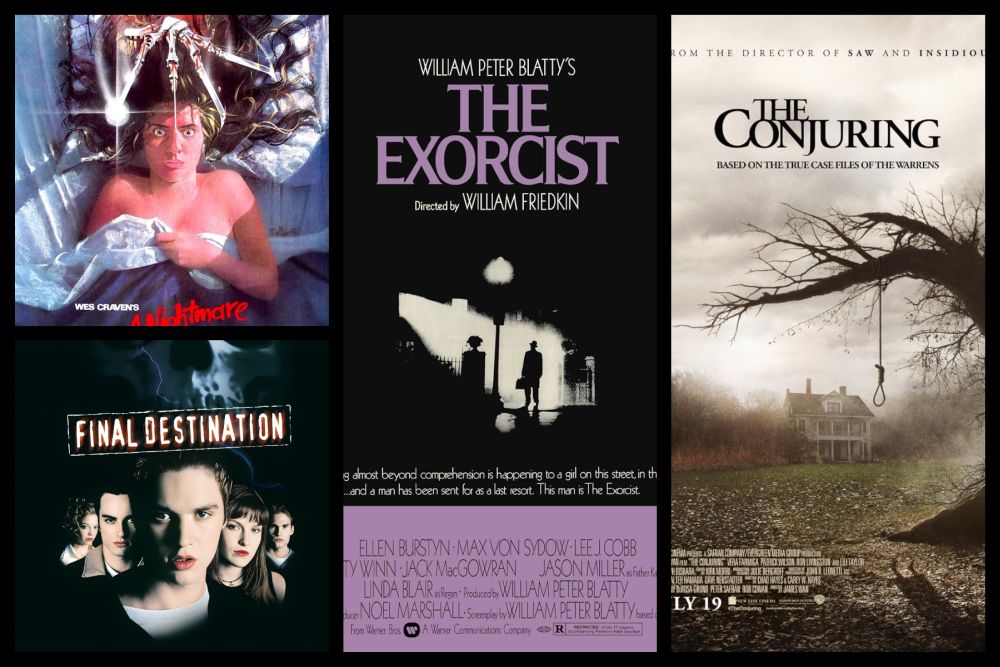
Horror stories continue to dominate as the most popular genre in movies and TV. And
while there are multiple reasons why horror is so enduring, which we will delve into later,
among the most popular stories in this genre are those dealing with the supernatural and
paranormal, particularly those ‘based on’ or ‘inspired by’ actual events. One of the big
reasons for this is the global fascination and ever-growing demand for all things
supernatural and paranormal.
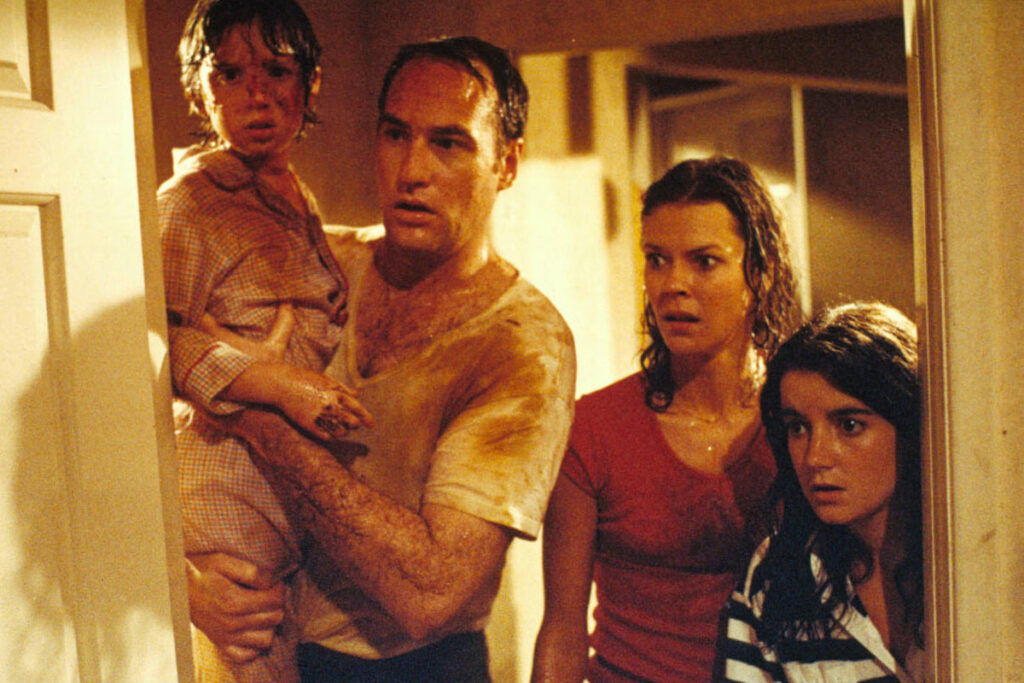
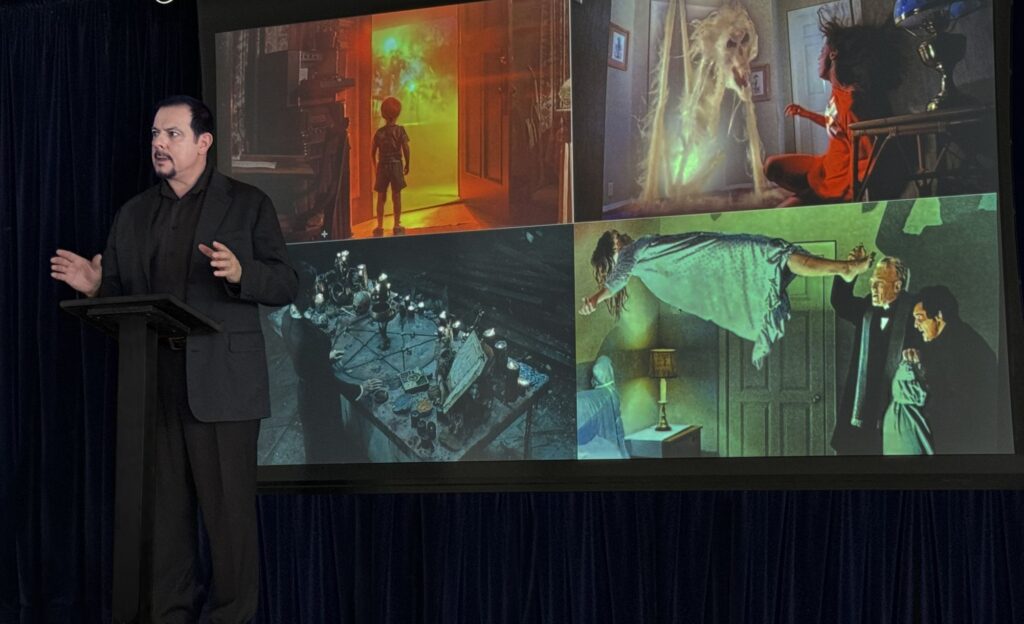
Iconic movies like “The Exorcist” and “Poltergeist” have left indelible impressions on the
psyche of the movie-goer, not only because they are brilliant film creations, but because
every aspect of the cinematic experience feels integral and natural, suspending the
audience’s sense of disbelief. Now add to that the realization that the origins of both
these creations were loosely inspired by actual accounts and experiences of real
supernatural phenomena, their cinematic status leaps to a whole other level!
Consider “Paranormal Activity”; arguably one of the most financially lucrative horror film
franchises ever made. Its novel and still enduring take, now referred to as “foundfootage”,
utilizing a first-perspective, cinema vérité style, creates the beguiling illusion to
its audience that they are ease-dropping on “real events”, blurring the lines of reality and
thereby creating a very chilling realistic experience! And in that regard, the brush with
disturbing pseudo-real paranormal phenomena is more than enough to grip audiences
the world over! It is again this brush with aspects of our real world that captivates and
transcends that of a traditional fictitious horror film.
Countless writers, directors and producers have given credit to actual experiences and
anecdotal accounts of real paranormal events that spawn stories behind horror movies.
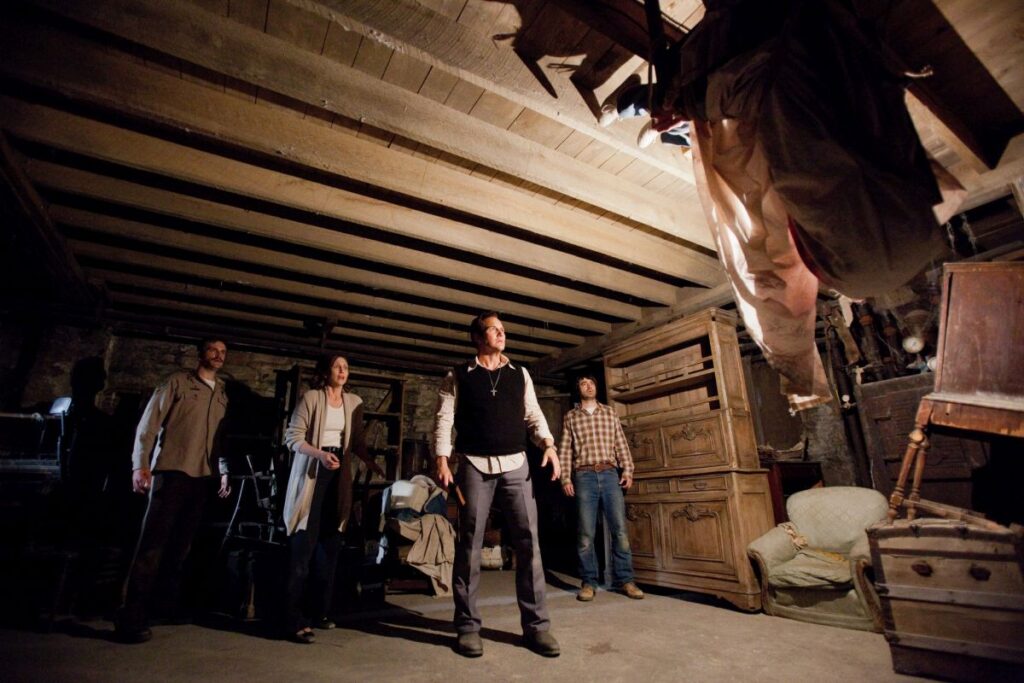
Movies like, “The Amityville Horror”, “The Serpent and the Rainbow”, “The Exorcism of
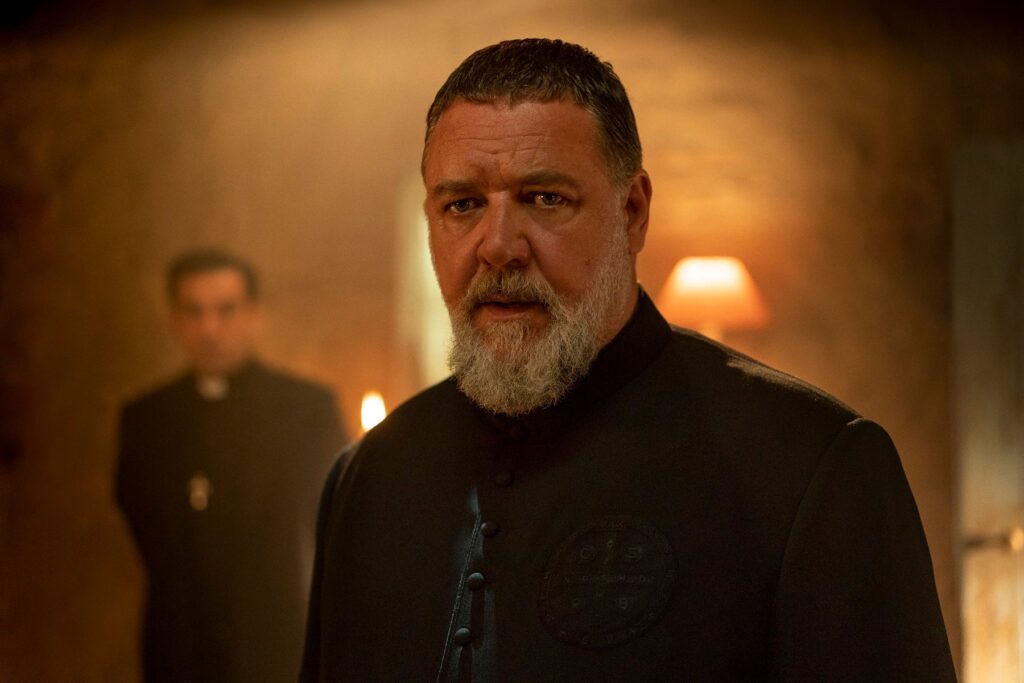
Emily Rose”, “Fire in the Sky”, “The Mothman Prophecies”, “The Conjuring” and “The Pope’s Exorcist”, all inspired by or based on some manner of true accounts. Audiences of these films were not only entertained by chilling film experiences, but they were also haunted (for lack of a better word) long after leaving the theater with the unsettling fact that there was some degree of truth to these horrifying stories! Surprisingly enough, even some of the most popular fictional horror films contain elements that are similar to actual reported cases, including “The Shining”, “IT”, “Final Destination”, “A Nightmare on Elm Street” and “The Grudge”, just to name a few, proving that the ongoing real-life encounters with the paranormal and supernatural, interfused into some form of entertainment, all but ensure for a well-received chilling experience. But how true and accurate are the depictions in movies and claims of real-life events?
To answer this and other related questions I asked Christopher Chacon; who has one of
the most fascinating résumés in showbusiness! A writer, producer and director for TV and
film that got his start as a professional Magician/Illusionist, he is also one of the world’s
foremost authorities on supernatural, occult, paranormal and anomalous phenomena. A
preeminent Parapsychologist, Anomalist and UFOlogist; Chacon has an extraordinary
background of almost 50 years of traveling the world; conducting hands-on investigating,
researching every type of phenomena imaginable; from demonic possessions to
hauntings and poltergeists, from UFOs and alien abductions to all manner of psychic
phenomena, from unknown creatures and life-forms to miracles. Chacon is also regarded
as a top expert on ancient and arcane witchcraft, sorcery and occult-practices involving
every culture, religion and spiritual belief system. Additionally, his research involving
supernatural mythologies and legends worldwide is unparalleled, having conducted indepth
investigations and research on countless legends, myths and folk-tales around the
world. Chacon’s reputation as a world-renowned scientific investigator of the paranormal
has been the inspiration and fodder of many films and TV series, Stephen King being
inspired to create “1408” after hearing Chacon being interviewed on the radio discussing
investigations of some of the most haunted hotels in the world.
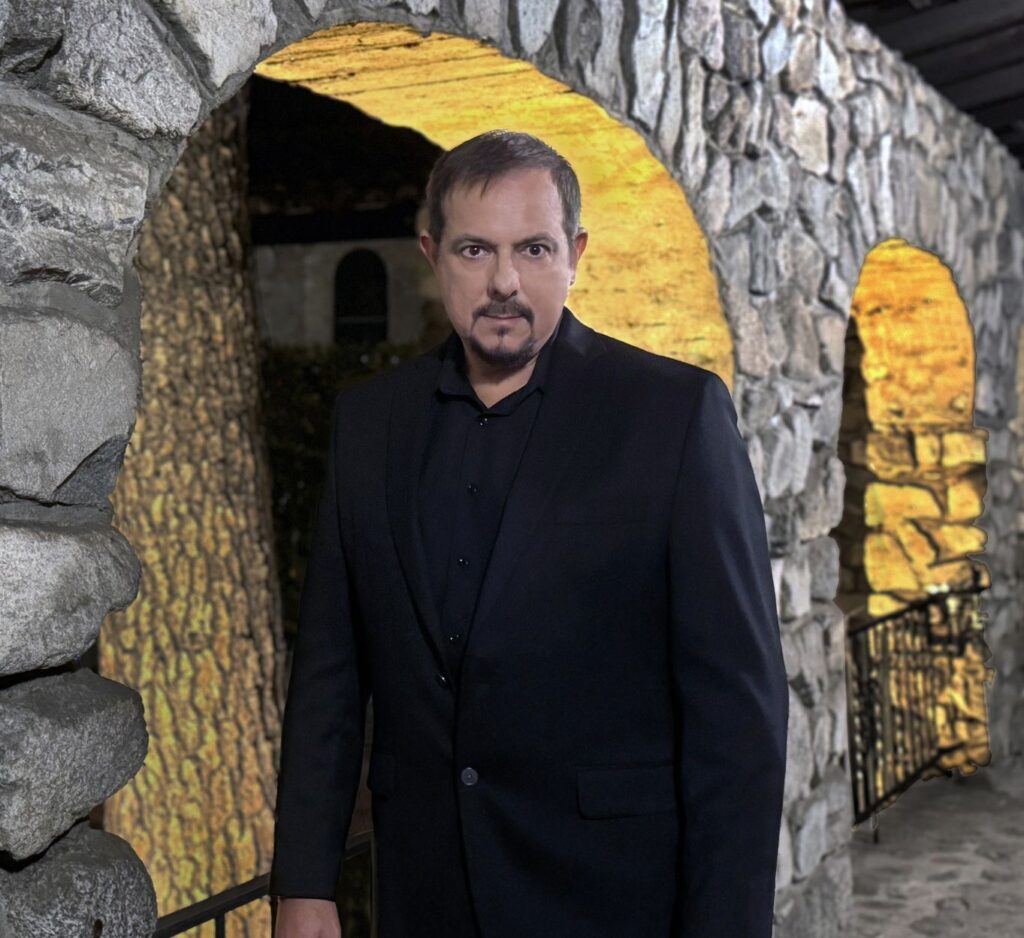
Chacon’s one-of-a-kind expertise and unparalleled life experiences equips him with a
perspective that’s innovative, thought-provoking, even revolutionary at times, which is
invaluable to developing and creating stories dealing with other-worldly topics. He has
worked with a huge range of entertainment creative geniuses, from Jan de Bont (“The
Haunting”, “Twister”) to David Gordon Green (“Halloween”, “The Exorcist: Believer”), he
has even worked with “Ghostbusters” creator himself, Dan Aykroyd, who starred in
Chacon’s paranormal-adventure TV series, “PSI Factor: Chronicles of the Paranormal”. The stories in the series were inspired by real paranormal encounters investigated by a real-life scientific think tank. Chacon was the Creator/Writer and Executive Producer of the one-hour scripted dramatic series that also starred Matt Frewer and Michael Moriarity, with an 88-episode run that was broadcast in over 30 countries. Countless writers, directors, producers and studio executives have brought-in and utilized Chacon for some of the most successful movies and TV series dealing with the paranormal and supernatural.
Chacon juggles his work in film and TV with his work traveling around the world dealing
with every imaginable type of paranormal phenomena. He confidentially takes-on cases
that are referred from clients that include religious organizations, medical and academic
institutions, government and law enforcement agencies and private corporations. The
majority of clients and cases Chacon receives primarily deal with the most volatile,
unstable and destructive phenomena, many involving traumatized victims and casualties.
Additionally, he does this work free of charge!
I was fortunate enough to attend two lectures by Chacon; one at the Los Angeles Latino
International Film Festival and the other at a special movie presentation at the Arclight
Cinemas in Hollywood, and recently had the opportunity to speak with him briefly when
he was at Warner Brothers Studios doing a taping for TCM Presents for ‘National
Paranormal Day’.
Chacon admits that the degree of truth between what is depicted in produced stories and
what is reported by investigators and researchers into phenomena varies greatly; he
personally knowing many of them, from Dr. J. Allen Hynek, the scientist that coined the
“close encounter” terms behind “Close Encounters of the Third Kind”, to Ed and Lorraine
Warren, the demonologists behind “The Conjuring” film franchise. “The elements of truth
in stories that springboard off of the experiences of researchers vary greatly, with some
interjecting astounding facts in every encounter, and others only serving as an anecdotal
kernel to base an entirely fictional story on. The interpretations and adaptions of course
lying in the hands of the writers, directors and producers” says Chacon. But with the
power of dramatic license at the creators’ control, at what point does a story depart from
what it is based-on or inspired-by and becomes entirely fictional? Chacon said it is a
slippery slope when it comes to the use of dramatic license with such an already
extraordinary topic. Writers, directors and producers really need to examine their
agendas in telling a story and be mindful when adaptations are made and at what point
it goes too far. Whether for good or bad, Chacon admits that the use of dramatic license
to some degree should probably be expected when experiencing any type of dramatic
interpretation, “Unless it’s a documentary, it should surprise no one when stories stray
greatly from reality, as it is for the primary objective of writers, directors and producers
of films and TV shows to entertain first and foremost above all else.”
So just how accurate are the depictions of the supernatural and paranormal in films?
Chacon states, “The disparity between fact or fiction for film stories dealing with the
paranormal varies a great deal. For example, movies like, “The Birds”, “Scanners” and
“Flatliners” possess elements that are similar to documented events, whether the writers
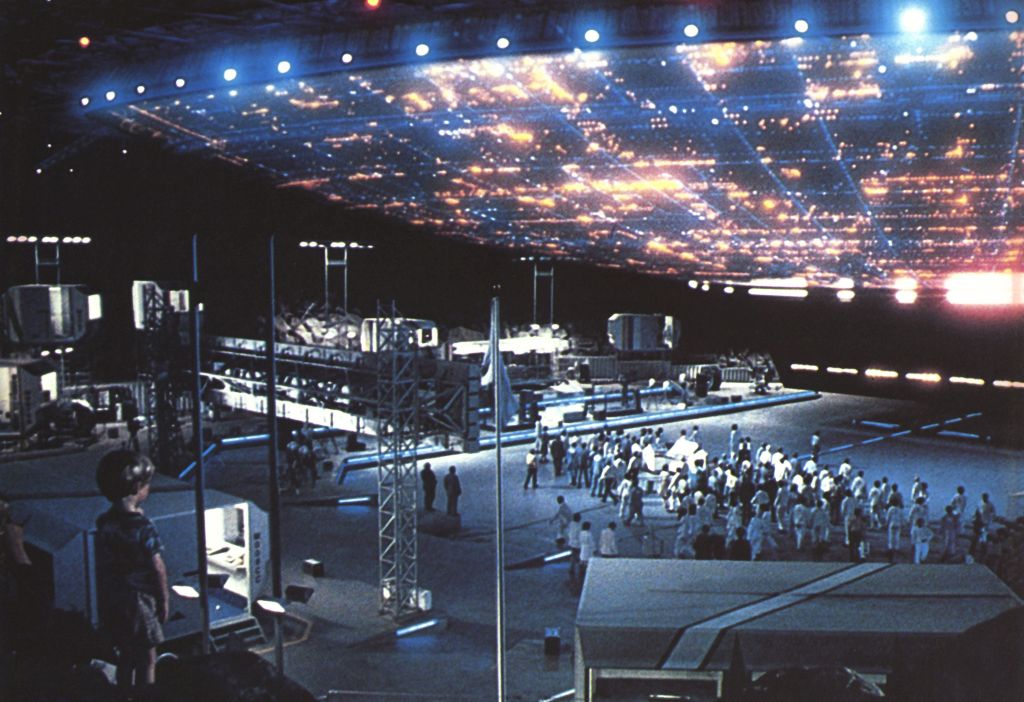
intended it or not. Whereas the majority of phenomena depicted in “Close Encounters of
the Third Kind” was representative of multiple reported phenomena.” Chacon continues,
“Generally speaking, if you were to analyze each individual paranormal event in every
paranormal film, you’d be surprised by how similar depictions are with reported real-life
phenomena around the world that occurred prior to the creation of each film, but that’s
just with reported events. Obviously, horror stories tend to exaggerate the phenomenon
by amplifying the frequency and intensity, among other aspects, creating a mash-up of
collective phenomena that enhances drama to suit the story. That is rare in the real
world.” But the realization that the hair-raising paranormal events we experience in
movies is indeed being experienced around the world is both extraordinary and
unsettling! Whether we believe in these phenomena in real-life or only embrace them in
our imaginations, many of us have created assumptions about the supernatural and
paranormal based on what we grew up hearing and then reinforced by movies, TV and
literature. As it turns out, many of these assumptions were incorrect. After having
investigated and researched thousands upon thousands of cases around the world,
Chacon’s findings challenge traditional thinking and rewrite the books about many types
of phenomena. “Time and time again I encounter phenomenon that re-defines their
dynamics, functions, mechanics and even origins, defying long-held beliefs, many that are
as different and unique as the situation and/or the people experiencing them”, said
Chacon. He emphasizes that things are not always as they appear when dealing with any
situation. It is this fact, he explains, that can be utilized to help enhance and craft a truly
riveting story that is refreshing and unpredictable.
Some of the amazing cases that Chacon has dealt with included; a mass-possession of
twenty-three people, a giant gargoyle-like flying creature that attacked skydivers, a black
magic curse that tormented its victim that included swarms of insects, corpses that dug
themselves out of their graves, several people that were abducted at sea by a UFO and
witnessed by naval vessels, a child that caused everything around her to freeze when she
would tantrum and a powerful poltergeist that would sporadically take the form of a
massive black cloud that could crush furniture and bones!
Chacon was quick to point out that the majority of reported phenomena around the world
actually has rationale, explainable causes. “Approximately 70% to 80% percent of
reported recurrent phenomena is explainable and falls into one or more categories that
include, psychological, physiological, environmental and circumstantial explanations.
Many of these explainable events occur in such a unique way that the majority of people
would misinterpret them as genuine phenomenon. That is why it is imperative to first
rule-out rational explanations” says Chacon. But that leaves some 20% to 30% percent of
reported phenomena that is authentic and very real, which is terrifying if you consider
the many types of phenomena that includes! It is these types of encounters that make
the most unforgettable horrifying stories!
Chacon’s methods of investigating and researching phenomena put to shame all
depictions in film and TV. He utilizes a hybrid model with a wide spectrum of various
techniques and methods; from anomalistic/advanced scientific (with next-generation
technology) to parapsychological to ancient occult/metaphysical. His process of
investigating, assessing and analyzing a phenomenon is unlike anything depicted in films
or TV and are far more comprehensive. When asking Chacon about his overall favorite
films when it came to realistic depictions of phenomena and investigating, he replied,
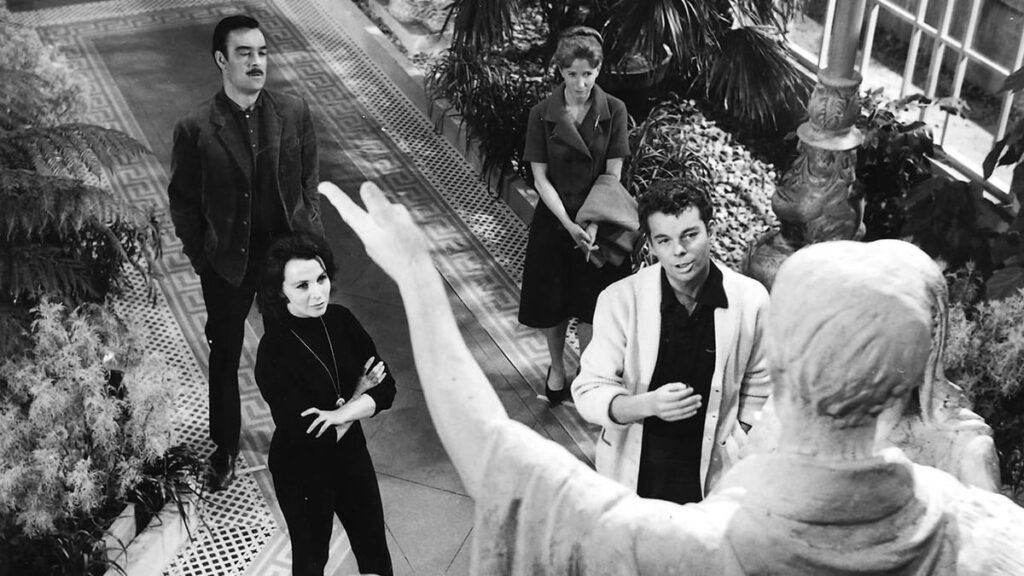
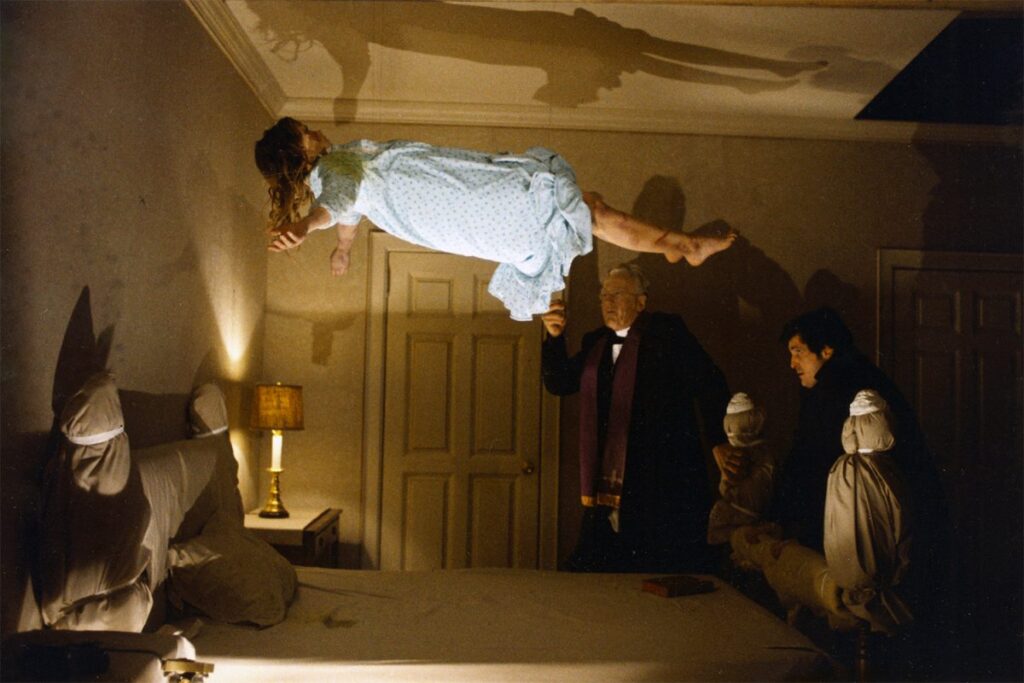
““The Haunting” (1963 version) and “Poltergeist” (1985 version) both depicted the
haunt/poltergeist phenomenon quite well, along with the parapsychological model (at
the time) for investigating. Another would be “The Exorcist”; not only did it depict the
possession phenomenon and Roman Catholic Rite of Exorcism accurately and the church’s
protocol, but it also realistically depicted the painstaking scientific procedures to find a
rational explanation for the phenomenon. The other thing that all three of these films
depicted quite accurately was the emotional responses and trauma connected to each
experience. And lastly, the phenomena in each of these films was for the most part,
unresolved, which is frequently the outcome for cases dealing with these phenomena.”
So why don’t all horror films and TV series depict investigations and resolving the
phenomena accurately? Chacon says, “There could be any number of possible reasons;
from the vision, direction and agenda of the creators and their belief systems, to the
logistical restraints of the production. Additionally, many believe that audiences won’t be
satisfied without a resolution and answers to the “why” and therefore want to satisfy this
need with various types of exposition and explanation.”
Whether they’re authentic stories based on actual events or completely fictitious, the
growing demand and eager audience for paranormal and supernatural stories in
entertainment doesn’t seem to be waning! That could very well be because of the
consistently spreading belief of these other-worldly phenomena. Polls and surveys
conducted by Gallup, YouGov and Pew Research Center in recent years all show a growing
percentage of Americans that believe in numerous types of paranormal and supernatural
phenomena, including psychic phenomena, ghosts, demons and possession and that
UFOs are ‘extraterrestrial’ in origin. These percentages are even higher internationally.
The consistent demand and ongoing fascination for supernatural and paranormal fuels
the entertainment industry, making the category the biggest in demand among movies,
TV series and books, defying presumed cyclic trends.
So, is it simply the popularity of paranormal topics that’s drawing audiences to horror
films and TV series, or is it perhaps something more visceral? Even with the gut-wrenching
revelation that some horror movies are inspired by actual events and might leave you
with nightmares, audiences continue to flock to be terrified. Like a moth drawn to a flame,
why are we so drawn to experience horrifying entertainment and feel the uncomfortable
sense of fear? The science of fear is a complicated and intriguing study that explores
intricacies of human behavior. Whether by movies, TV, literature or live attractions,
Chacon explains why many people love to be scared, “Scary forms of entertainment allow
audiences to experience fear in a controlled, enjoyable and safe manner. At anytime you
want the experience to stop, you need only leave the theater, change the channel or close
the book. The experience of coming face-to-face with something terrifying without
actually any real threat is gripping and exhilarating at the same time; an experience to
many that can be somewhat addictive. There are many reasons why people would subject
themselves to an experience of terrifying imagery. Scary supernatural content taps into
our primal instincts; the fear of death, the unknown, losing what means most to us, and
allows audiences to confront these fears in a controlled safe manner, thereby embracing
fears and allowing ourselves to cope with them in the real world. While most people hate
to experience fear, a significant number also love to be scared by this type of
entertainment and experience the psychological and physiological stimulation that it
triggers. The scares produced in horror movies not only trigger the natural defenses of
fight or flight (also called hyperarousal or acute stress response), but also the calming
feeling following this biological process commonly known as rest and digest. The process
can produce an addictively calming state that makes you feel better.” It is this love of
being frightened that is one of the key intrinsic factors that has always fueled the success
of paranormal horror, as well as all horror in general.
With no end in sight for the insatiable hunger for horror and for the scares that come with
it, it goes without saying that paranormal and supernatural horror movies and TV shows
will continue to be one of the most popular and in-demand forms of entertainment. The
realization that so many of these darkly disturbing horror stories depict real-life
encounters with phenomena around the world is mind-blowing and whether I like it or
not, causes me to experience entertainment horror in a whole new light—or should I say,
dark.
