


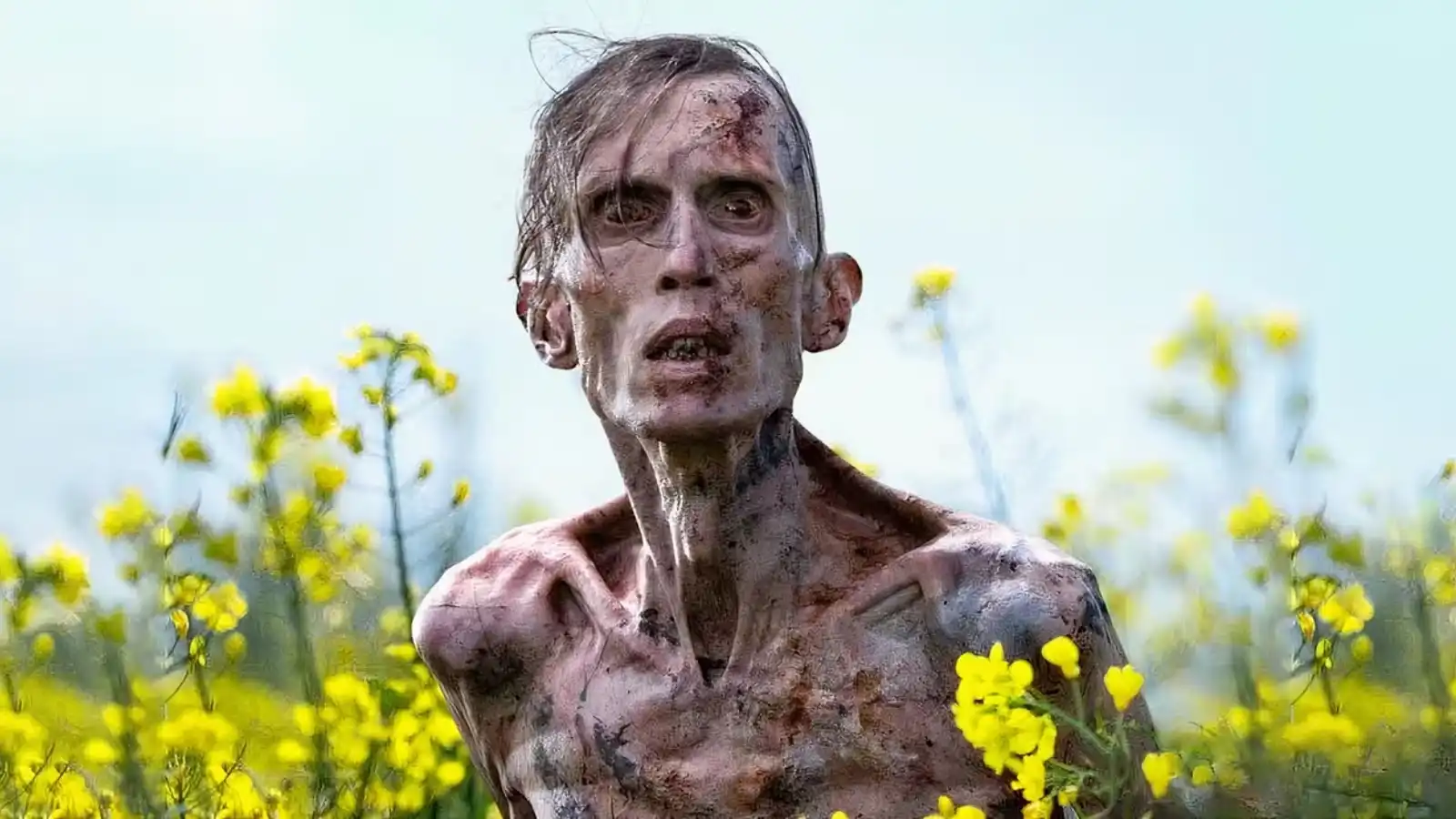
Cast your mind back to the silence, the unnerving, crushing quiet of a collapsed civilization. Now, fast forward. Time hasn’t healed this world; it has simply allowed the darkness to mutate, evolve, and calcify into a terrifying new normal.
28 Years Later is not just a sequel; it is a profound, grisly meditation on what happens when isolation becomes a way of life, and the memory of peace is nothing but a forgotten fairy tale. This is a visceral journey into the heart of a broken Britain, where hope is a poison and the greatest terror is the unsettling realization that humanity, given time, will always find a new, more refined way to destroy itself.
This third chapter plunges us into a life lived literally on the edge of a small, isolated island community clinging to a fragile existence, separated from the ravaged mainland by a tide-washed causeway.
Here, rules are rigid, and survival is a primal, daily ritual. We meet Spike, a boy on the cusp of manhood, whose coming-of-age is a desperate rite: his first hunt across the mainland, a landscape where the infected still roam, but the greater danger is the cold, calculated madness of other survivors.
When Spike’s ailing mother, Isla, faces a terminal illness that no island remedy can touch, the boy commits an act of desperate, youthful defiance. He makes the perilous choice to venture into the wasteland, guided by fragments of legend about a reclusive doctor who might hold a miracle. What follows is a nightmarish pilgrimage across a land that has been scarred, abandoned, and has now begun to grow back not into a paradise, but into a surreal, unpredictable hell.
The journey is a brutal tapestry of encounters: evolved, terrifying strains of the Infected that stalk the ruins, and a chilling cast of survivors whose own methods of coping have warped them into something almost unrecognizable.
Every step Spike takes is a betrayal of the safety he knows and a terrifying leap into the unknown, culminating in an encounter with the enigmatic Dr. Kelson and his unsettling monument to the dead.
The film expertly builds a sense of dread, forcing you to question whether the virus is the real enemy, or if the true horror is the chilling, cult-like new societies that have sprung up in the vacuum of a lost world. The ending is a jolt of shocking, bleak revelation, suggesting that the long night is far from over and that the future of Great Britain belongs to a terrifying new order.
What Works✅
- Thematically Rich Evolution: The film shifts focus from immediate survival to a post-apocalyptic coming-of-age story, using the Infected as a backdrop for a powerful exploration of memory, political isolation, and cultural regression.
- The New Infected Strains: The introduction of evolved types, particularly the Alpha Infected, provides genuinely terrifying and visually distinct new threats that elevate the classic ‘Rage’ virus horror.
- Performance Powerhouse: Newcomer Alfie Williams anchors the film with a stunningly earnest and vulnerable performance, perfectly complemented by Jodie Comer’s heartbreaking portrayal of his mother, Isla.
- Atmospheric Cinematography: Director Danny Boyle returns to a gritty, raw digital aesthetic, blending it with grand, haunting visuals of the northern English countryside to create a world that feels both beautifully serene and utterly desolate.
- Philosophical Horror: Ralph Fiennes’ character, the reclusive Dr. Kelson, injects a surprising layer of meditation on death and remembrance into the horror, forcing both the characters and the audience to confront profound existential questions.
Where It Falls Short❌
- Uneven Pacing and Tone: The emotional and philosophical weight sometimes causes the film to lose the relentless, breakneck urgency that defined the first two installments, creating occasional moments of narrative drift.
- The Final Act Twist: The film’s cliffhanger ending and final character reveal, which sets up the next installment, is tonally jarring and feels conspicuously engineered, slightly undermining the grounded, raw emotional arc that precedes it.
- Underdeveloped Side Characters: While the core family unit is excellent, some of the supporting characters encountered on Spike’s journey feel rushed or underdeveloped, serving mainly as plot devices rather than fully realized survivors.
Final Verdict🎯 4.5/5
28 Years Later is a bold, ambitious, and deeply unsettling piece of horror cinema that proves the franchise is still vital and capable of reinvention. It honors the visceral terror of the original while fearlessly pushing the narrative and thematic boundaries into complex, psychological territory. It’s less about a virus and more about the disease of human nature, making it a chillingly relevant film for a generation grappling with a fractured world. This is a must-see for horror enthusiasts and a powerful experience for anyone interested in high-stakes, intelligent post-apocalyptic drama.
