


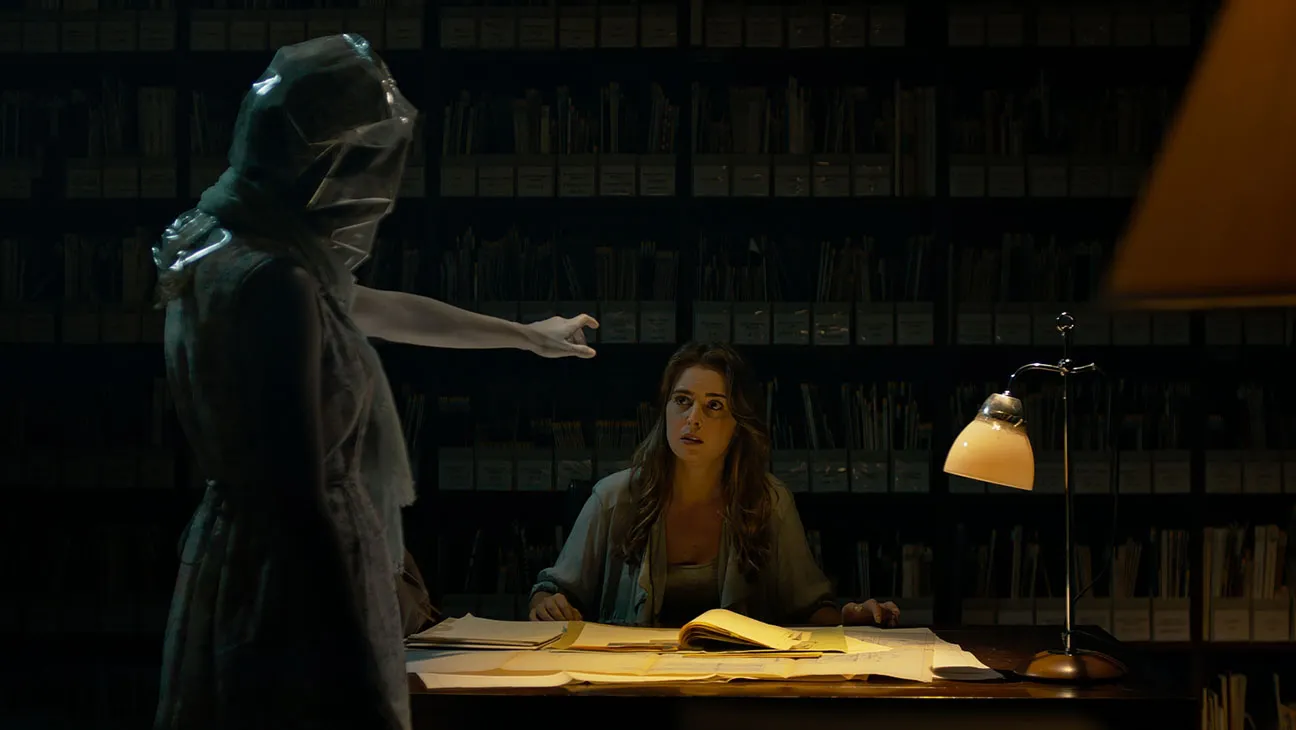
The Hasidic funeral home at the center of The Offering is a place of rigorous order and ancient tradition, until a corpse arrives carrying a secret that refuses to be buried. By rooting its horror in the specific, terrifying lore of the Kabbalah, this film bypasses the standard exorcism playbook entirely to focus on a demon that wants to erase your lineage.
The narrative hinges on the return of Art, a man who abandoned his ultra-orthodox community years ago for the secular world. He arrives at his father’s funeral home in Brooklyn with his pregnant wife, Claire, in tow, ostensibly to make amends. However, his true motivation is far more desperate, but his timing could not be worse.
Downstairs in the preparation room lies the body of a reclusive scholar who died in a bizarre ritual suicide. Concealed within the corpse is a mystical amulet, a binding seal meant to imprison Abyzou, an ancient Sumerian demon known as the “Taker of Children.” When the seal is accidentally shattered during the intake process, the entity is released into the house. What follows is a relentless siege. The demon, capable of warping reality and mimicking the voices of loved ones, isolates the family within the funeral home’s walls. As the lines between hallucination and reality blur, Art must frantically unlock the secrets of a faith he left behind to stop a predator that has already breached the sanctuary.
✅ What Works
- Distinct Cultural Horror: The film’s greatest strength is its immersion in Jewish folklore. By utilizing the legend of Abyzou and the specific rituals of the Chevra Kadisha, the story creates a texture and atmosphere that feels vastly different from the oversaturated market of Christian-centric hauntings.
- The Morgue as a Dungeon: The set design does heavy lifting here. The funeral home is shot with a cold, clinical dread downstairs and a warm, deceptive safety upstairs. The transition between these two worlds creates a constant, uneasy tension, making the house feel like a trap waiting to snap shut.
- Good Creature Design: When the entity finally reveals itself, it isn’t just a puff of smoke or a possessed human. The physical design of Abyzou is imposing and goat-like, giving the threat a visceral, beastly quality that grounds the supernatural elements in something physically dangerous.
- Psychological Manipulation: The narrative effectively uses the demon’s power of illusion. It doesn’t just attack; it confuses. By mimicking voices and projecting visions of the father, the entity weaponizes the characters’ guilt and grief against them, making the psychological toll just as heavy as the physical threat.
❌ Where It Falls Short
- A Frustrating Protagonist: The entire plot is driven by Art’s deceit and greed, but the writing makes his decision-making so selfish that it becomes difficult to care about his survival. The narrative spends too much time on his financial schemes, which detracts from the more compelling supernatural threat.
- Generic Scares: Despite the unique lore, the scare tactics are often generic. The film relies heavily on sudden, deafening noises to startle the audience rather than trusting its own eerie atmosphere to build sustained dread.
- Predictable Plot: Structural issues plague the second act. Experienced horror viewers will likely map out the film’s trajectory early on, leaving little room for genuine narrative surprise.
⚖️ Final Verdict: 3/5
The Offering is a technically polished horror film that succeeds in bringing a fresh mythology to the screen, even if the vessel it arrives in is familiar. It effectively uses the isolation of its funeral home setting to tell a story about the devastating consequences of trading tradition for material gain. It is a film that reminds us that some debts cannot be paid with money, and some doors, once opened, can never be closed again.
