


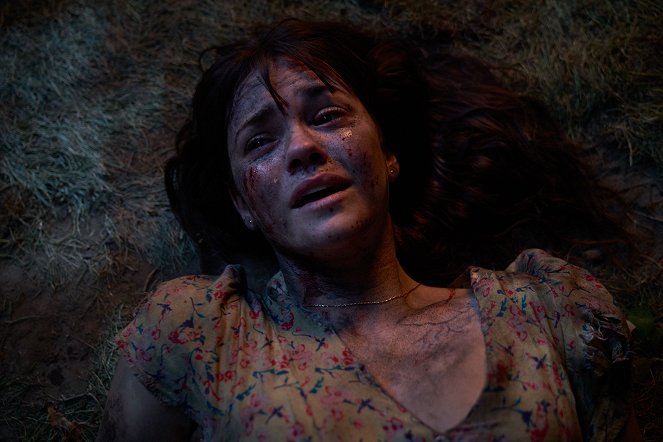
Director David F. Sandberg returns to his horror roots to deliver Until Dawn, a masterpiece in horror mystery. The movie contains all the necessary ingredients to become a classic.
This is a vicious, relentless reset of the “cabin in the woods” subgenre, trading familiar jump-scares for deep, unexpected chaos. Here, dying isn’t really the worst thing for the victims. It’s having to do it all over again.
Forget everything you thought you knew about survival horror. This film throws the rulebook out, locks the door, and sets the whole thing on fire.
The Setup
The story centers on Clover (Ella Rubin) and her group of friends who retreat to a remote location in Glore Valley a year after her sister goes missing.
Their trip quickly spirals into a suffocating nightmare as they are thrown into a world of death and puzzles, with little time to reassess what’s going on.
What elevates Until Dawn beyond standard genre fare is the crushing realization that the night itself is broken. Events repeat, failures echo, and a feeling of terrifying déjà vu settles over the group, suggesting they are trapped in a cycle with no clear exit.
They are fighting not just for their lives, but for their very minds. The fight is simple yet seemingly impossible. Survive until dawn, that’s it.
Their options for survival, however, are agonizingly complex. They must learn to anticipate the shifting horrors and the grim echoes of the past to find the one action, the one precise sequence of events, that can break the relentless, unforgiving cycle.
✅ What Works: Ingenuity and Insanity
Structural Novelty: Until Dawn brilliantly transforms the concept of a recurring night into an engine of escalating dread. Watching characters try new strategies only to encounter new, even more terrifying threats is thrilling and unpredictable.
A brutal play on intelligence: From water rigged to make you explode to houses popping up from out of nowhere, the movie buries viewers deep into a world of guesses. You end up wondering whether it’s all real or in their heads.
Efficiency: Despite its complex premise, the movie is savagely efficient. The nearly two-hour runtime is a blur of panic and violence, rarely letting up the pressure on either the characters or the audience.
Evolving Mythology: The audacious shift from a simple, familiar slasher narrative to a complex, monstrous siege mid-film injects a shocking amount of chaotic energy. This refusal to adhere to one genre keeps the audience perpetually guessing about the rules of the world and its threats.
Implications and the will to survive: The movie combines a strong desire to survive with a terror of choices. Characters are faced with an option to either sacrifice themselves or go on their own. Death isn’t the ultimate end in this tale, as the characters fight to survive together.
❌ Where It Falls Short: Lore Fatigue
Character Fatigue: Many supporting players are thinly sketched, existing purely to fulfill the film’s “death quota,” which dramatically dilutes the emotional impact when they are inevitably killed.
Underdeveloped Relationship Dynamics: Outside of Clover’s immediate circle, the established friendships feel like clichés from a typical teen-horror script. The lack of believable friction or history between the wider group prevents the emotional clarity the movie deserves.
Final Verdict 🎯: 4/5
Until Dawn isn’t your average horror movie with a predictable plot. It is a beautifully shot example of inescapable fate that transforms the familiar premise of surviving the night into a terrifying, existential treadmill.
It refuses to focus on one particular style of horror, making it even more captivating.
If you’re looking for a horror film that doesn’t just deliver simple jump scares but actively messes with your sense of narrative reality, then make sure to watch this masterpiece from a true master of directing.
