


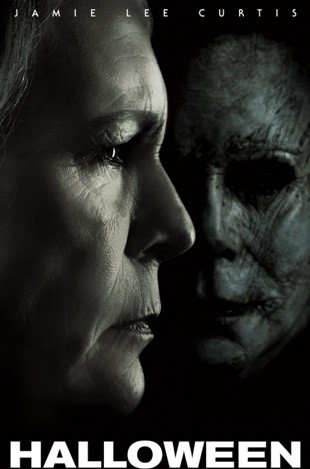
Forget everything you thought you knew about masked killers and suburban terror. David Gordon Green’s Halloween (2018) isn’t just a sequel; it’s a brutal, no-nonsense correction of decades of franchise lore, slapping the viewer directly back into the chilling, quiet dread of that original 1978 masterpiece.
This is the big, scary return the Shape demanded, delivering a primal scream of fear that feels both nostalgically familiar and terrifyingly immediate.
The Unseen Shadow
Forty years after the infamous night he terrorized Haddonfield, Michael Myers remains locked away, a silent, institutionalized specter of pure evil. The film wisely sidesteps the convoluted continuity of the previous sequels, establishing itself as a direct follow-up to John Carpenter’s original.
On the eve of his scheduled transfer, a botched encounter sets the seemingly immortal killer free, plunging the quiet Illinois town back into chaos.
Our focus shifts primarily to Laurie Strode returning with fierce determination, now a hardened, almost militarized grandmother whose life has been a four-decade-long preparation for this inevitable return.
While the town tries to carry on with modern anxieties, Laurie, her daughter Karen, and her granddaughter Allyson find themselves living under the shadow of a monster they’ve never truly faced. When Michael escapes, his singular focus seems to be finding the one person who ever escaped him.
The film masterfully builds tension around this unavoidable collision, exploring the generational trauma inflicted by a single, inexplicable act of violence, culminating in a terrifying, protracted hunt where the prey has finally decided to set her own trap. It’s a story about inevitability, survival, and the sheer, unkillable persistence of true horror.
What Work✅
Jamie Lee Curtis’s Iconic Return: Laurie Strode is no longer the final girl; she is the final warrior. Her portrayal of a woman consumed by paranoia and preparing for war is mesmerizing and provides the necessary emotional anchor for the violence.
Atmosphere and Tone: The film recaptures the low-fi, suspense-driven dread of the original, relying heavily on creeping tension, ominous stillness, and less on gore, at least initially.
The Score: The utilization and modern update of John Carpenter’s iconic musical themes are expertly deployed, providing immediate, spine-tingling recognition and ramping up the suspense at crucial moments.
Effective Modernization: The handling of secondary characters, particularly the teenagers, feels authentic to the contemporary setting, grounding the absurdity of the situation in relatable modern anxieties before the nightmare begins.
❌Where It Falls Short
The Subplots: The focus occasionally drifts to secondary storylines involving teens and neighbors that, while sometimes entertaining, occasionally slow the relentless pace built around Laurie and Michael.
The Logic of the Crowd: The community of Haddonfield often exhibits puzzlingly poor decision-making, serving mainly to isolate the main characters for dramatic effect.
Deviation from Subtlety: While the tone is largely effective, the final act leans perhaps too heavily into the overt, almost unstoppable nature of Myers, sacrificing some of the original’s subtle, psychological terror for grander set pieces.
Uneven Pacing: The buildup is magnificent, but the film takes its time getting there, which might test the patience of viewers accustomed to faster-paced modern horror narratives.
Final Verdict: ⅘ 🎯
Halloween (2018) is not just a satisfying sequel; it is arguably the best entry in the franchise since the original masterpiece. It is a film that understands what makes Michael Myers terrifying: his inhumanity, his inevitability, and the sheer, chilling simplicity of his evil.
By discarding decades of confusing lore and focusing on the core, primal conflict between a survivor and her monster, the filmmakers deliver a horror experience that is both respectful to the legacy and ruthlessly modern.
Best not to see it alone, just to be safe!
