


Halloween Special · Horror Creators’ Top 50
Which horror films stay with us forever? The ones that make us afraid to turn out the lights? The ones we revisit every October? Or the ones that made us start a channel, record a podcast and share our love of horror in the first place?
Cinema has a long tradition of choosing its greatest works. Sight and Sound asks critics and filmmakers to name the greatest films of all time. The American Film Institute builds its celebrated lists around the views of film professionals and industry figures. Such polls help shape the films that future generations will discuss, revisit and discover.
But why not put the same question to film YouTubers, bloggers and podcasters?
They are an important part of film culture, too. They bring forgotten films back into the conversation, challenge the reputations of established classics, support independent cinema and help audiences decide what to watch tonight. Their love of the genre lives in long video essays, quick recommendations and conversations that continue after the credits.
For Halloween, LikeHorror invited them to submit their own ten greatest horror films. We then combined their choices into a collective ranking.
We left participants free to interpret that question in their own way. Some chose historically important films, some chose the scariest, and others chose their personal favourites.
The result brings established classics together with newer favourites, with a few familiar titles in unexpected places. Let’s count down the top ten and work our way to the winner.
How we counted the votes
A first-place pick earned 10 points, second place earned 9, and so on down to 1 point for tenth. Each submitted ballot carried equal weight. A joint list counted as one ballot; separate lists from co-hosts counted individually. Ties were decided by the number of ballots featuring a film, then the number of first-place votes, second-place votes and so on. Results that remained identical share a position. The final cutoff includes all films tied at 49th place, so this Top 50 contains 53 films.
The countdown
The top 10 horror movies
10. Hereditary (2018)
Directed by Ari Aster
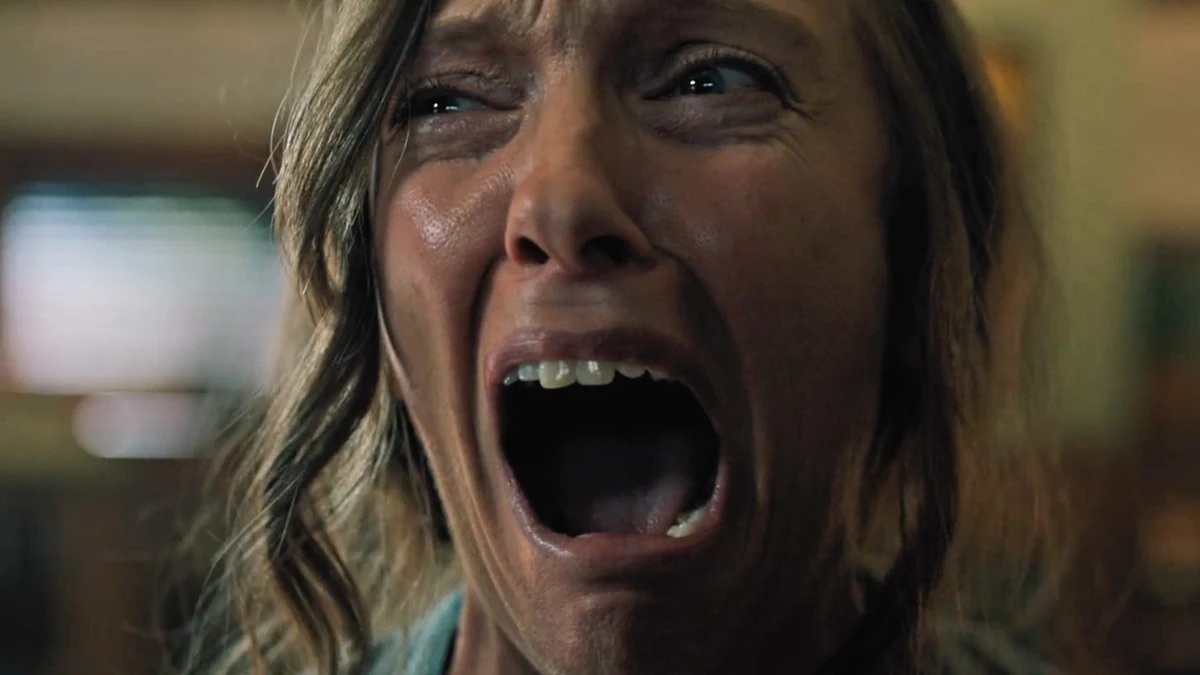
After the death of her mother, a woman and her family struggle with a loss that makes their familiar ways of talking and caring for one another fall apart. Everything that should connect them gradually becomes a source of fear.
Ari Aster binds family tragedy and occult horror so tightly that they become difficult to separate. Miniature rooms, motionless wide shots and Toni Collette’s performance suggest lives controlled by an outside will. The only 21st-century film in our top ten, it is a modern nightmare that has already found its place beside the classics.
9. Psycho (1960)
Directed by Alfred Hitchcock
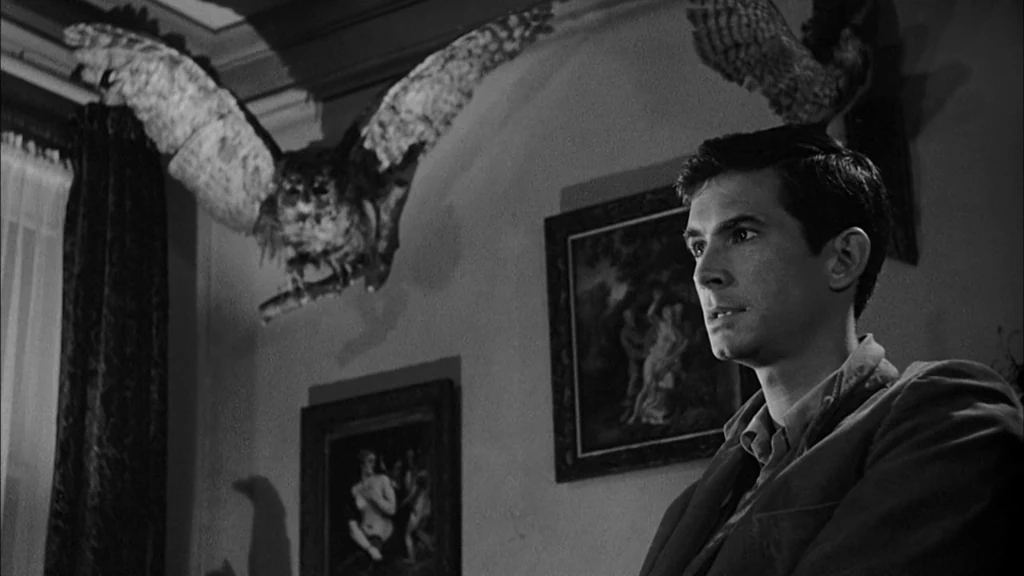
A roadside motel, a polite proprietor and a woman who needs a place to spend the night. Hitchcock turns an ordinary stop into a trap while dismantling the viewer’s confidence in how a story is supposed to unfold.
The significance of Psycho extends well beyond its famous shower scene. It made everyday life a source of horror and our vulnerable expectations its most effective weapon. Even when we know what is coming, the editing, music and uneasy restraint can draw us in again.
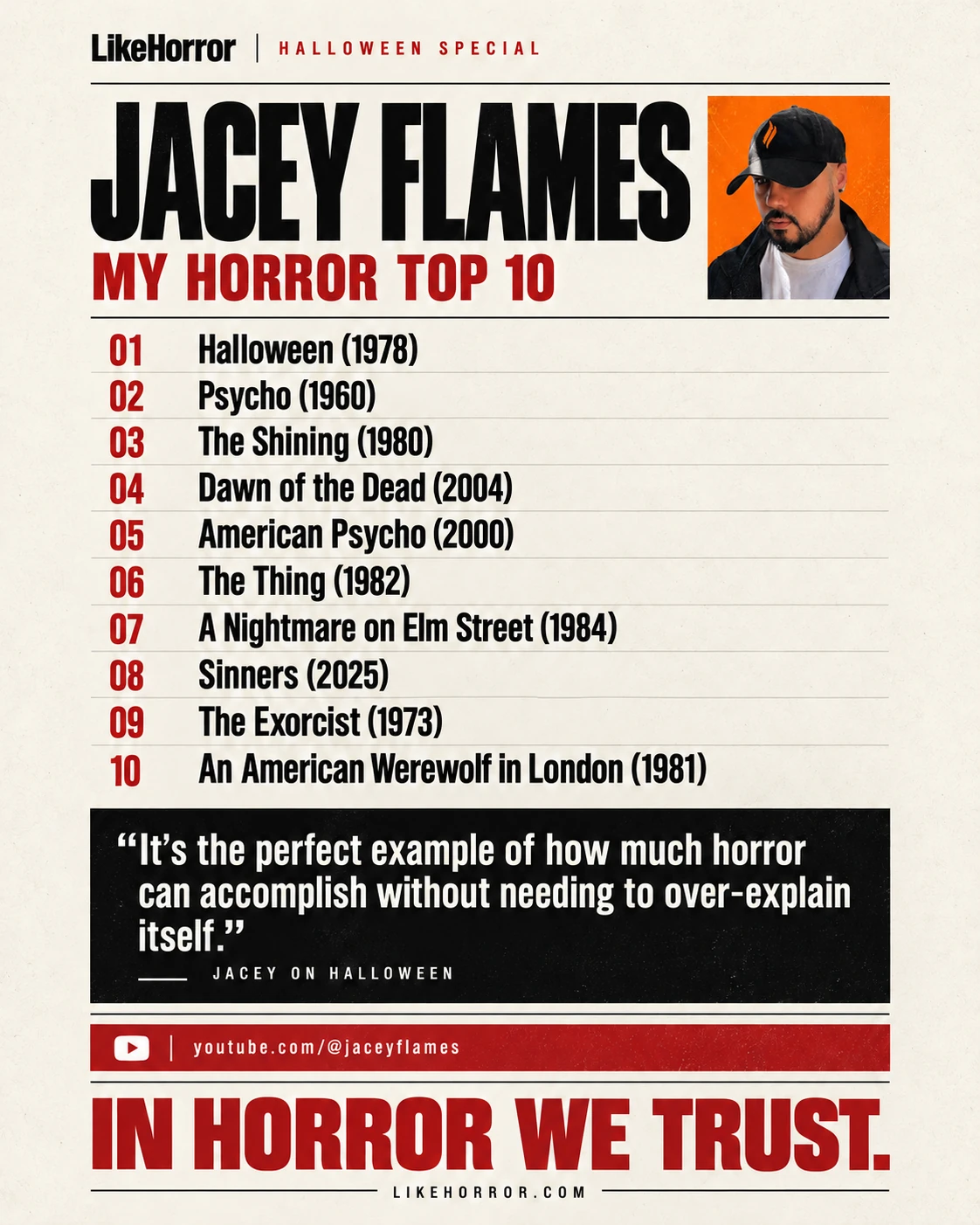
“Alfred Hitchcock’s ability to create suspense, manipulate the audience, and turn seemingly ordinary locations into terrifying places is incredible.”
— Jacey Flames
8. Jaws (1975)
Directed by Steven Spielberg
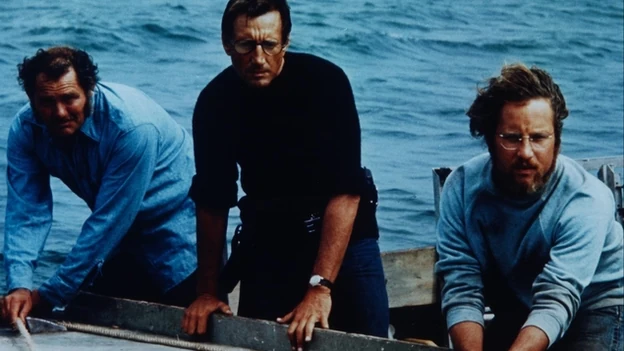
A threat lurks beneath the water, while a seaside town refuses to give up its tourist season. From this simple conflict, Spielberg creates a film in which fear of a shark becomes inseparable from human stubbornness, responsibility and mistrust.
Jaws helped define the summer blockbuster while retaining the precision of an intimate thriller. Music and editing make us anticipate an attack long before the predator appears, and the relationships between its three leads turn a hunt at sea into something much richer than a battle with a monster.
“With its balance of horror, humanity and humour, it’s what I consider a practically perfect film.”
— Sarah Cliff · What The Horror
7. The Texas Chain Saw Massacre (1974)
Directed by Tobe Hooper
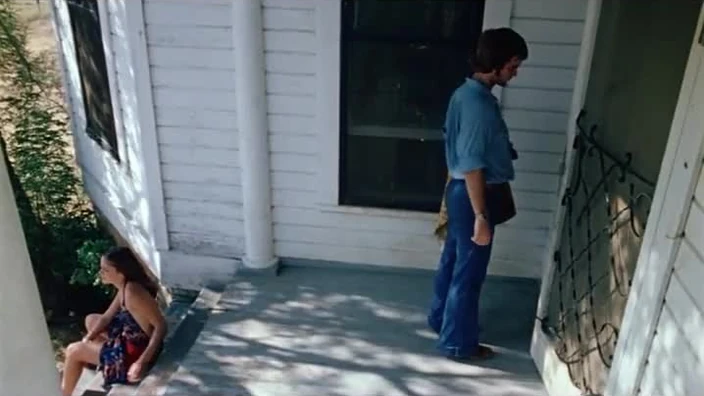
A trip through rural Texas becomes a nightmare from which it is impossible to stand back. Sunlight, dust, noise and cramped spaces create an almost physical discomfort: the film seems to happen beside you rather than safely on a screen.
Hooper achieves this less through the amount of blood shown than through rhythm, sound and a sense that the normal world has completely collapsed. The film became a landmark of independent horror, demonstrating what a small budget and an uncompromising vision could achieve.
“Often emulated, but few films rarely come close.”
— Graham Trelfer · Dark Corners Reviews
6. Scream (1996)
Directed by Wes Craven
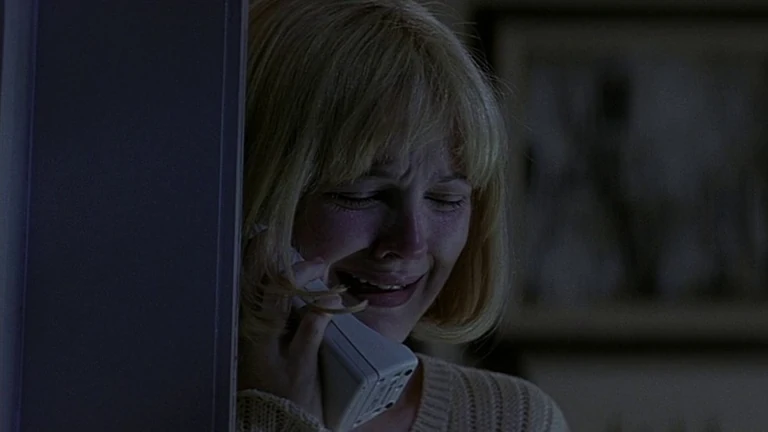
The characters know horror films, discuss their rules and believe they can recognise danger. But knowing the genre does not save you when a telephone call becomes a threat.
Scream helped bring the slasher back into mainstream cinema, offering a tense mystery, a story of trauma and a witty conversation about horror itself. Its self-awareness does not cancel out the fear: the characters can joke about clichés, but pain and consequences remain real. That balance lets the film work both as a commentary on the genre and as one of its finest examples.
5. The Shining (1980)
Directed by Stanley Kubrick
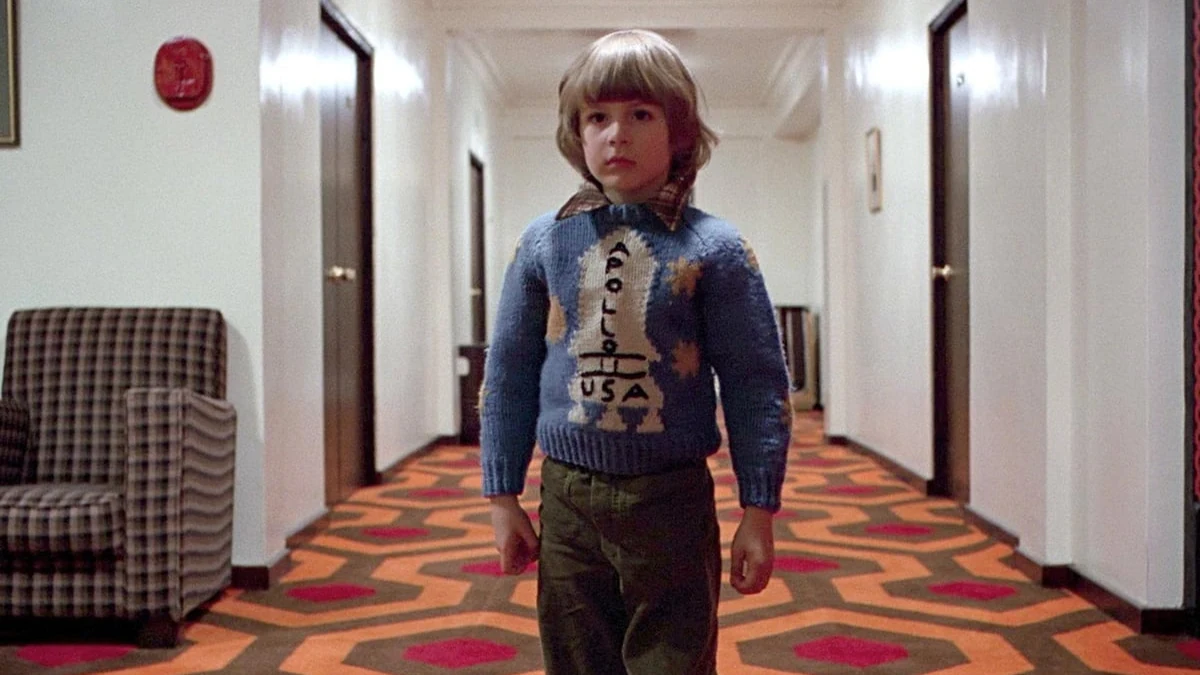
A writer takes a winter caretaking job at a hotel and brings his family along. Ahead lie months of silence, empty corridors and a chance to concentrate at last. But isolation exposes things that cannot be kept out by locking the doors.
Kubrick turns architecture into an instrument of fear. Long tracking shots and repeating spaces make the hotel feel both comprehensible and impossible. The Shining leaves questions about the nature of its events unanswered while keeping the horror of domestic violence painfully concrete. Its images have become part of cinema’s vocabulary, yet remain more disturbing within the film than in any homage.
4. The Exorcist (1973)
Directed by William Friedkin
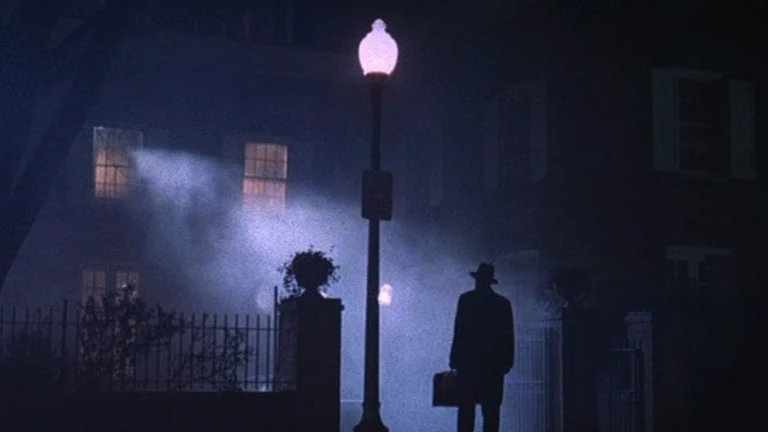
A mother tries to understand what is happening to her daughter. Doctors look for an explanation, examinations bring no relief, and help must eventually be sought somewhere she might never have turned before.
Friedkin gives supernatural horror the conviction of serious drama. Hospital procedures, exhaustion and doubt prepare the ground for events that resist rational acceptance. Behind the shocking scenes is a story of faith, compassion and a willingness to take on another person’s suffering. That human foundation keeps the film from becoming merely a collection of provocations.
3. Alien (1979)
Directed by Ridley Scott
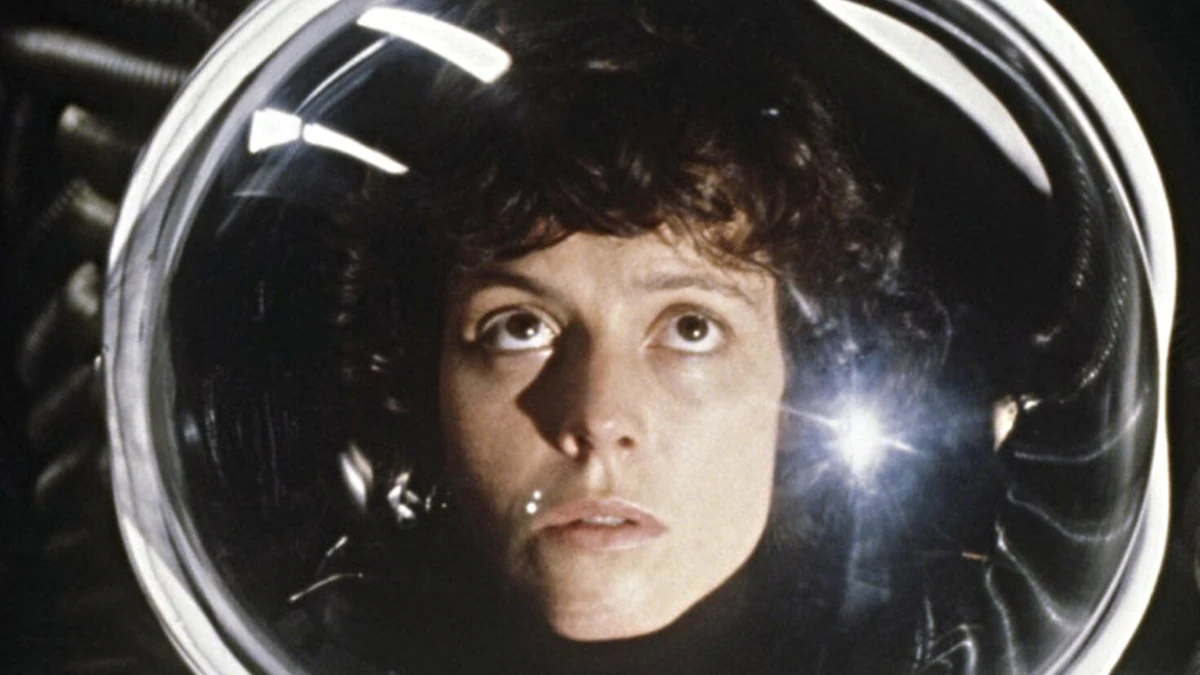
The crew of a cargo ship answers a mysterious signal and brings aboard an organism nobody is prepared to face. A spaceship becomes a haunted house, except that beyond its walls there is nowhere to run.
Alien combines science fiction, body horror and a story about workers their employer considers expendable. The creature and production design make this world tangible, while the slow build lets fear inhabit every pause. Its monster is terrifying both as a physical presence and as a violation of the body’s most familiar boundaries.
“I don’t think you get a better combination of excruciating, slow-burn tension and absolute kinetic, claustrophobic panic.”
— Sebastian Tampa · Dark Cinema
2. Halloween (1978)
Directed by John Carpenter
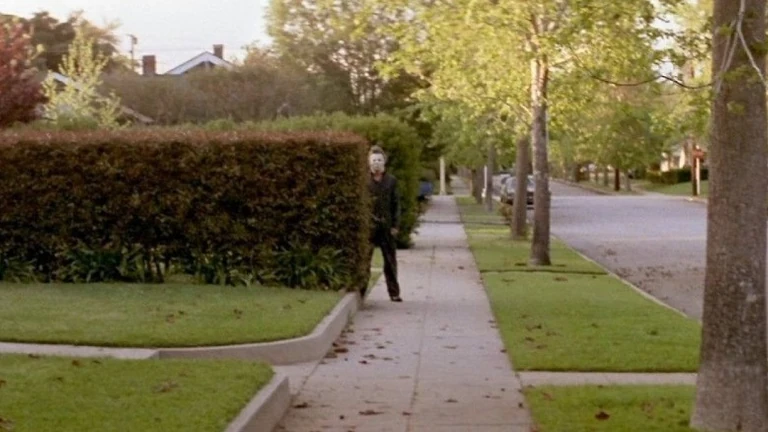
Michael Myers returns to his hometown, and a quiet suburb gradually loses its sense of safety. Danger does not always announce itself with a noise. Sometimes it simply stands outside a window and waits to be noticed.
Halloween helped establish the language of the slasher, from the stalker’s point of view to the tension surrounding an ordinary house. But its power lies above all in directorial discipline: empty space becomes a threat, and a simple musical theme says more than an explanation. Myers frightens us precisely because the film lets us know so little about him.
“It’s the film I watch every Halloween. The scares are perfect, the music is perfect, the cinematography is perfect, and naturally, Jamie Lee is perfect.”
— Chelsea Beller · Horror Babe Show
1. The Thing (1982)
Directed by John Carpenter
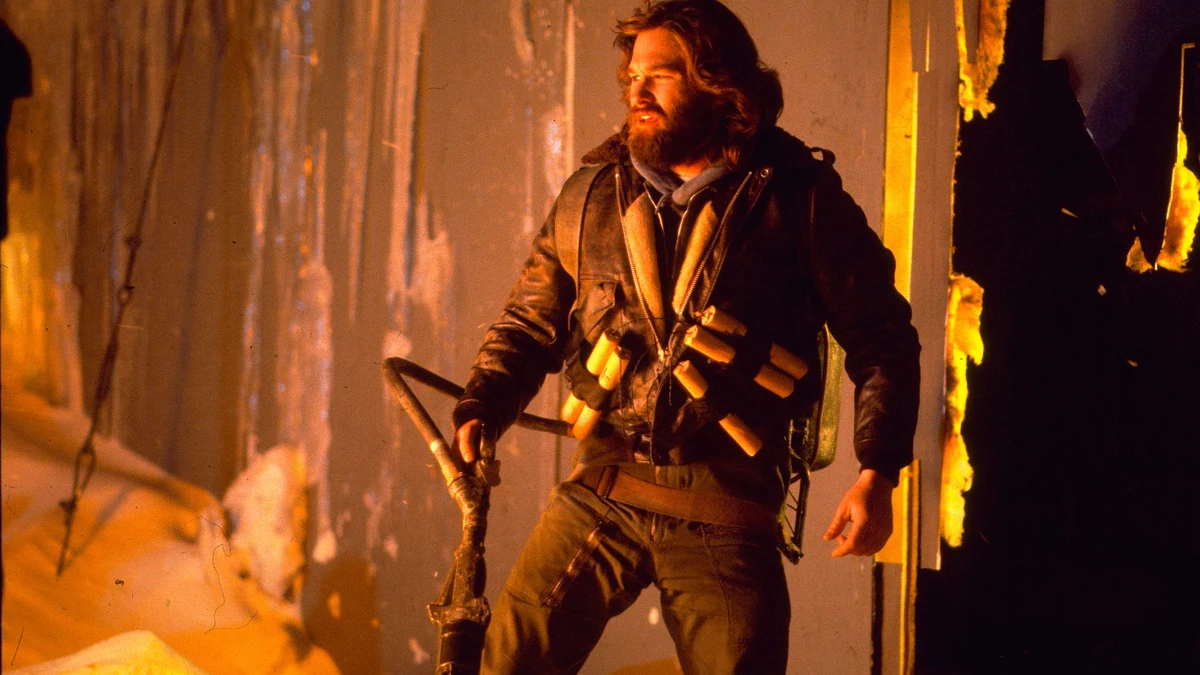
An organism capable of imitating living creatures arrives at an Antarctic research station. Every attempt to establish the truth creates fresh suspicion, and surviving together becomes impossible without the trust that has already disappeared.
The Thing pushes the invasion story towards a deeply uncomfortable question: what remains of a person when their appearance proves nothing? Practical effects turn the body into unpredictable matter, but the greatest tension lies in the faces of people watching one another. Our winner is a rare combination of spectacular creature horror, a confined thriller and doubt that refuses to be resolved.
“The idea that anyone around you could be the monster creates constant tension.”
— Jacey Flames
“I watched this a ton as a kid and was just blown away by the practical effects and how truly terrifying it was. It’s a movie that will stand the test of time I believe as it is still just as good today as it was in 1982.”
— William Howard · The Fear Review
Behind the ranking
What the results reveal
One first-place vote. The broadest support.
The Thing received just one first-place vote, but appeared on 18 lists — exactly half of all ballots. It had the widest support of any film in the poll. Our winner was less a unanimous number one than the film people most consistently felt belonged among horror’s greats.
Halloween received the most first-place votes: five. The Exorcist and The Shining followed with four each. There is an interesting difference between the film people call their absolute favourite and the one they find hardest to leave out.
Ninety years of horror
The oldest film in the final selection is The Bride of Frankenstein (1935); the newest is Sinners (2025). Ninety years separate studio-era Gothic horror from a vampire story built around music and the American past.
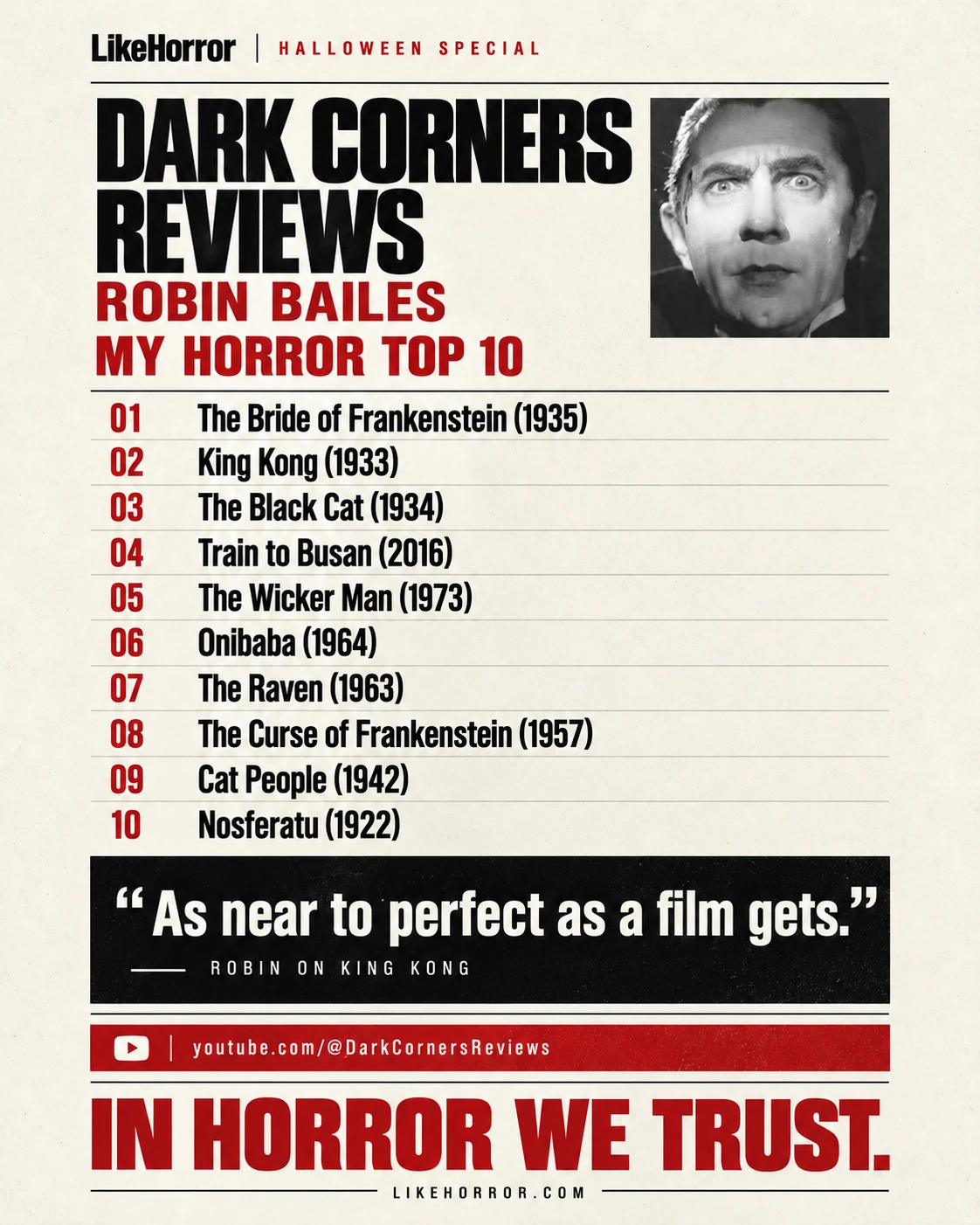
The Bride of Frankenstein is here as more than an obligatory monument to film history. Robin Bailes describes it as:
“A horror film that makes you laugh and cry, possessed of an extraordinary depth and beauty.”
— Robin Bailes · Dark Corners Reviews
Yes, Jurassic Park counts — for these voters
Two participants included Jurassic Park in their horror top tens, placing it first and second. Together, those votes carried it to 20th place. Spielberg’s film is usually discussed as a science-fiction adventure, but a T. rex outside your car and velociraptors in the kitchen make a persuasive case for the horror within it.
The rarest picks are not a single film
Five films at the final cutoff appeared on just one ballot each — and each was that voter’s number one: The Bride of Frankenstein, Cube, House, Men and The People Under the Stairs. Each earned its place through one person’s strongest possible endorsement.
Beyond Hollywood
American cinema forms the backbone of the ranking, but the selection reaches further. British folk horror, Canadian science fiction, Japanese ghosts, a Swedish vampire story and a South Korean zombie film offer very different ways to frighten an audience.
Three non-English-language films make that range particularly clear: Let the Right One In, Train to Busan and Ringu. The Swedish film turns vampirism into a story of closeness and loneliness; the Korean film uses a zombie catastrophe to explore mutual responsibility; the Japanese film finds a threat in an image that can be copied and passed on.
| Cinema | Examples in the ranking |
|---|---|
| United Kingdom | The Wicker Man, The Descent, Men |
| Canada | Cube |
| Japan | Ringu |
| South Korea | Train to Busan |
| Sweden | Let the Right One In |
| International co-production | The Substance — United Kingdom, United States and France |
These are examples of the countries represented, not mutually exclusive production-country totals.
A discovery for your next watch: Summer of 84
Among so many familiar titles, it is easy to overlook Summer of 84, about teenagers who suspect a neighbour of being a serial killer.
The familiar atmosphere of a summer adventure gradually gives way to real danger. Nostalgia draws us closer to the characters before the film questions the very idea of a safe childhood memory. If you have already worked through the major horror franchises, this is one of the more intriguing stops on the list.
A miniature John Carpenter retrospective
Five films he directed made the ranking: The Thing, Halloween, In the Mouth of Madness, The Fog and Christine.
They offer different kinds of fear: lost identity, pursuit, collapsing reality, the return of the past and obsession. What connects them is Carpenter’s ability to make a simple situation unsettling long before the threat reveals itself.
The rest of the ranking
Places 11–50
From Gothic and folk horror to comedies, bodily transformations and coming-of-age nightmares, these films broaden the picture of what horror can be.
An equals sign indicates an exact tie. All five films tied at 49th are included, bringing the full selection to 53 films.
| Rank | Film | Why watch it? |
|---|---|---|
| 11 | A Nightmare on Elm Street (1984) | A slasher that takes away even the safety of sleep. |
| 12 | The Fly (1986) | Bodily transformation becomes a tragedy of love, illness and the loss of self. |
| 13 | The Return of the Living Dead (1985) | Punk energy, black humour and zombies that refuse to follow the usual rules. |
| 14 | The Wicker Man (1973) | An investigation inside a community where familiar ideas of right and wrong offer no protection. |
| 15 | Evil Dead II (1987) | A virtuoso collision of physical comedy, possession and bloody chaos. |
| 16 | Get Out (2017) | Social horror concealed behind politeness and performative hospitality. |
| 17 | Midsommar (2019) | Folk horror unfolding in the brightest daylight. |
| 18 | Sinners (2025) | Vampire horror in which music sits at the centre of the story and its cultural conflict. |
| 19 | Dawn of the Dead (1978) | A shopping mall becomes a refuge, a trap and a model of consumer society. |
| 20 | Jurassic Park (1993) | The wonder of meeting dinosaurs gives way to a fight for survival. |
| 21 | The Witch (2015) | Isolation, religious terror and a family falling apart at the edge of the woods. |
| 22 | The Substance (2024) | Grotesque body horror about youth, other people’s gaze and hatred of one’s own body. |
| 23 | The Evil Dead (1981) | Independent filmmaking ingenuity turns a lonely cabin into an uncontrollable nightmare. |
| 24 | Fright Night (1985) | Teenage suspicion, vampire elegance and a love of classic horror. |
| 25 | Phantasm (1979) | A dream of death and loss that follows its own strange logic. |
| 26 | An American Werewolf in London (1981) | Black comedy and tragedy joined by an extraordinary screen transformation. |
| 27 | Let the Right One In (2008) | A tender, brutal story of loneliness disguised as a vampire film. |
| 28 | Summer of 84 (2018) | A teenage investigation gradually loses the safety of a summer adventure. |
| 29 | A Nightmare on Elm Street 3: Dream Warriors (1987) | The nightmare becomes a space for collective resistance. |
| 30 | Halloween II (1981) | The same night continues in the empty corridors of a hospital. |
| 31 | The Descent (2005) | Claustrophobic terror begins long before the cave’s inhabitants appear. |
| 32= | In the Mouth of Madness (1994) | What happens when fiction gains power over reality? |
| 32= | Saw (2004) | A locked-room puzzle built around information, time and an agonising choice. |
| 34 | The Fog (1980) | A ghost story about a town that would rather forget its past. |
| 35 | The Lost Boys (1987) | Vampirism as the promise of eternal youth and belonging to a dangerous crowd. |
| 36= | Christine (1983) | An obsession with a car becomes a destructive relationship. |
| 36= | Train to Busan (2016) | A zombie catastrophe in which the real test is remaining human. |
| 38 | Night of the Living Dead (1968) | A siege that transformed the screen zombie and the possibilities of independent horror. |
| 39 | The Conjuring (2013) | A haunted-house story built on patient suspense and a family’s growing fear. |
| 40 | The Silence of the Lambs (1991) | A criminal investigation in which a conversation can be more frightening than violence. |
| 41= | Longlegs (2024) | A detective investigation gradually slips into an occult nightmare. |
| 41= | Shaun of the Dead (2004) | Growing up and accepting responsibility remain necessary, even in a zombie apocalypse. |
| 43 | It (2017) | Childhood fears take a shared form, and friendship becomes a means of resistance. |
| 44= | Gremlins (1984) | A Christmas fairy tale that delights in breaking the rules of good behaviour. |
| 44= | Ringu (1998) | A curse travels with an image. All you need to do is press play. |
| 46 | Hellraiser (1987) | Desire opens a door to a world where pleasure and pain become inseparable. |
| 47= | Tales from the Hood (1995) | An anthology combining supernatural retribution with social criticism. |
| 47= | Invasion of the Body Snatchers (1978) | Paranoia about a world that looks familiar but no longer belongs to us. |
| 49= | The Bride of Frankenstein (1935) | Gothic tragedy, grotesque humour and compassion for a human-made monster. |
| 49= | Cube (1997) | Minimal space, maximum mistrust: strangers trapped in a system of deadly rooms. |
| 49= | House (1985) | Trauma and loss explored through a wonderfully peculiar horror comedy. |
| 49= | Men (2022) | Folk horror about grief, guilt and a threat returning in different forms. |
| 49= | The People Under the Stairs (1991) | A house with monstrous owners becomes a grotesque image of power and exploitation. |
Meet the contributors
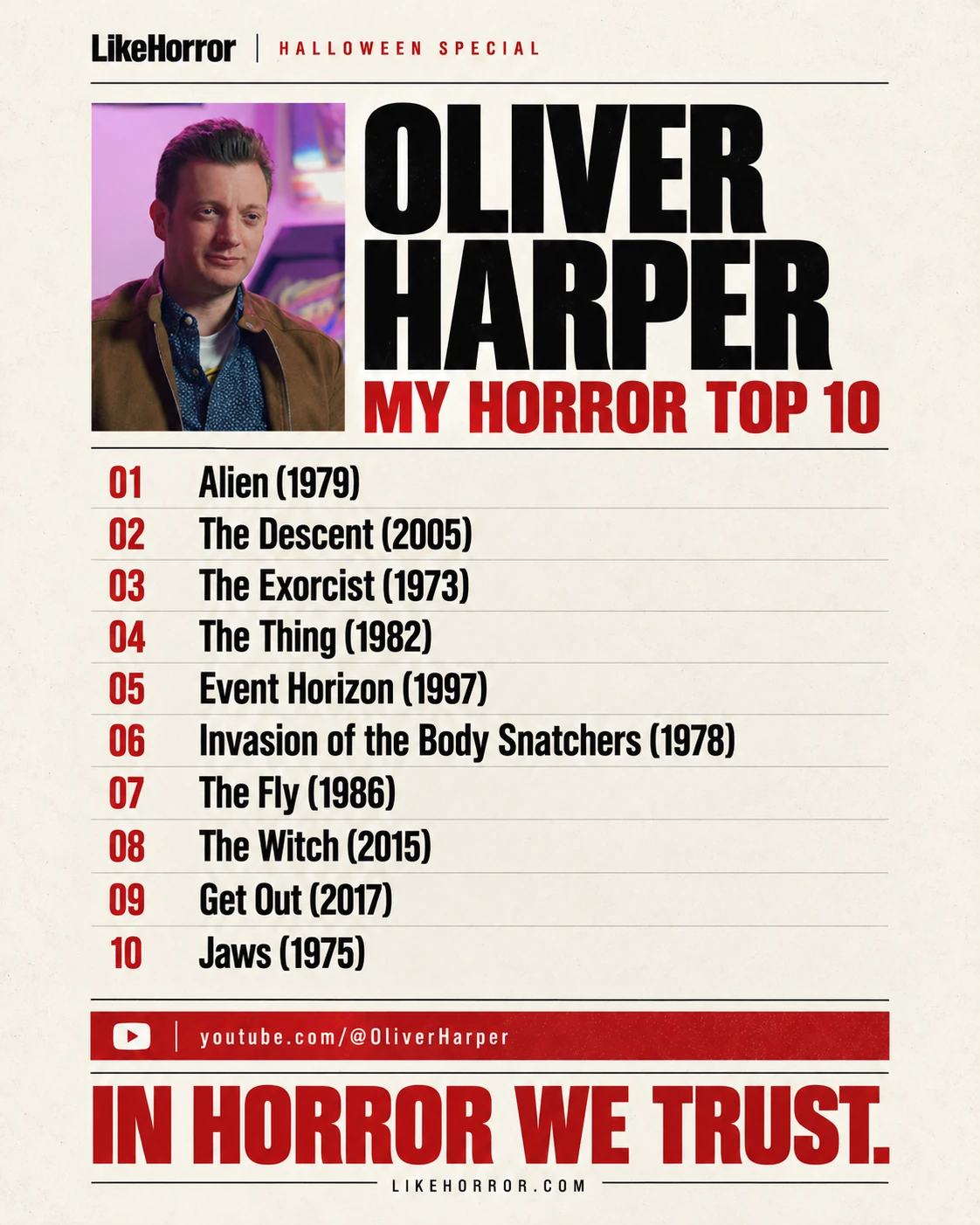
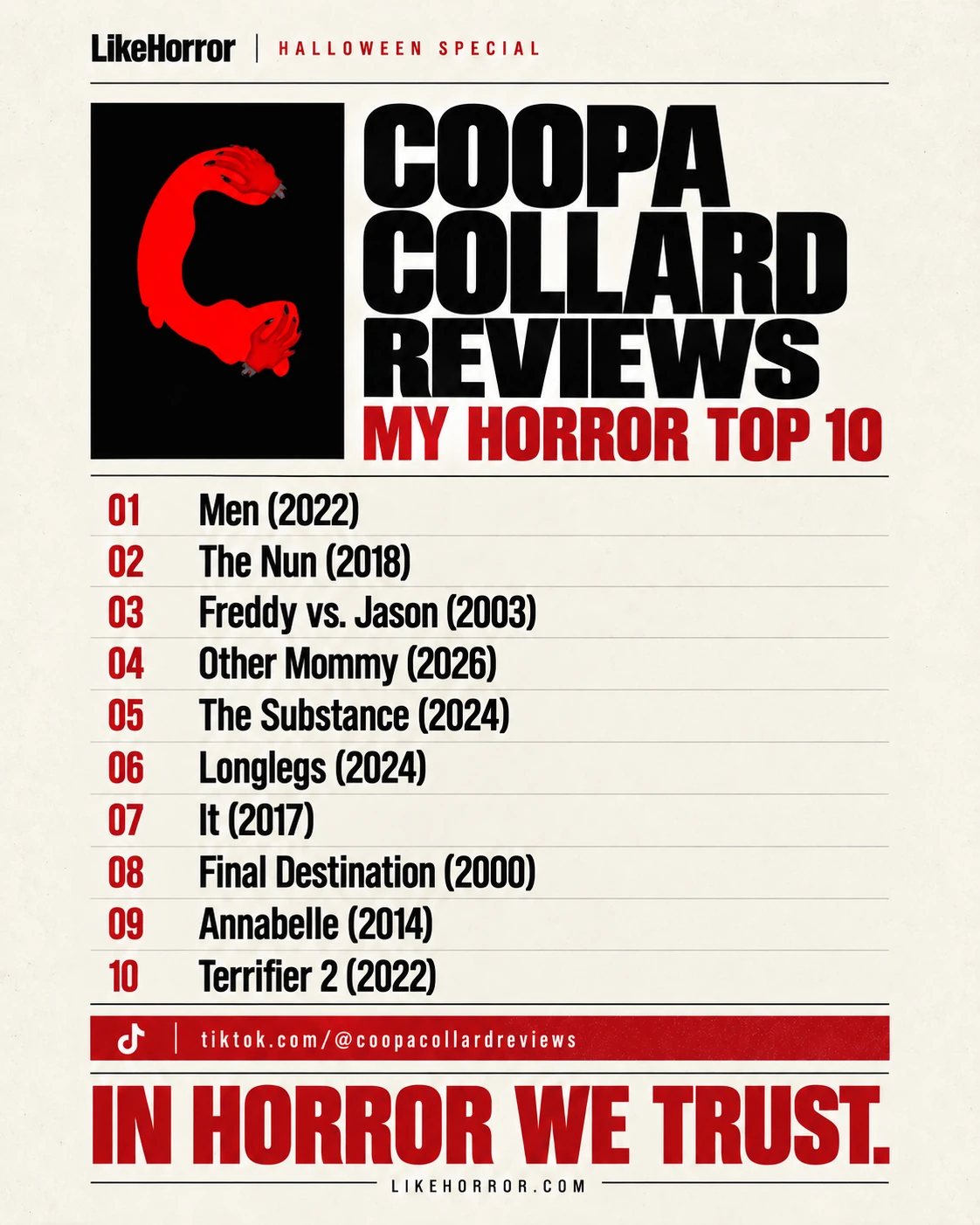
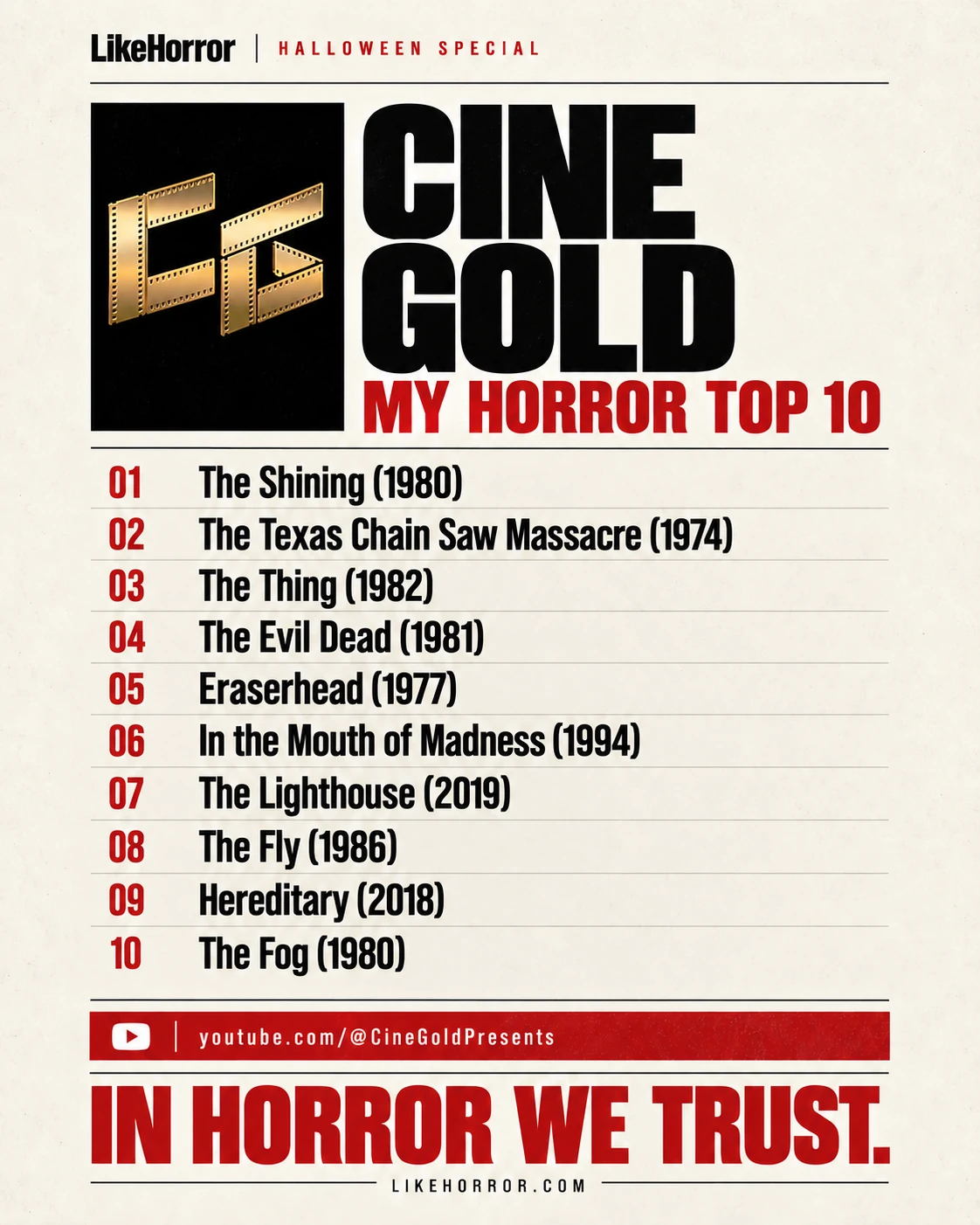
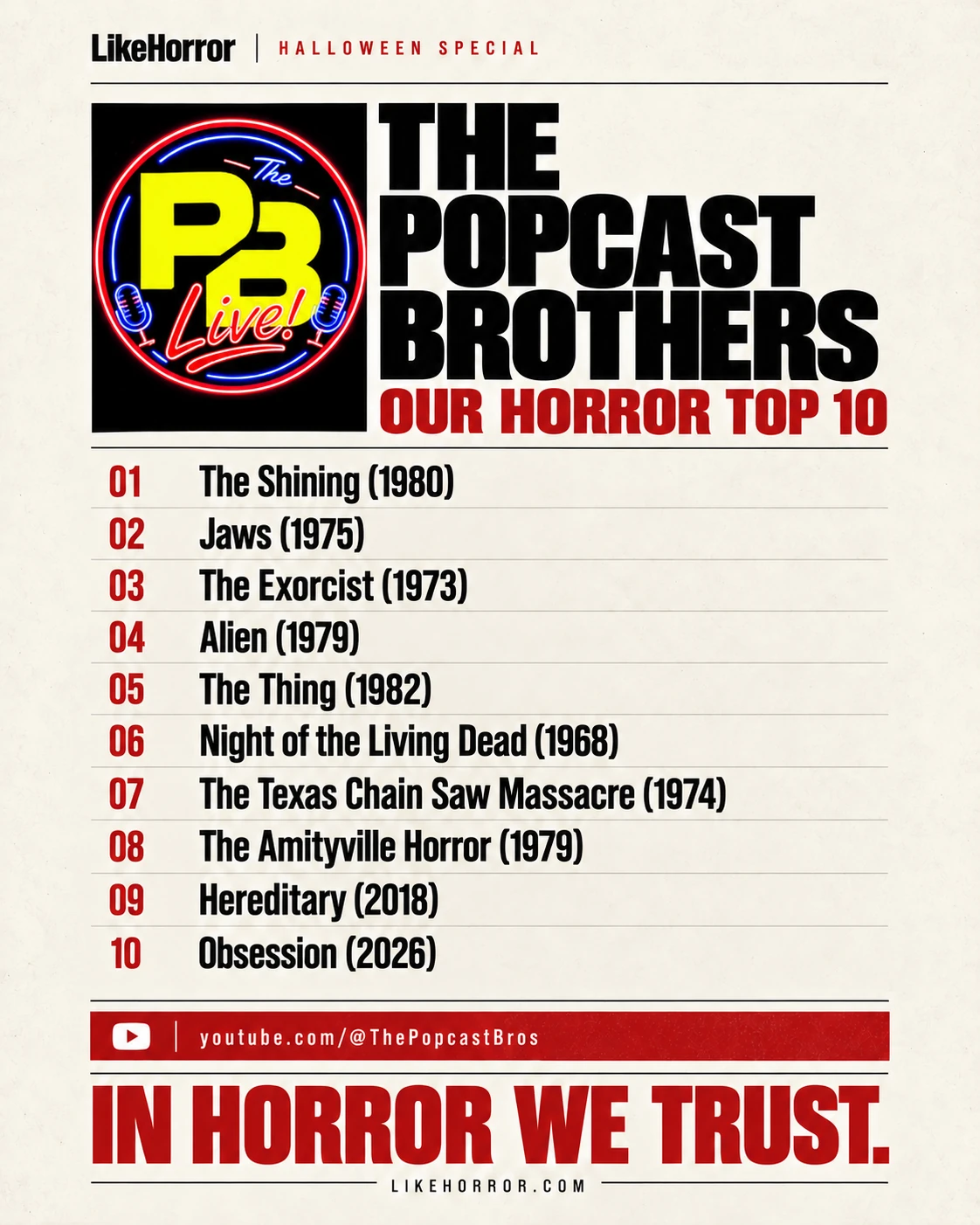
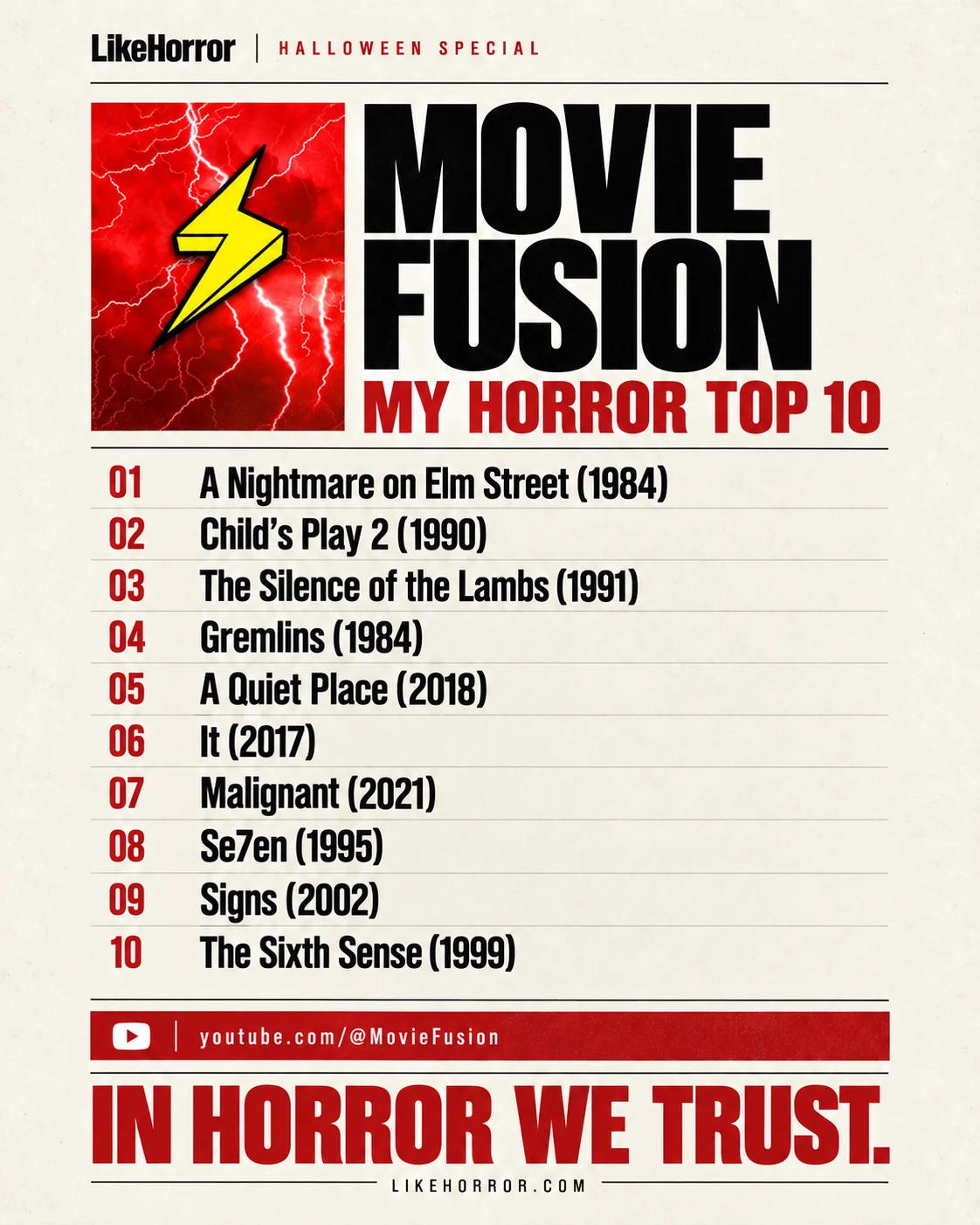
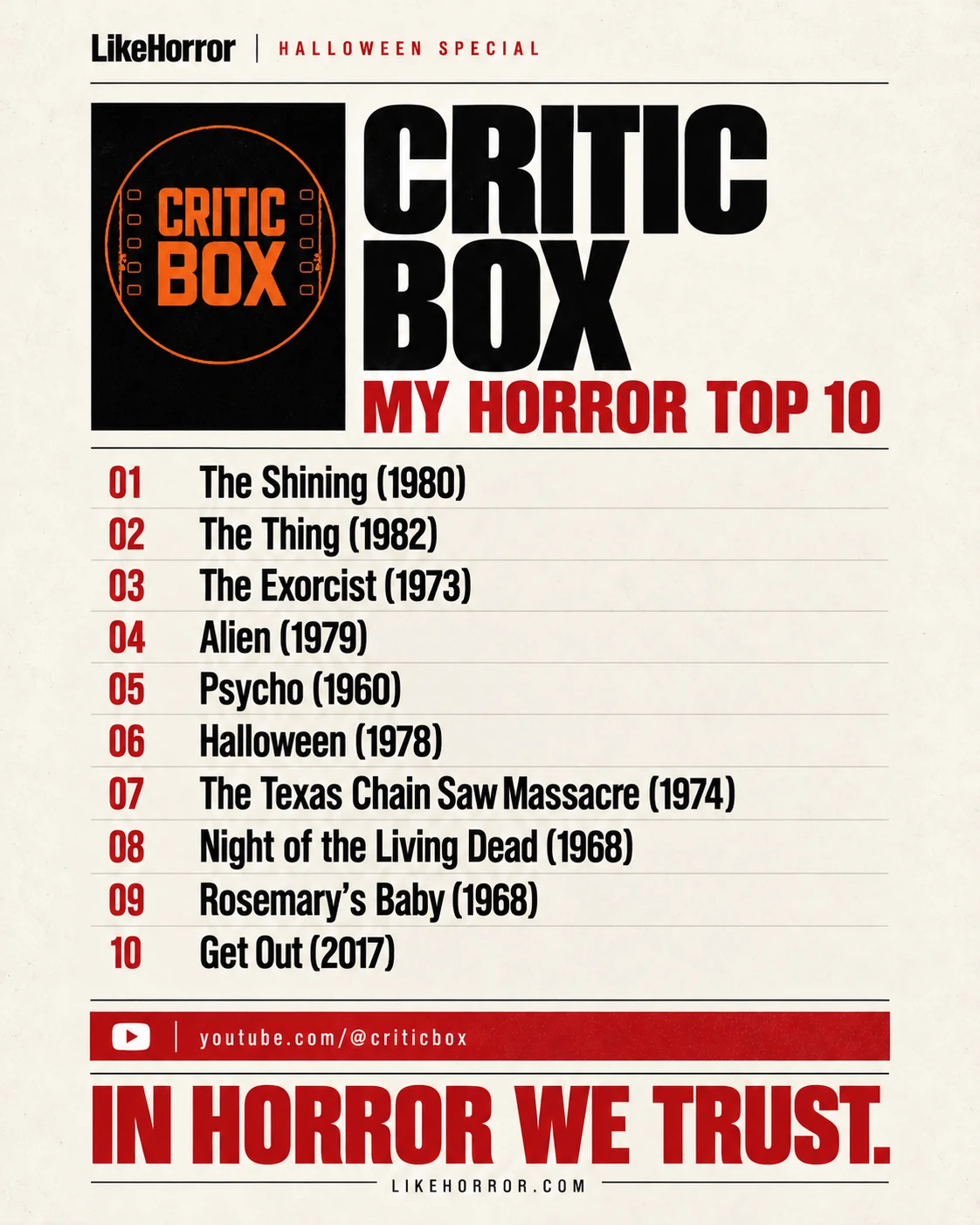
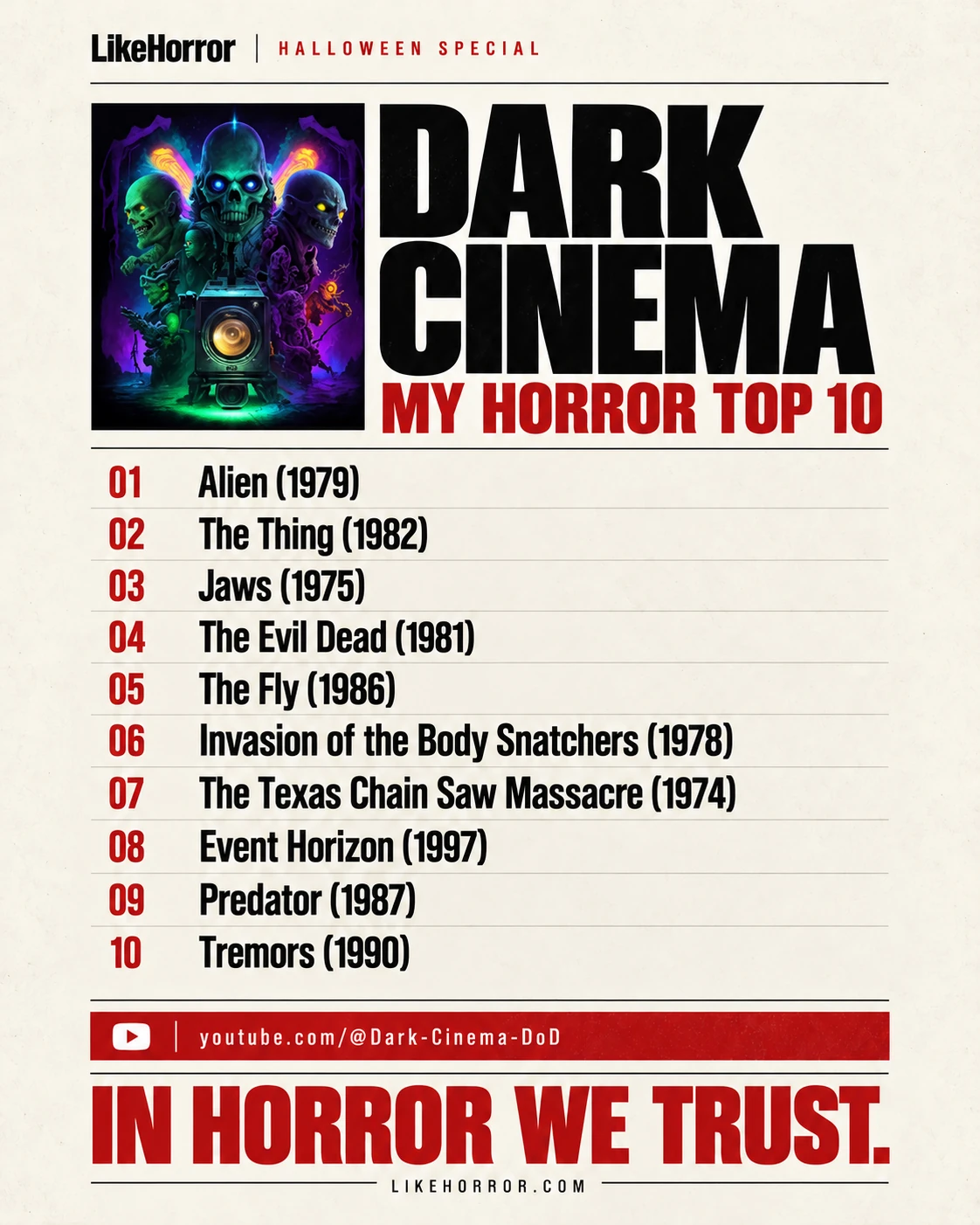
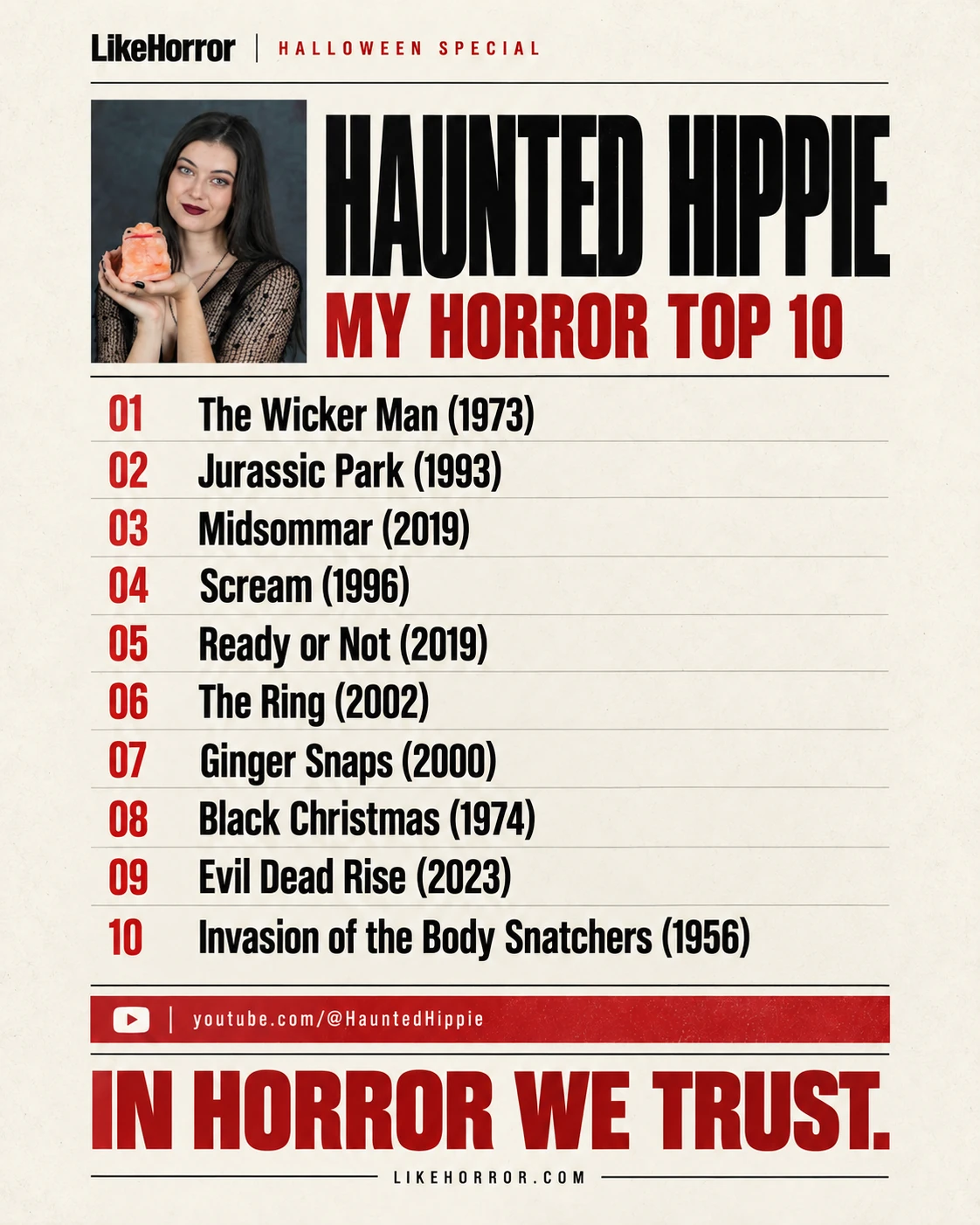
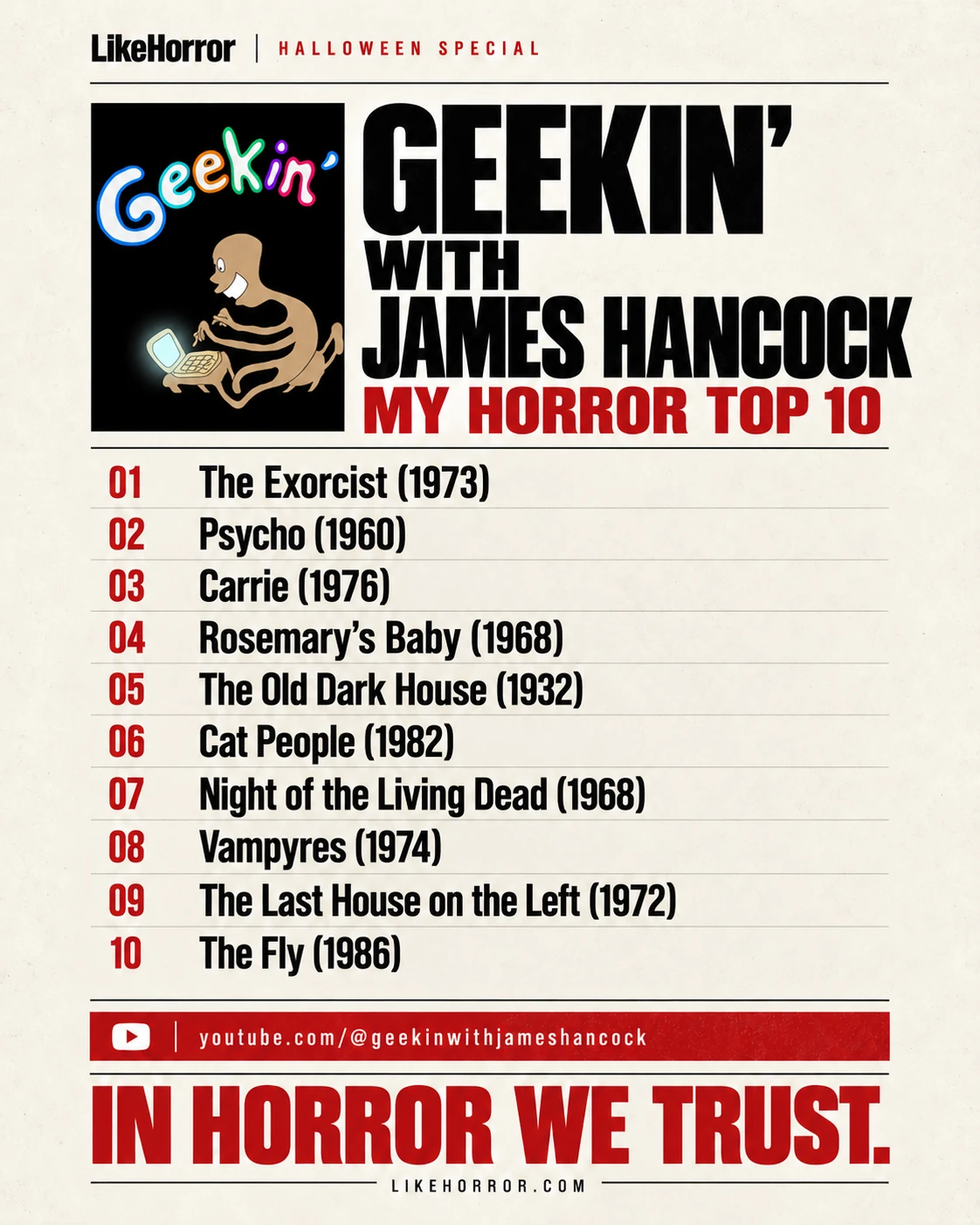
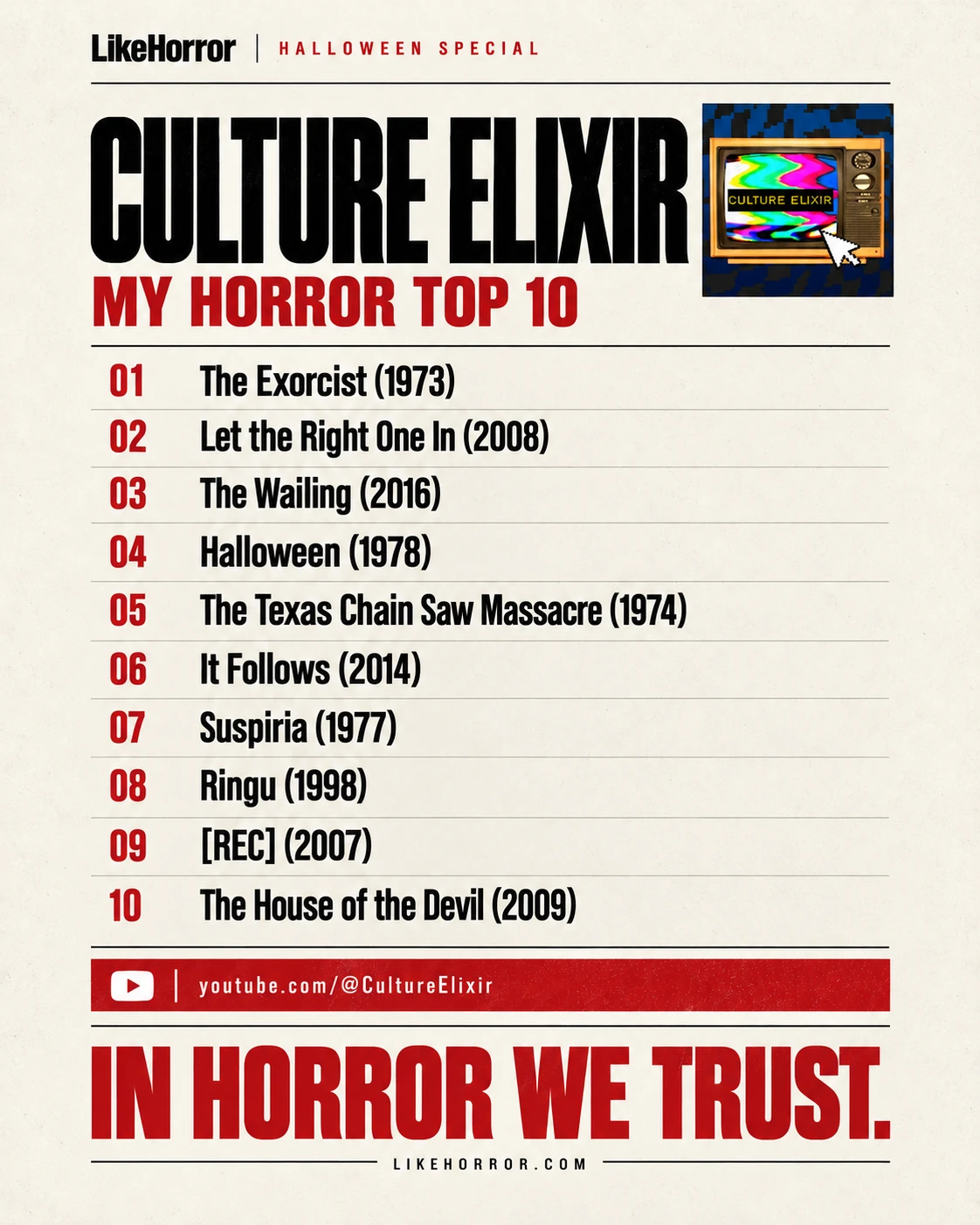
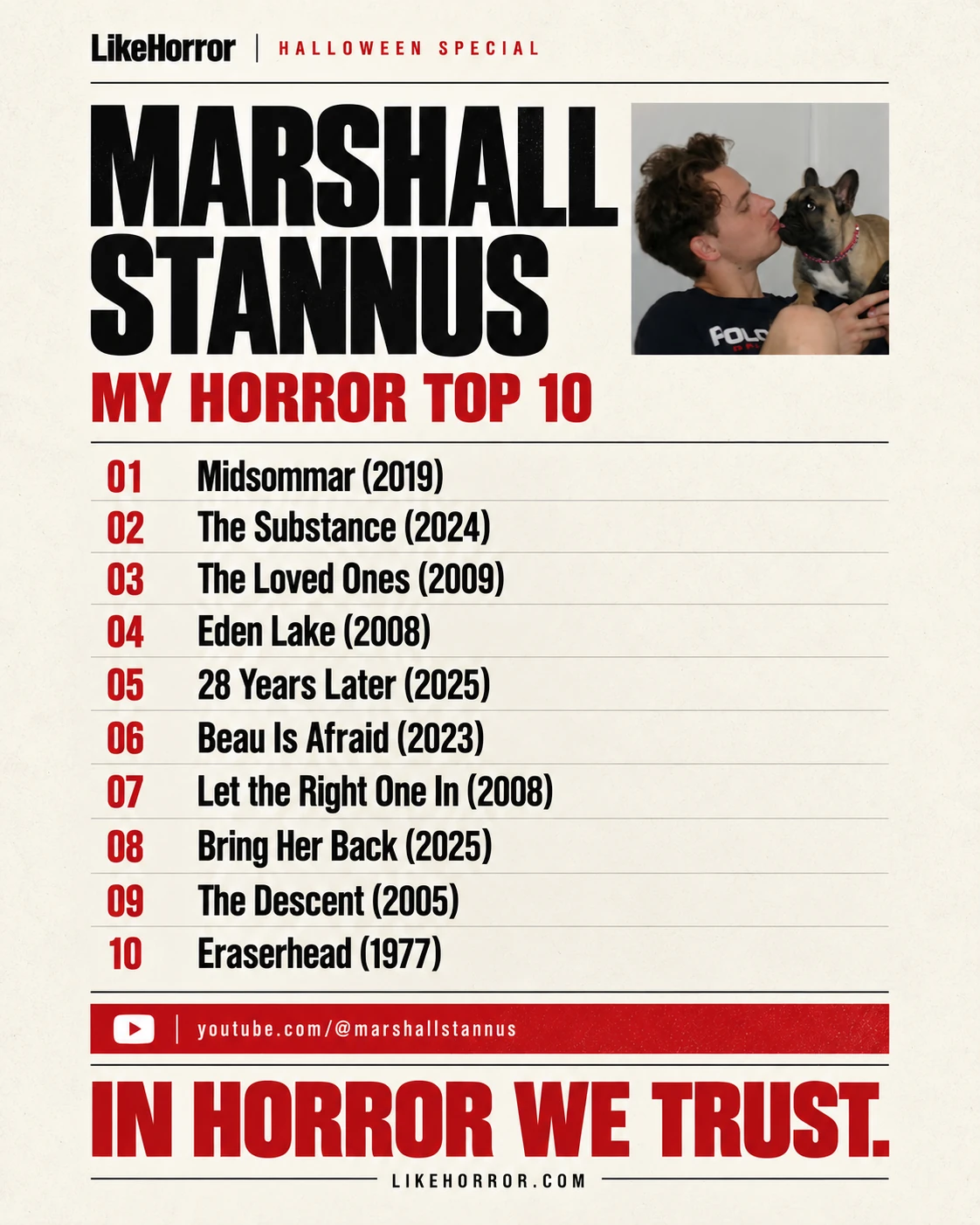
Their personal horror top tens
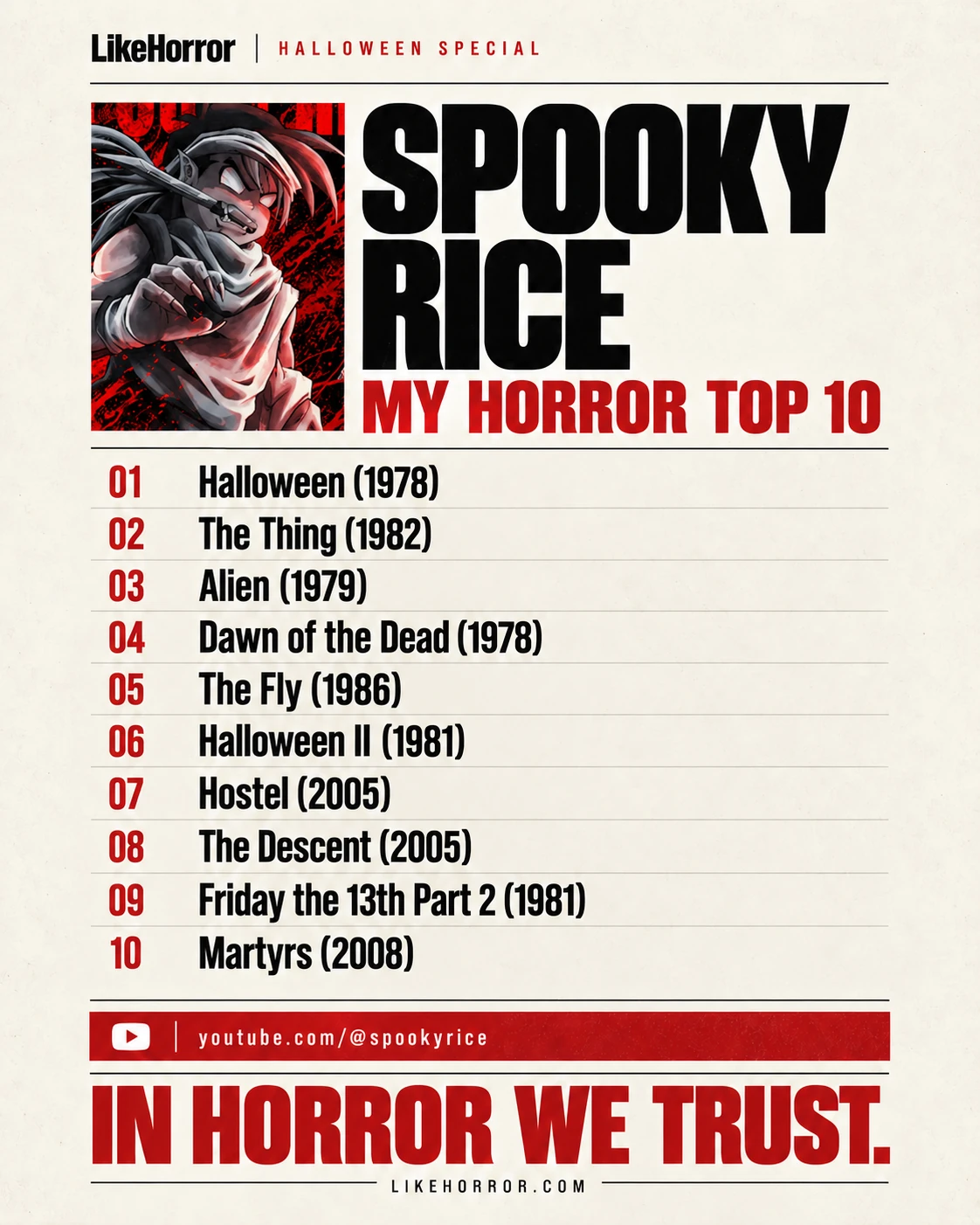
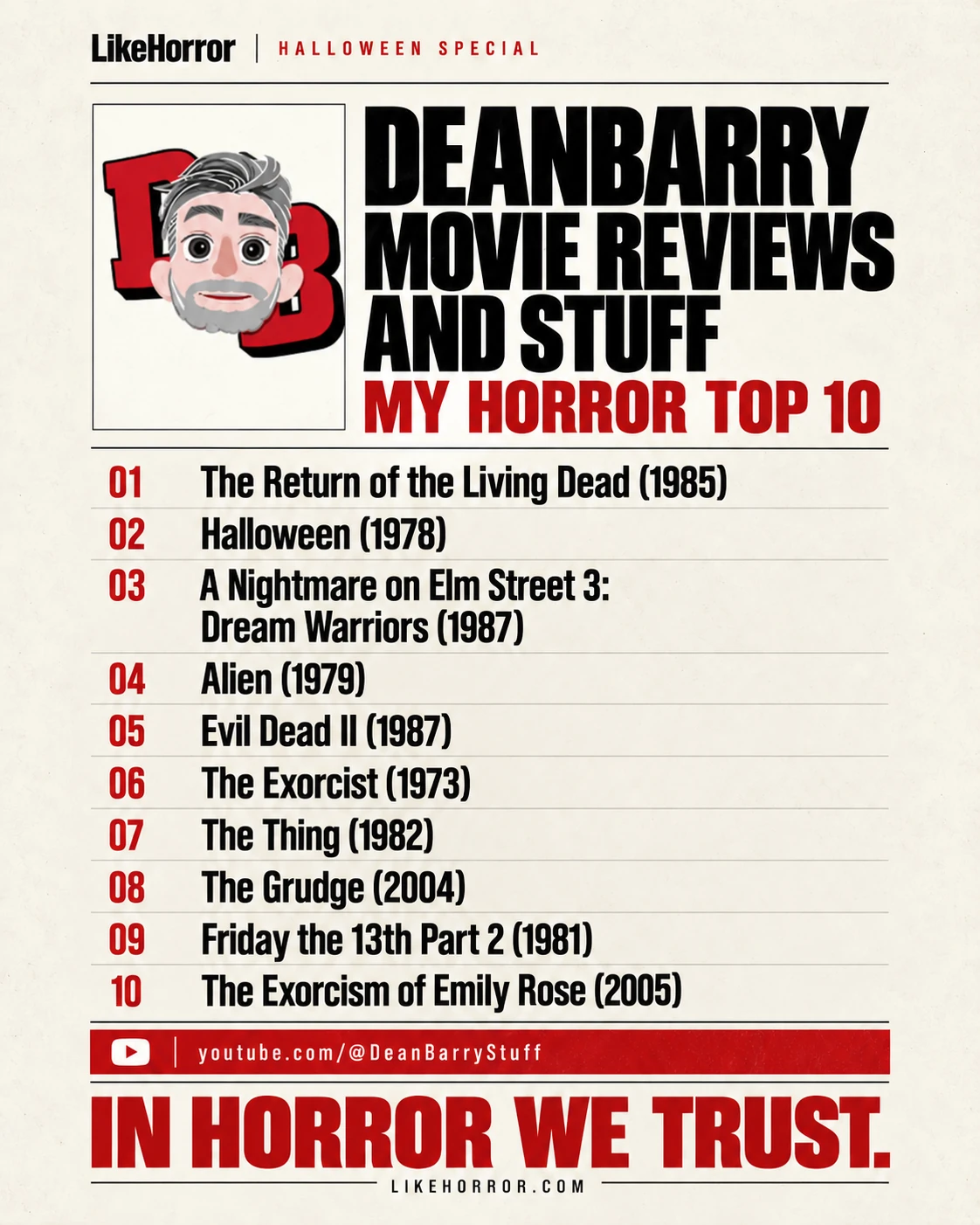
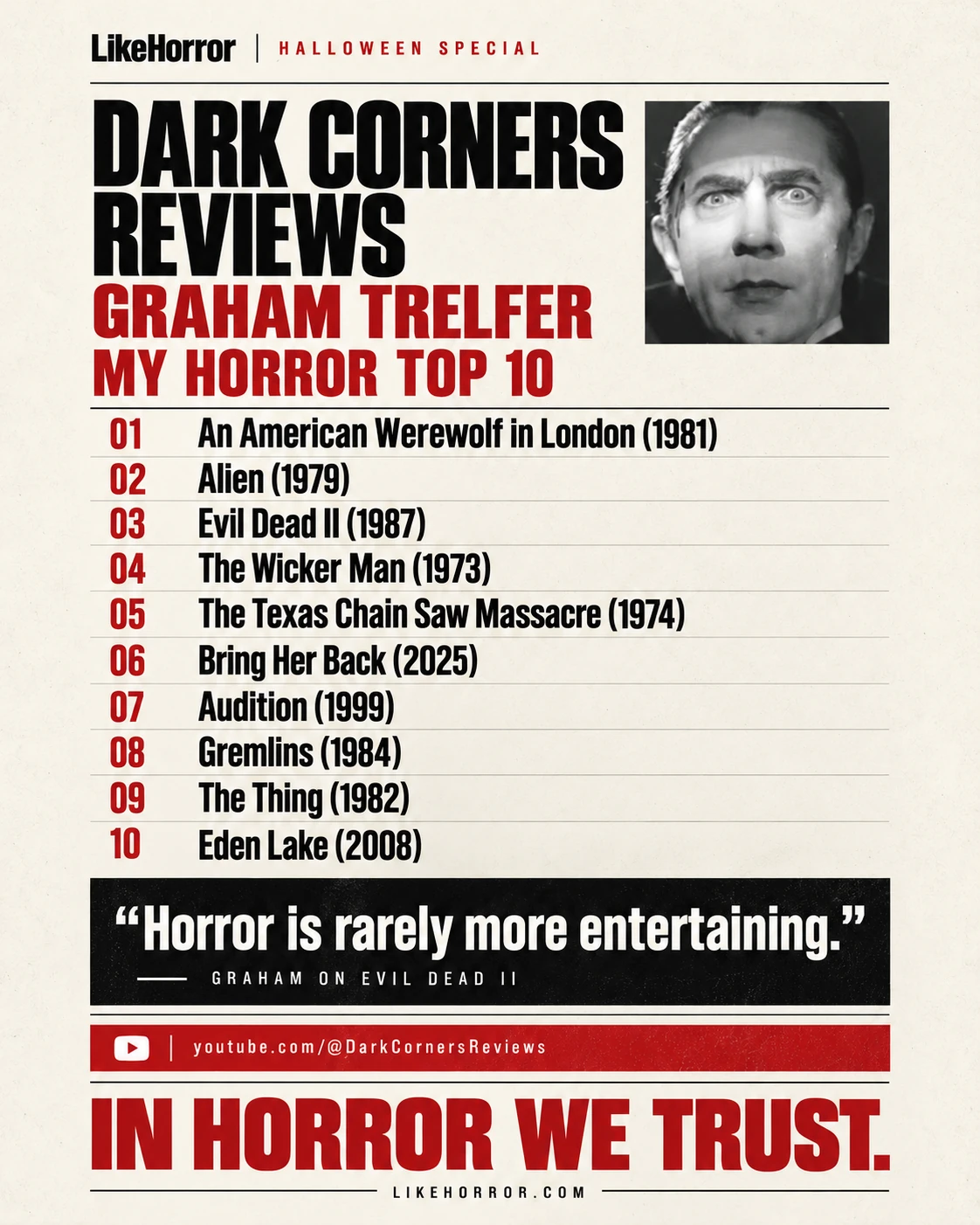
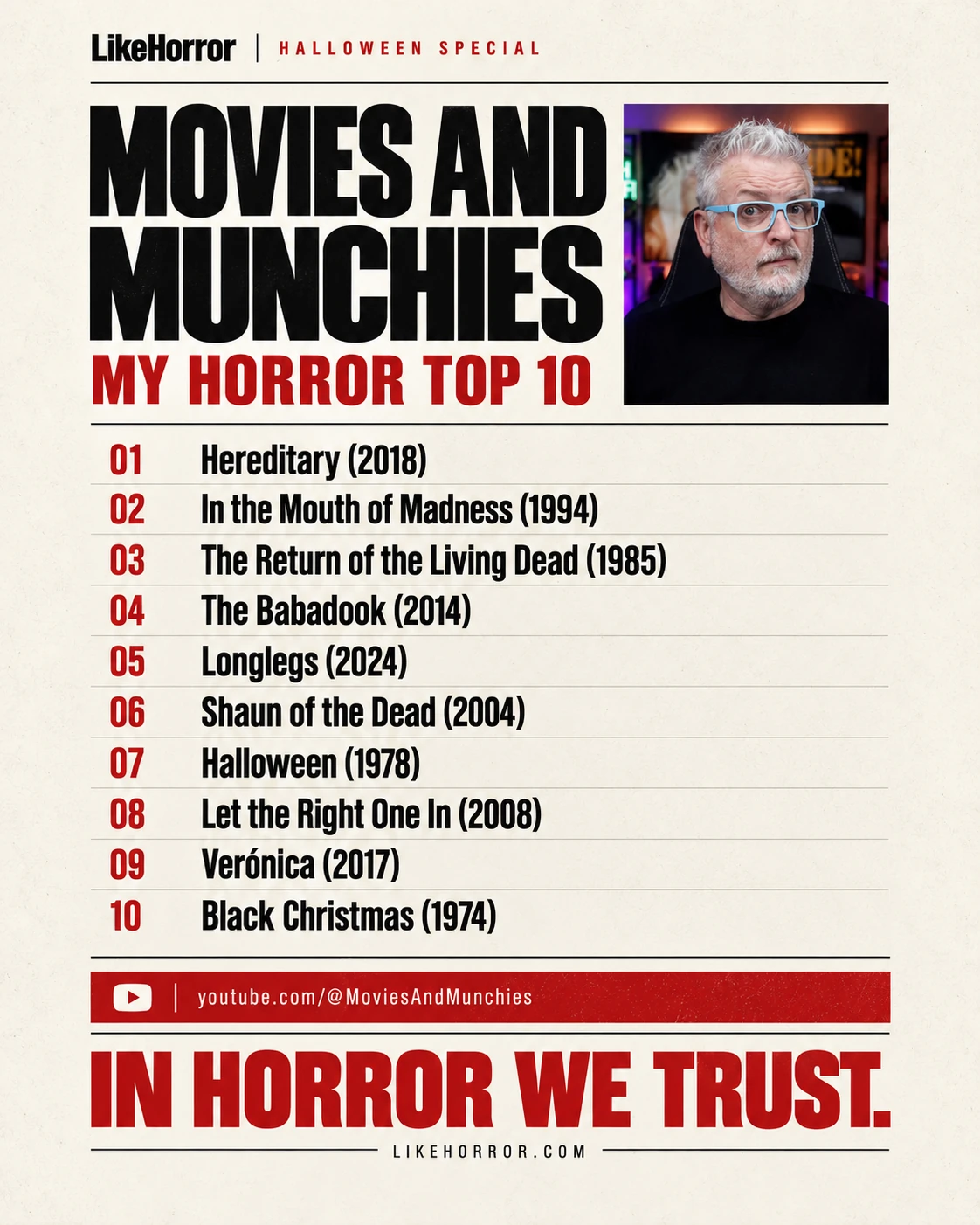
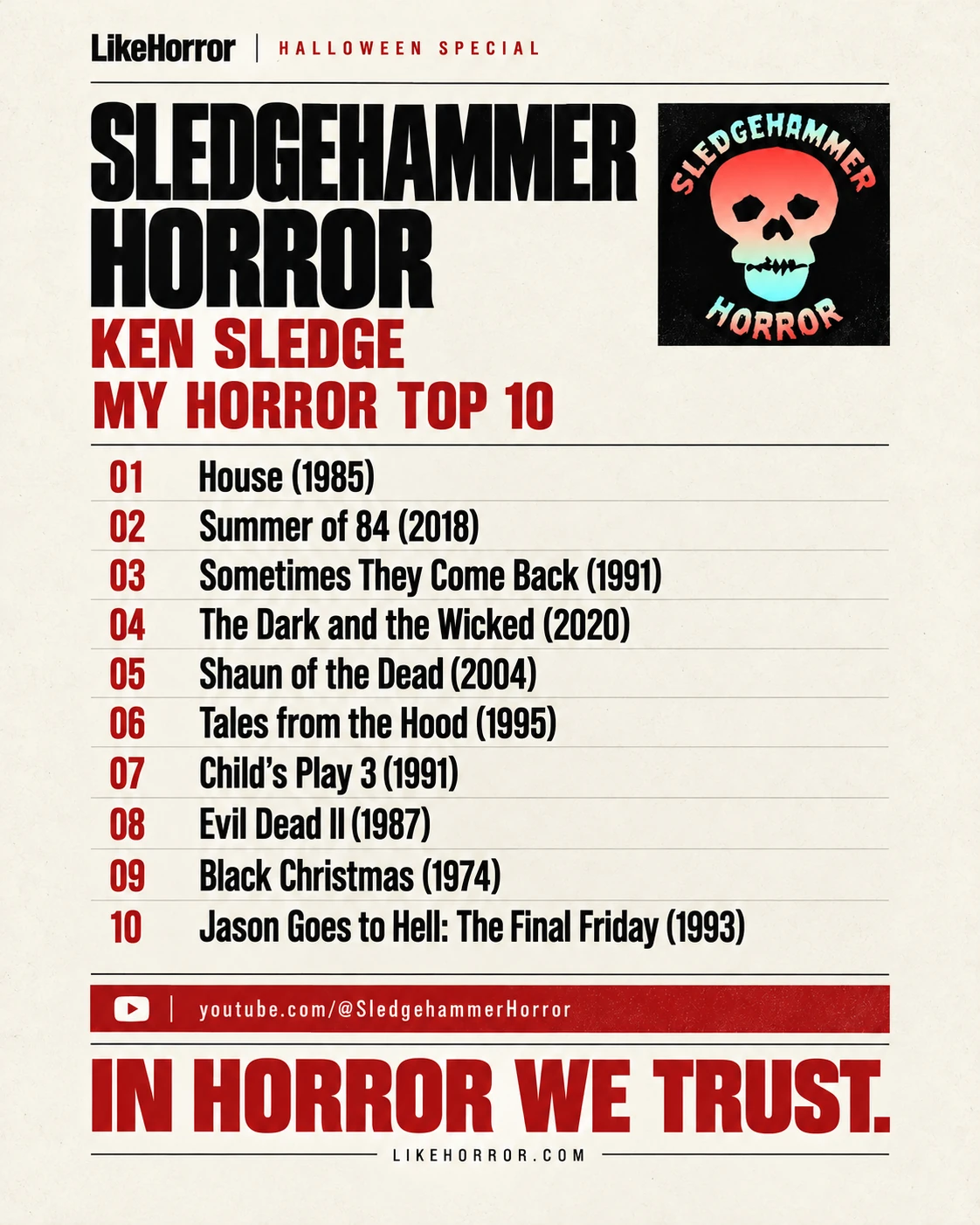
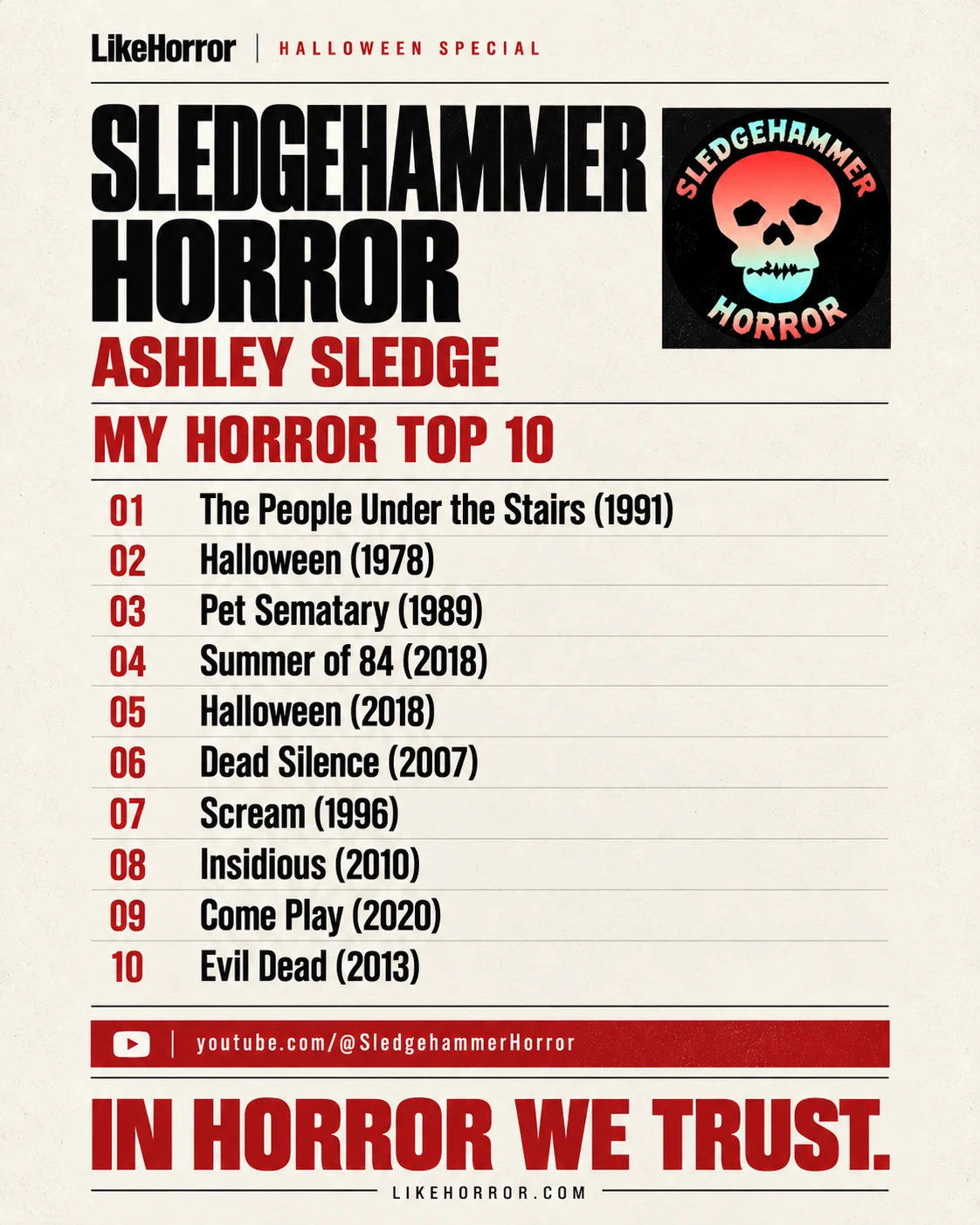
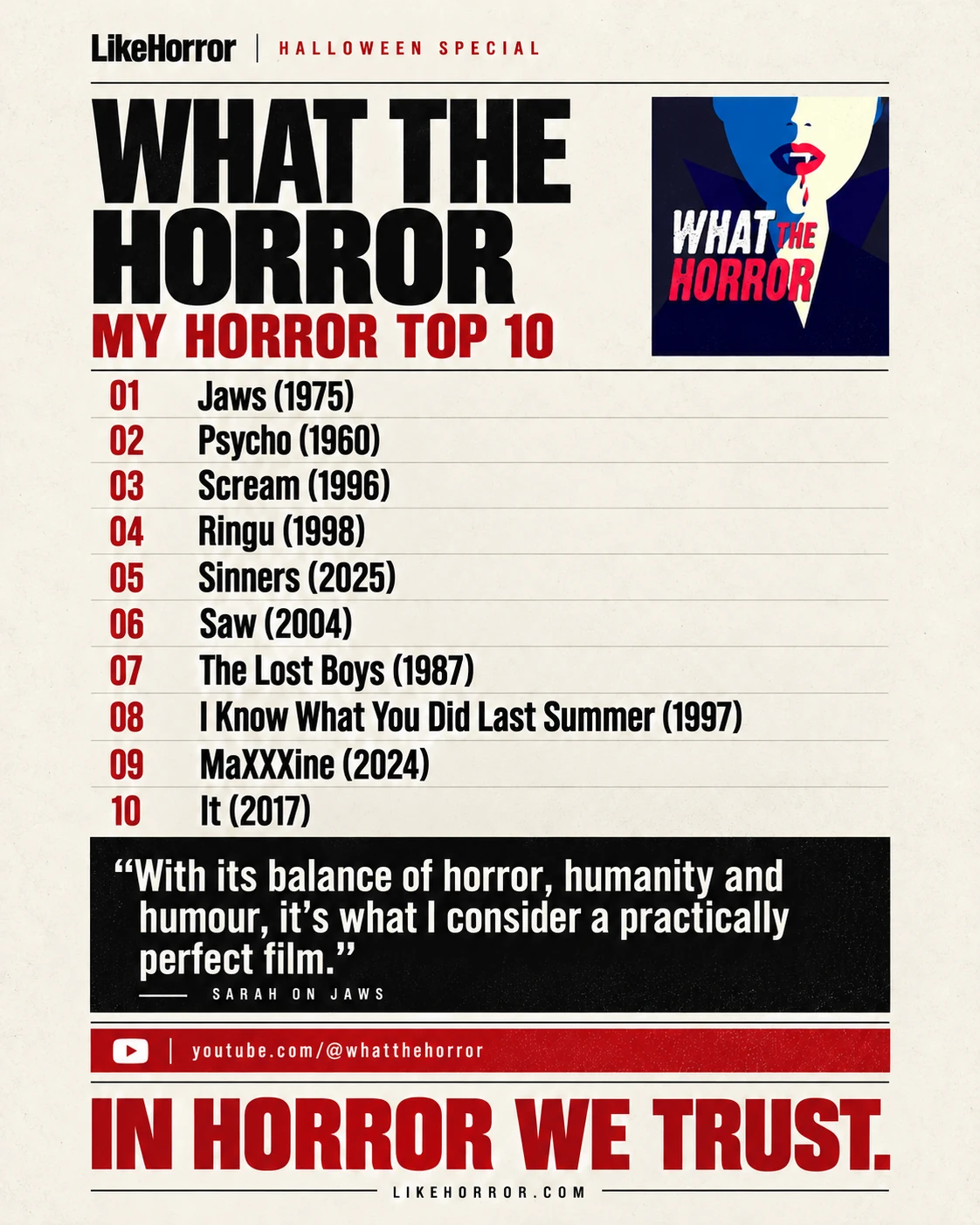
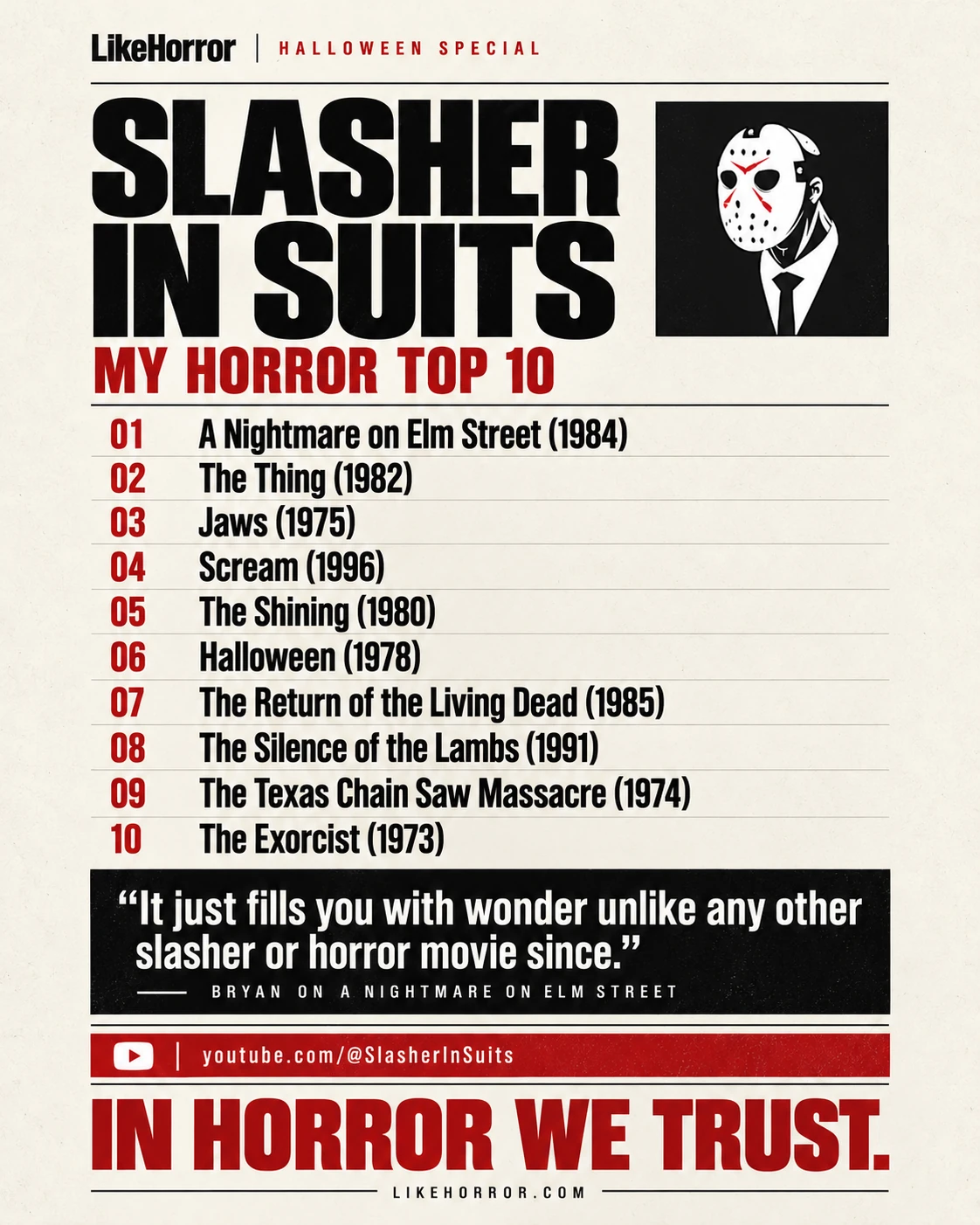
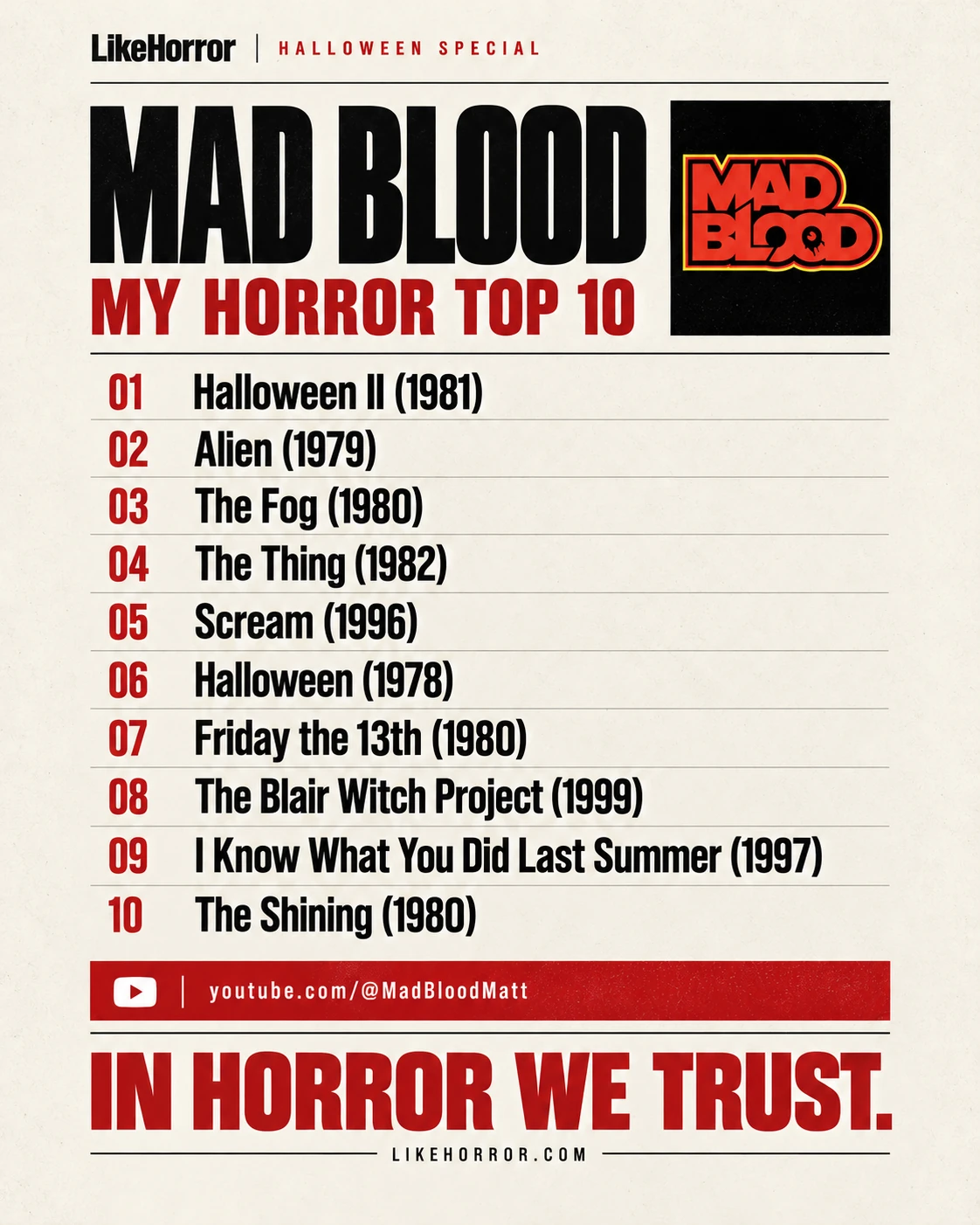
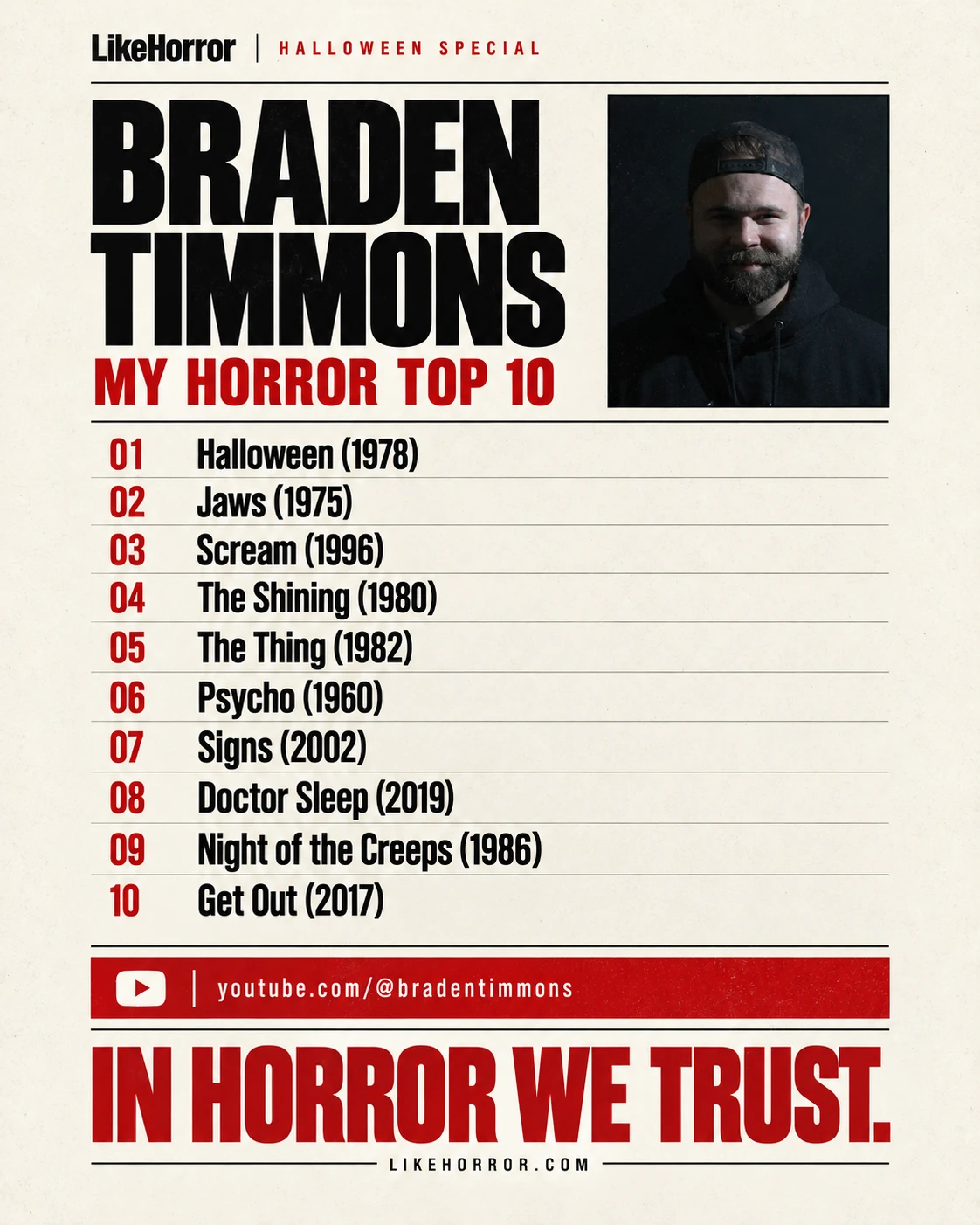
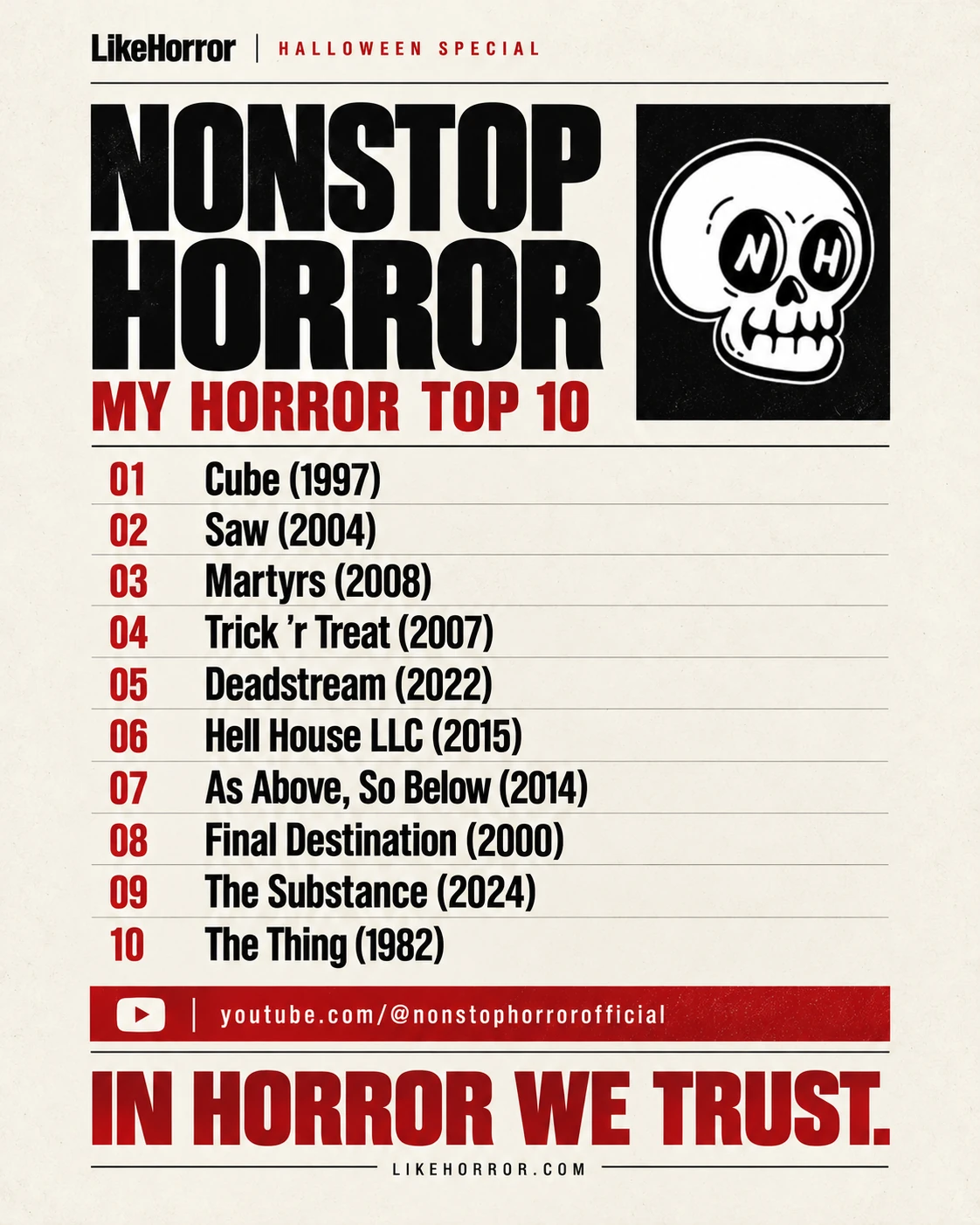
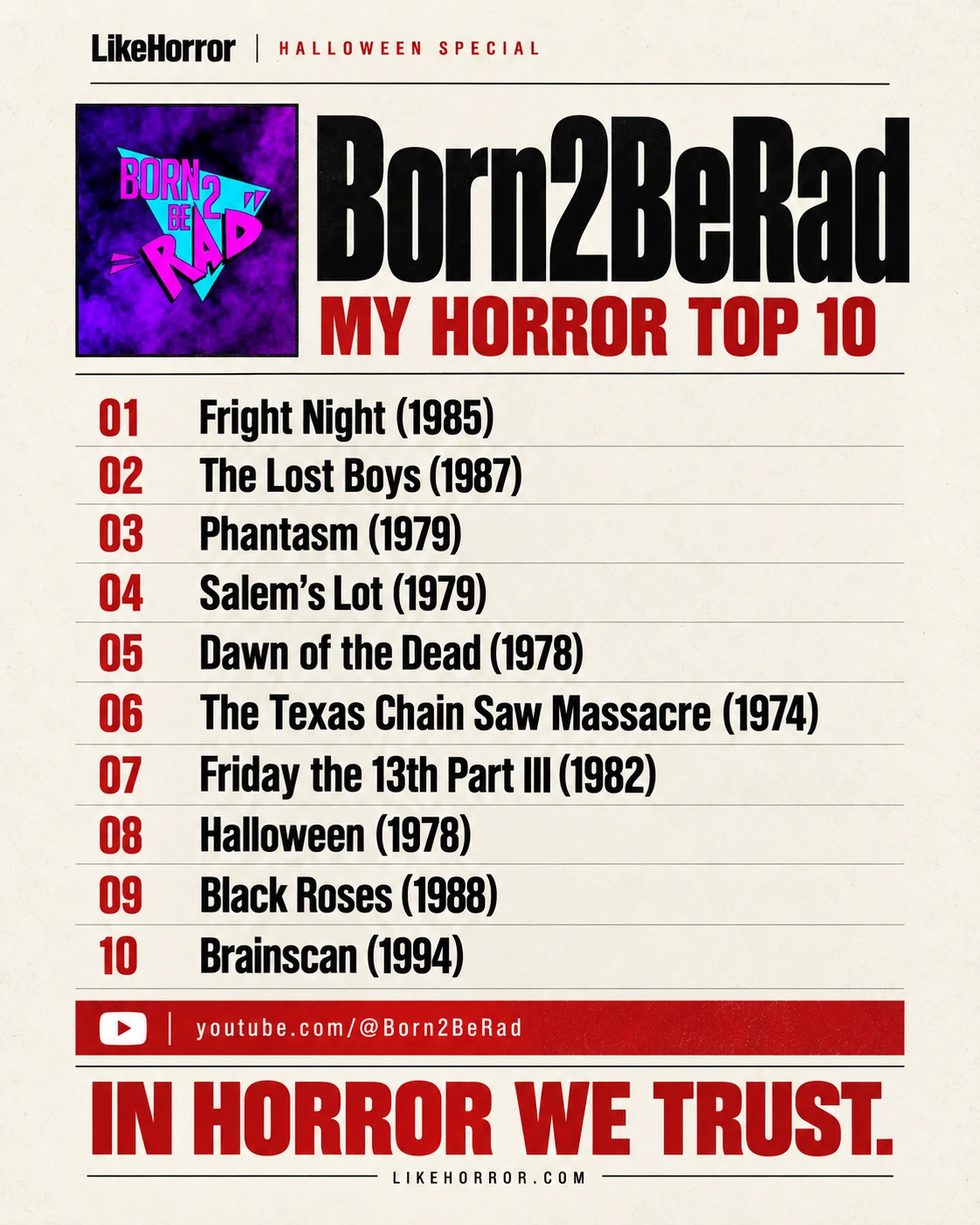
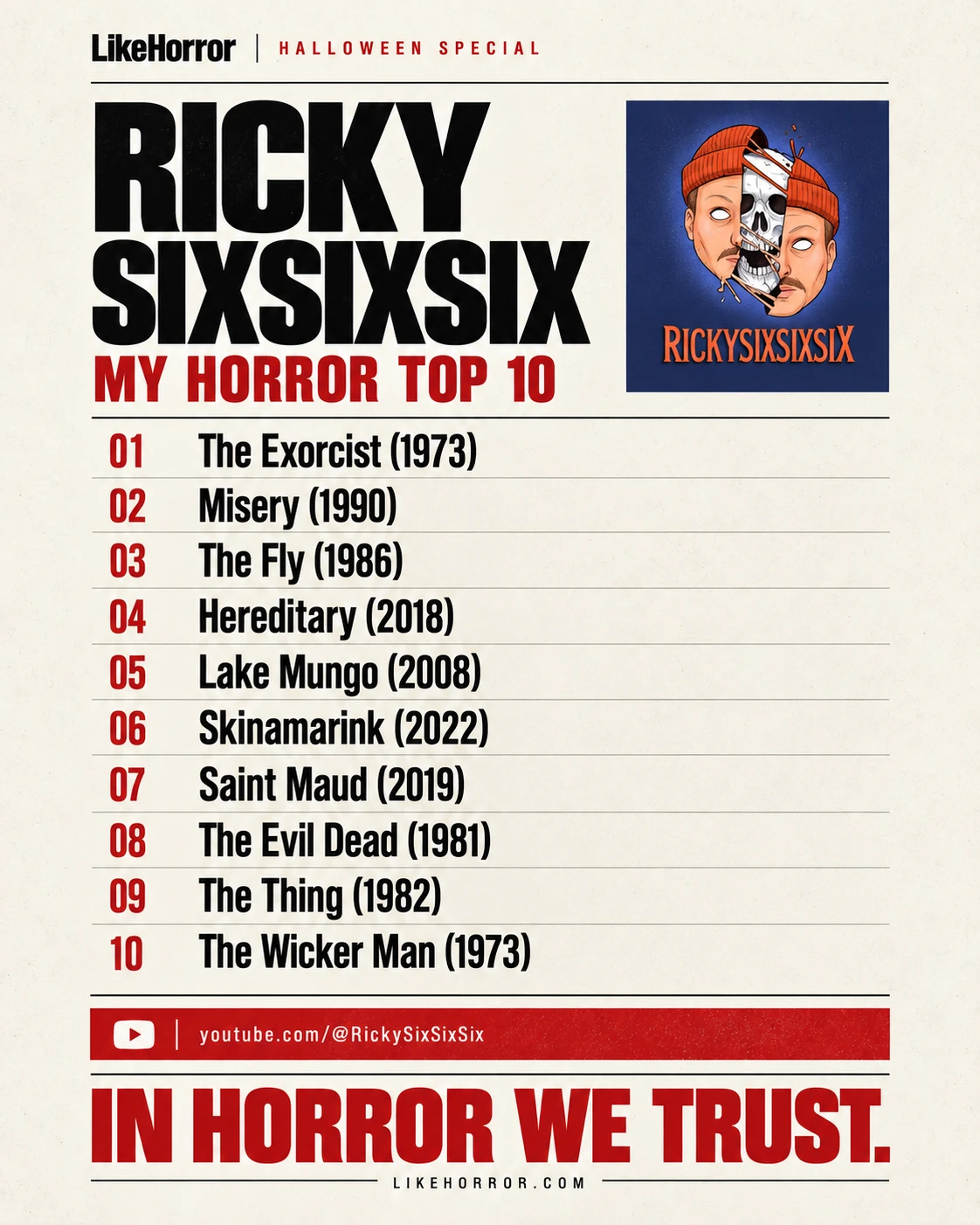
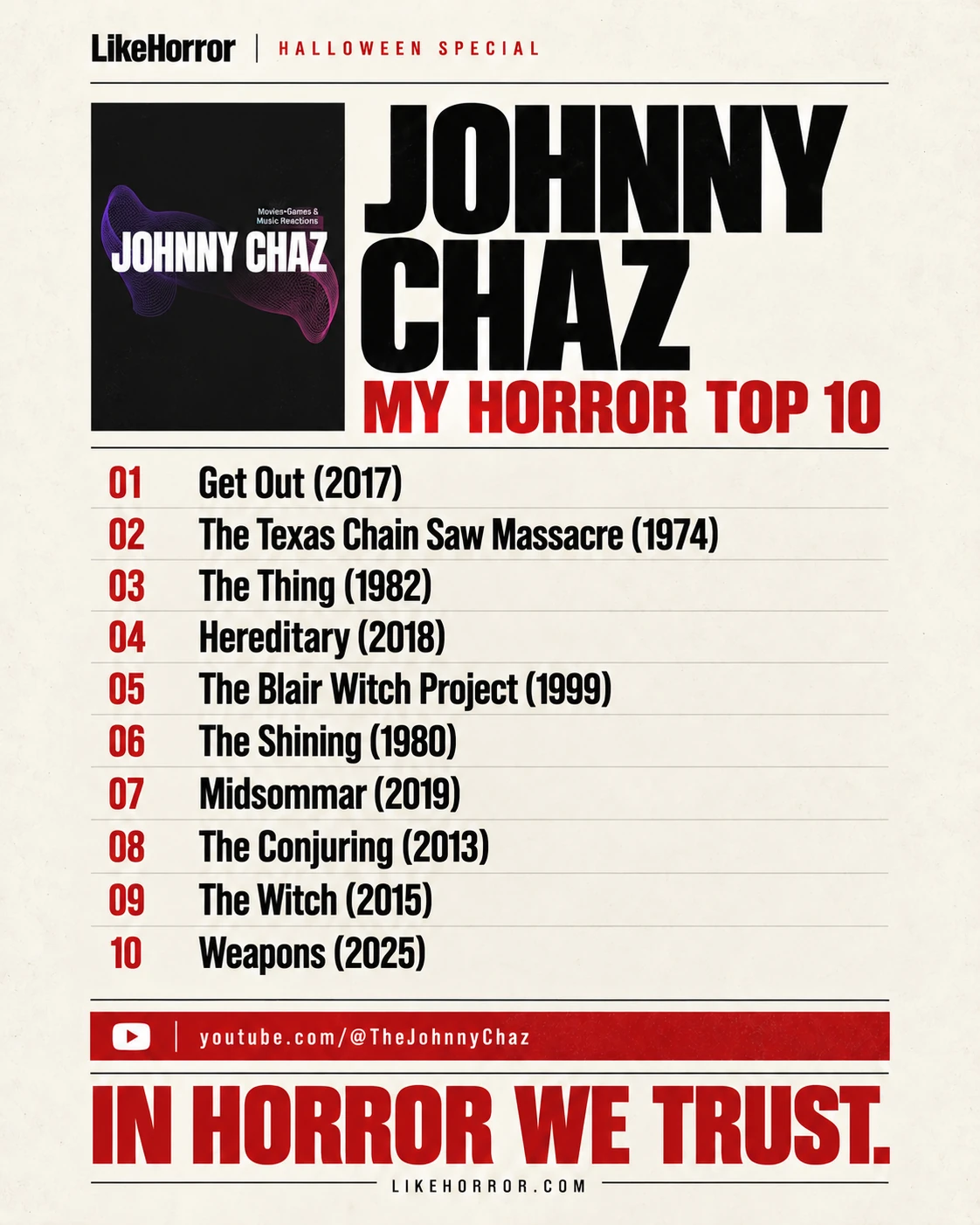
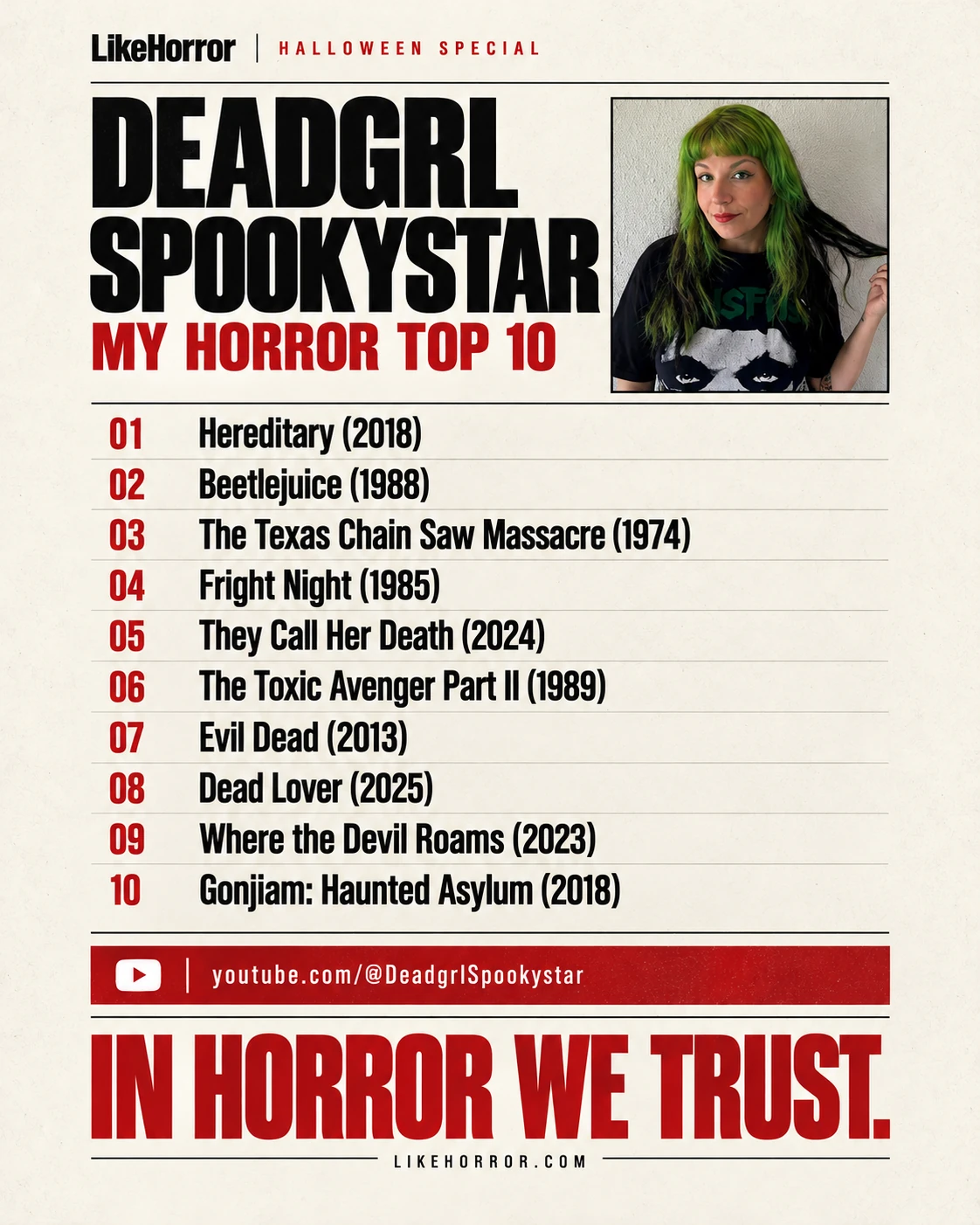
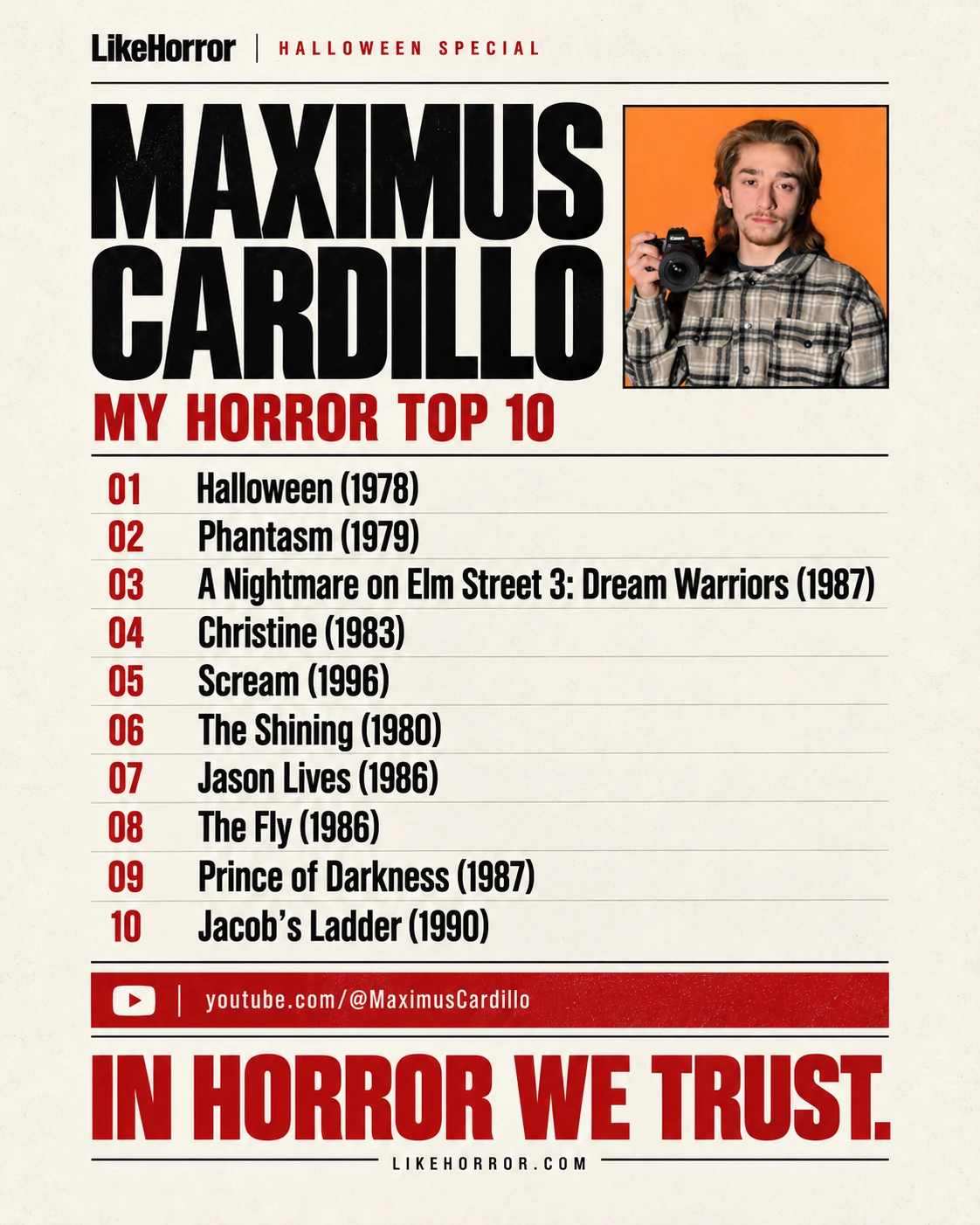
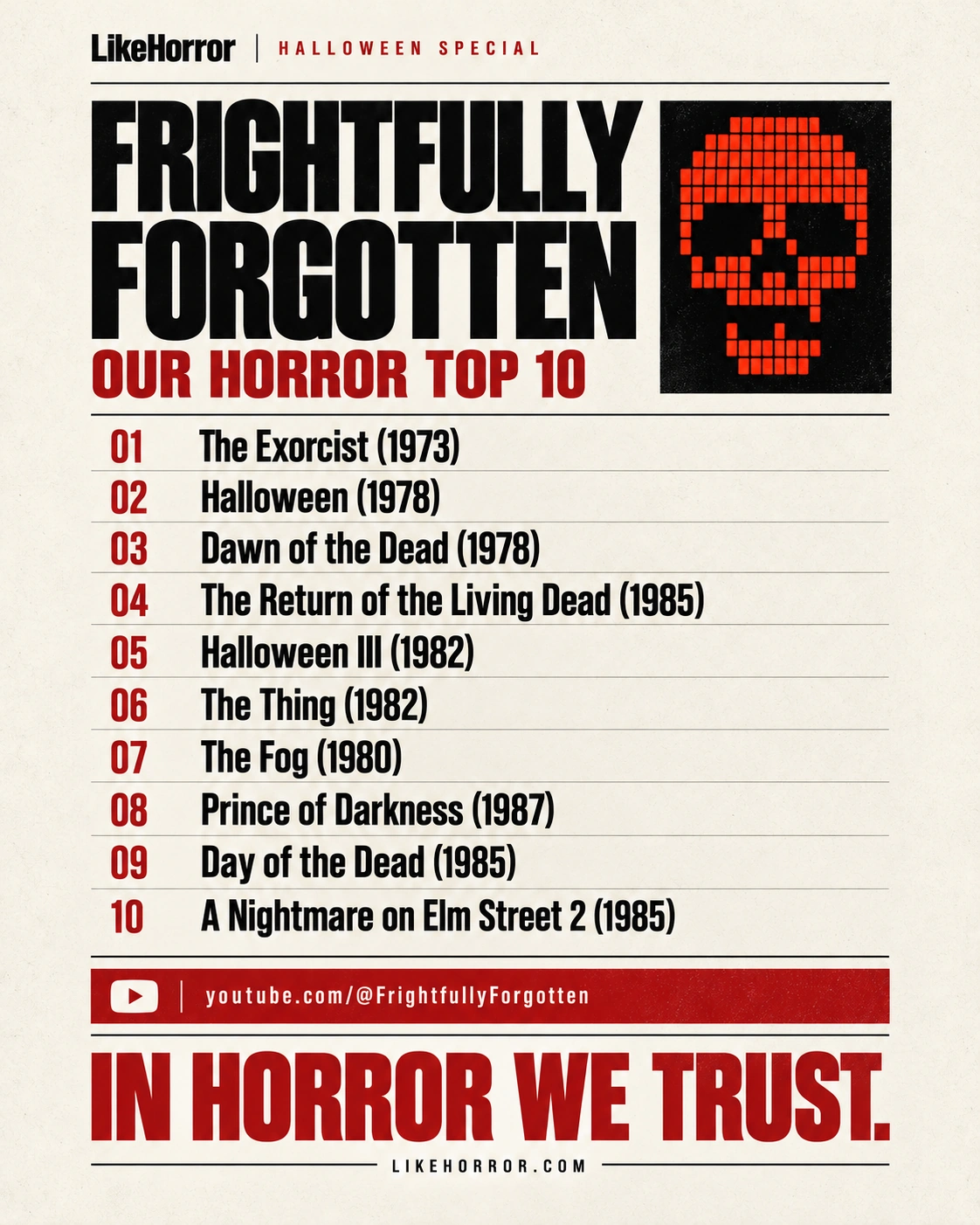
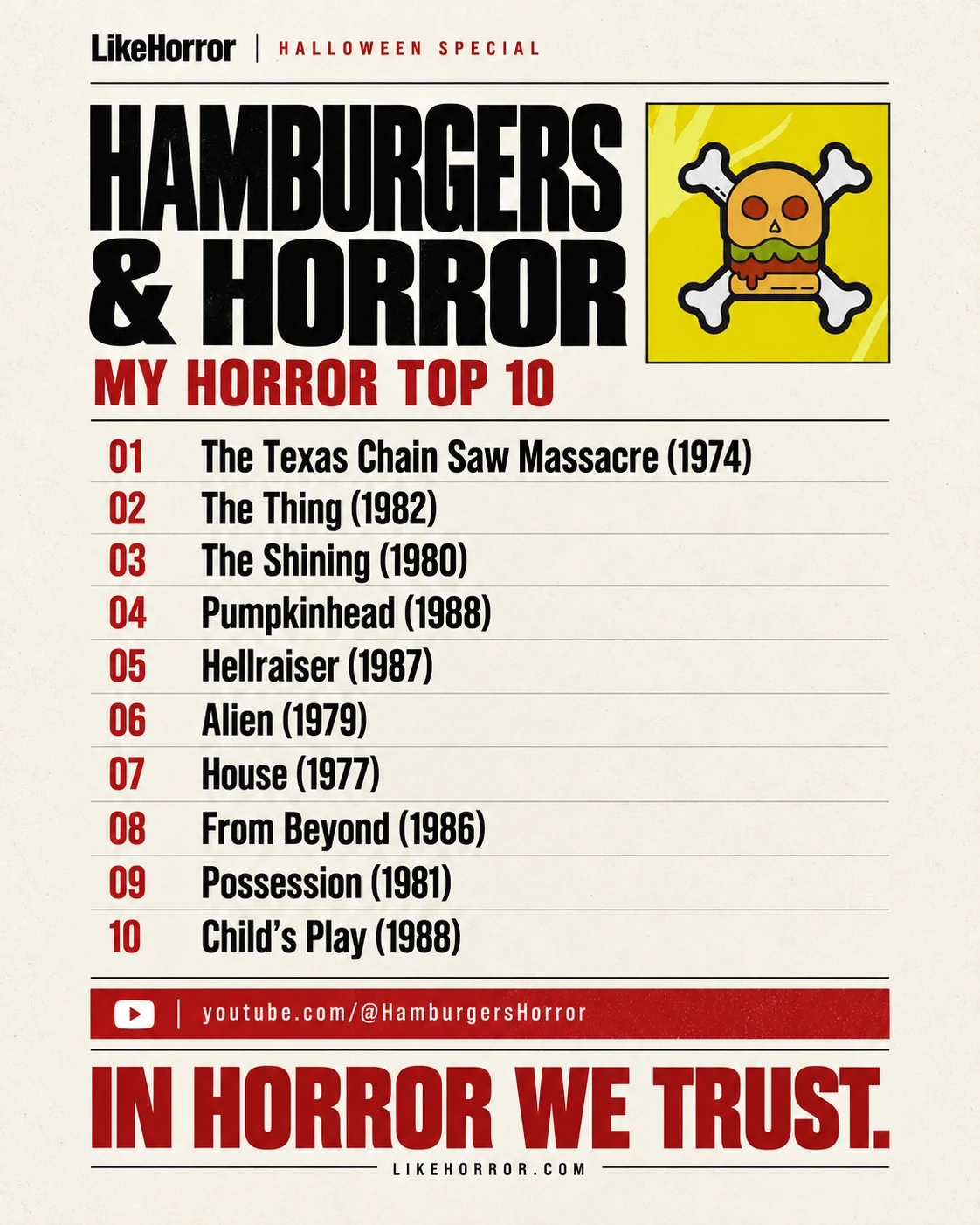
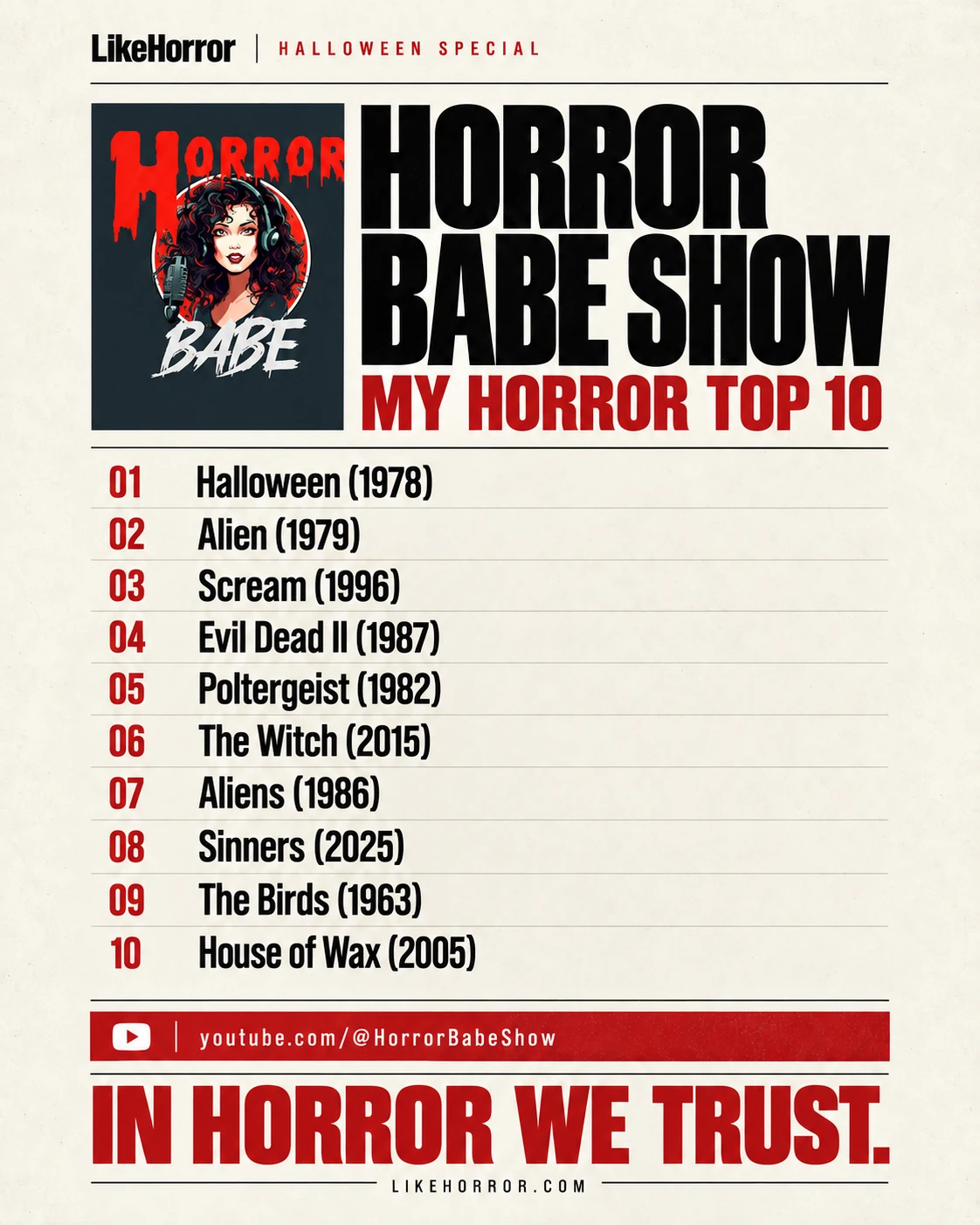
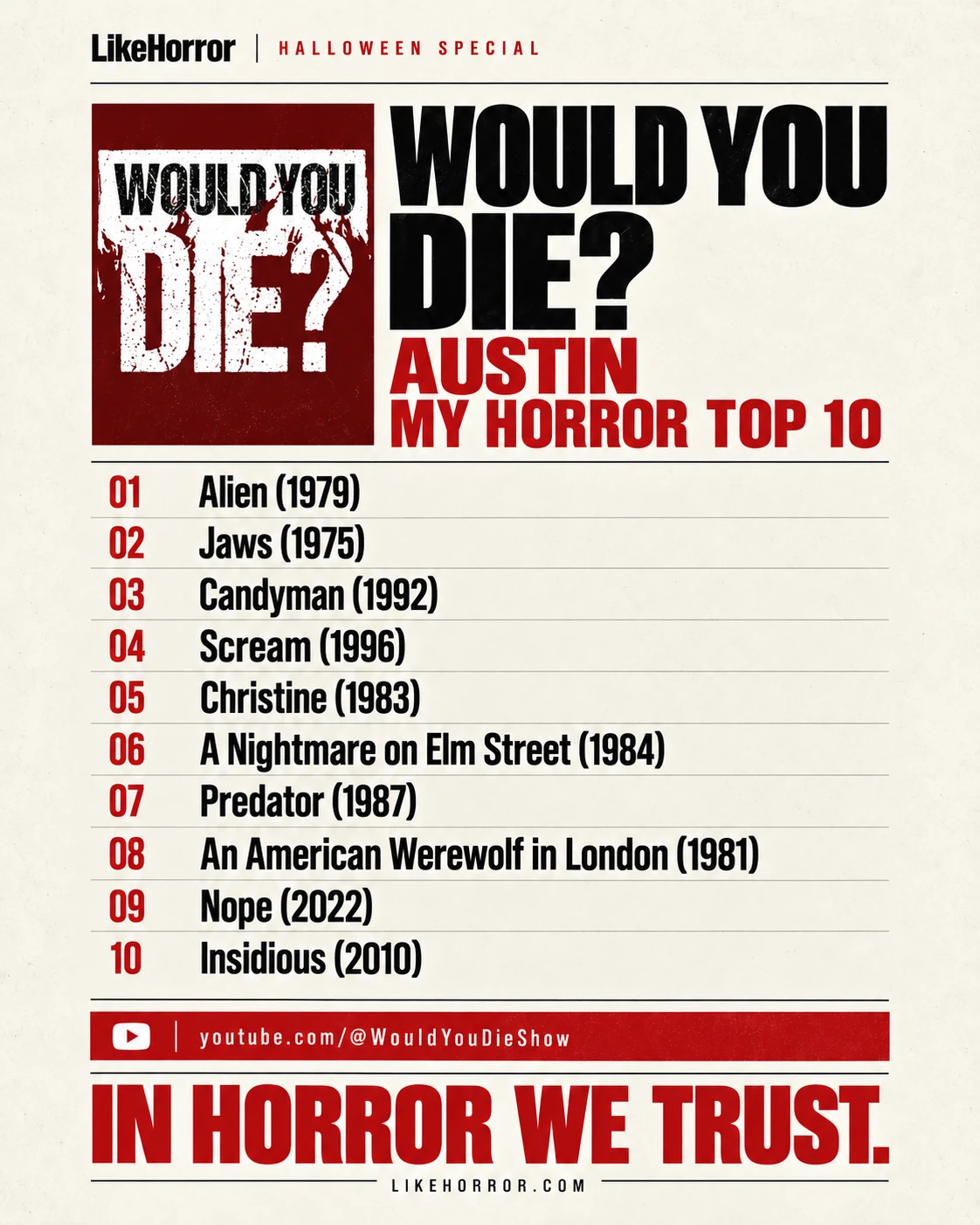
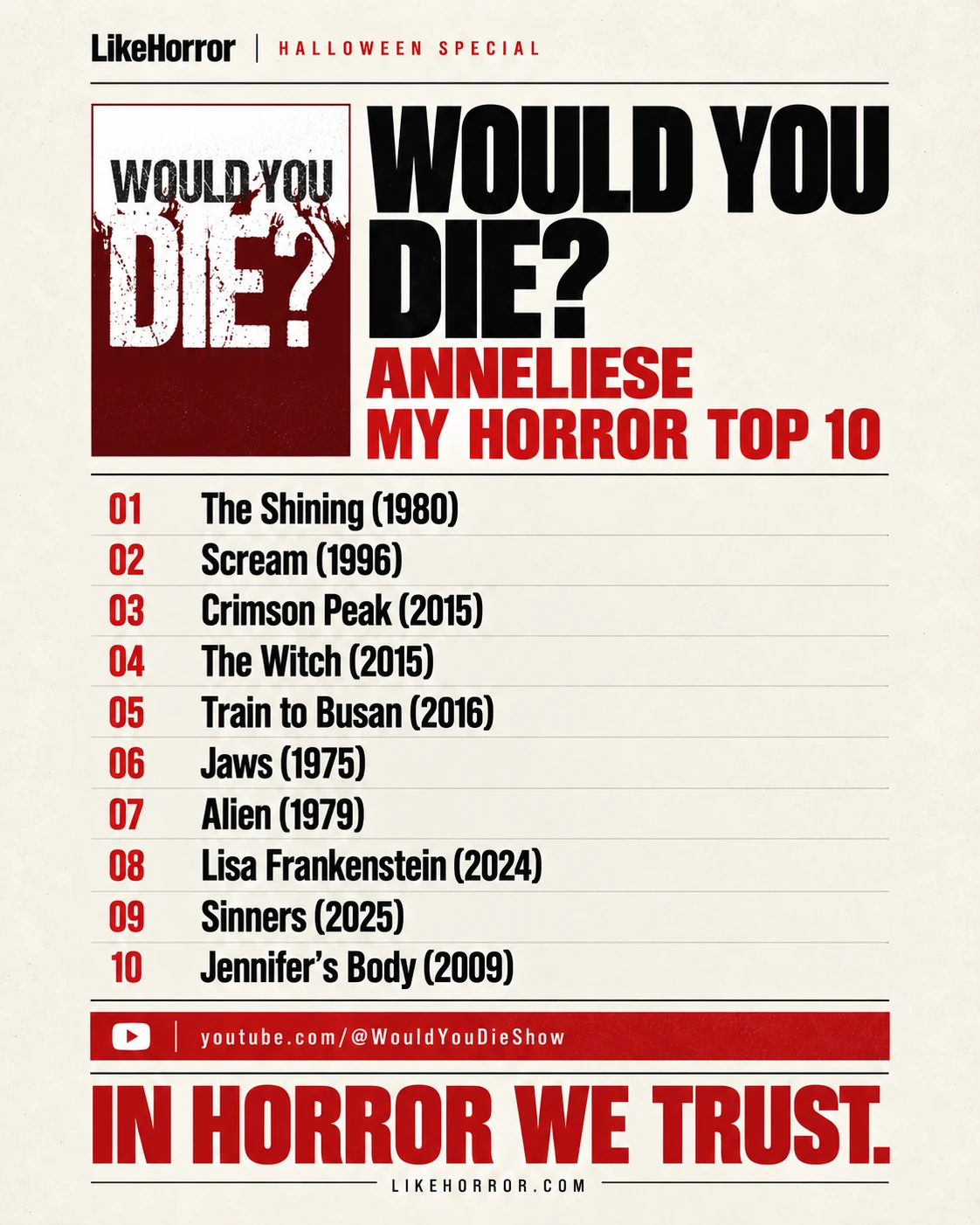
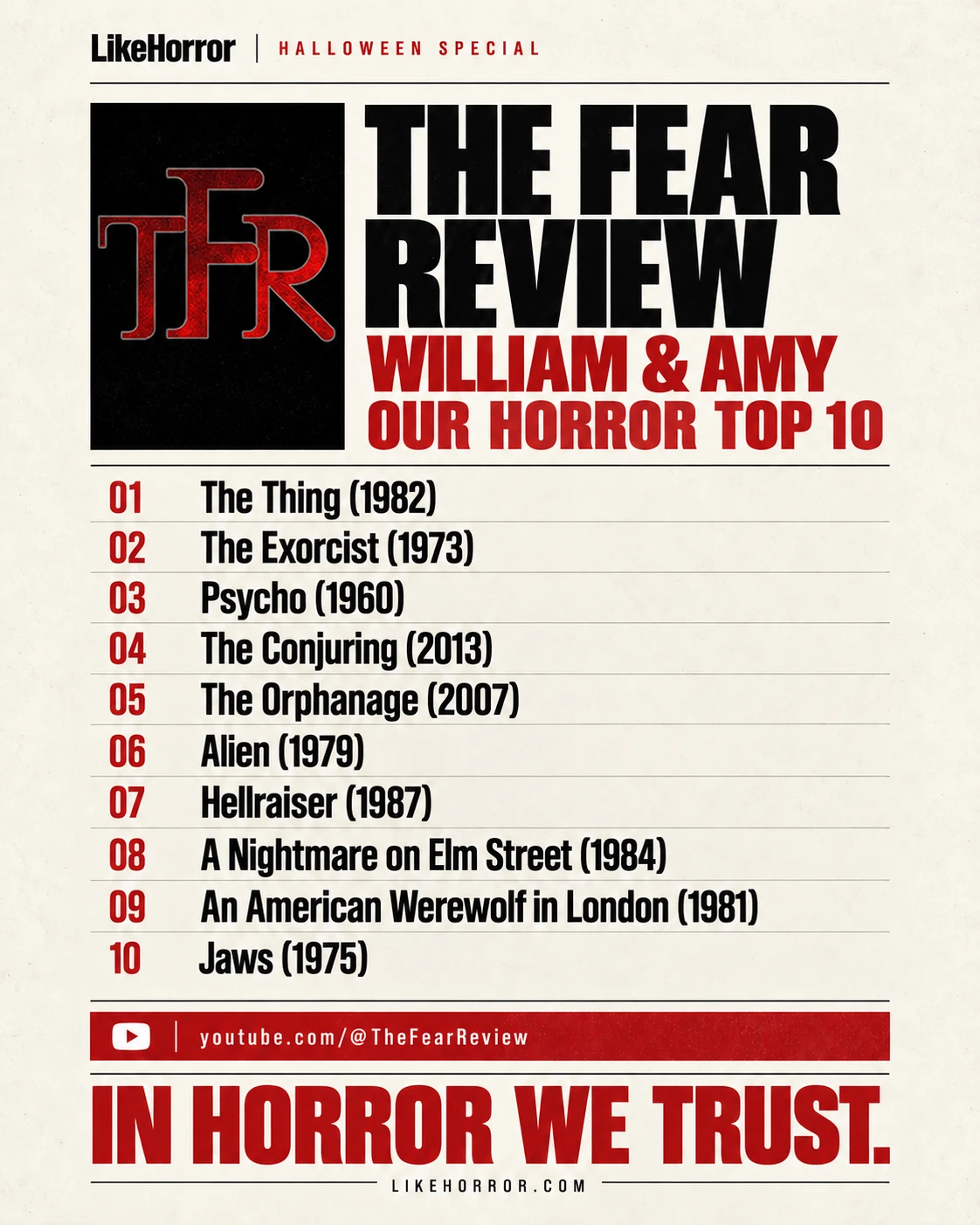
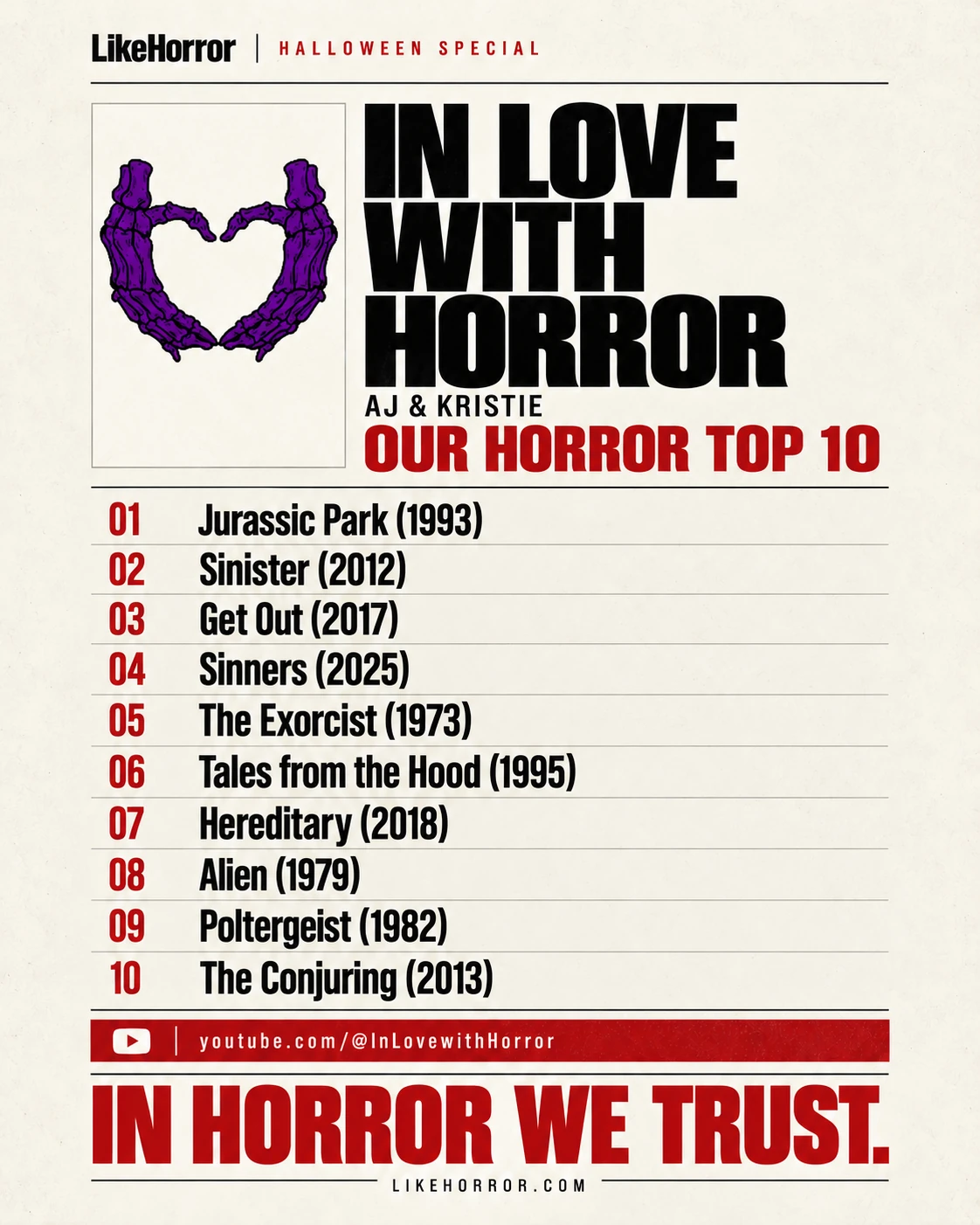
The collective ranking shows where tastes converge. The individual lists preserve the unexpected favourites, discoveries and films that matter more to one person than any established classic.
Select a card to open the full-size image. Channel links appear underneath. Separate lists from co-hosts have their own cards.
Jump to a contributor
- Spooky Rice
- Oliver Harper
- Coopa Collard Reviews
- CineGold
- Jacey Flames
- DeanBarry Movie Reviews And Stuff
- Dark Corners Reviews — Robin Bailes
- Dark Corners Reviews — Graham Trelfer
- Movies And Munchies
- The Popcast Brothers
- MovieFusion
- Critic Box
- Dark Cinema
- Haunted Hippie
- Geekin’ with James Hancock
- Culture Elixir
- Marshall Stannus
- Sledgehammer Horror — Ken Sledge
- Sledgehammer Horror — Ashley Sledge
- What The Horror
- Slasher In Suits
- Mad Blood
- Braden Timmons
- Nonstop Horror
- Born2BeRad
- Ricky SixSixSix
- Johnny Chaz
- Deadgrl Spookystar
- Maximus Cardillo
- Frightfully Forgotten
- Hamburgers & Horror
- Horror Babe Show
- Would You Die? — Austin
- Would You Die? — Anneliese
- The Fear Review
- In Love with Horror
IN HORROR WE TRUST.
