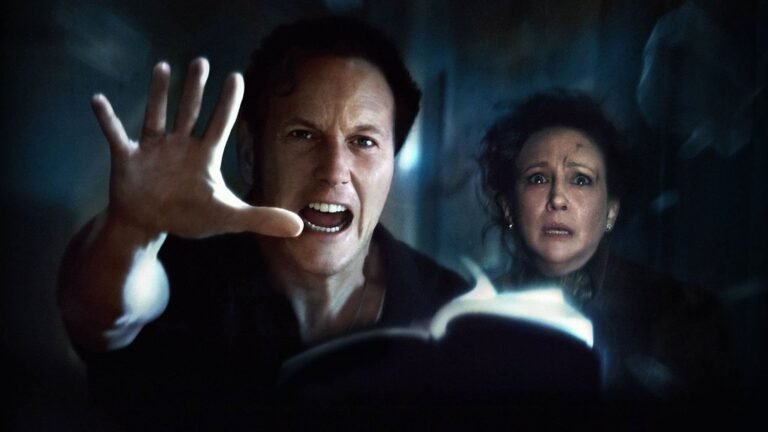
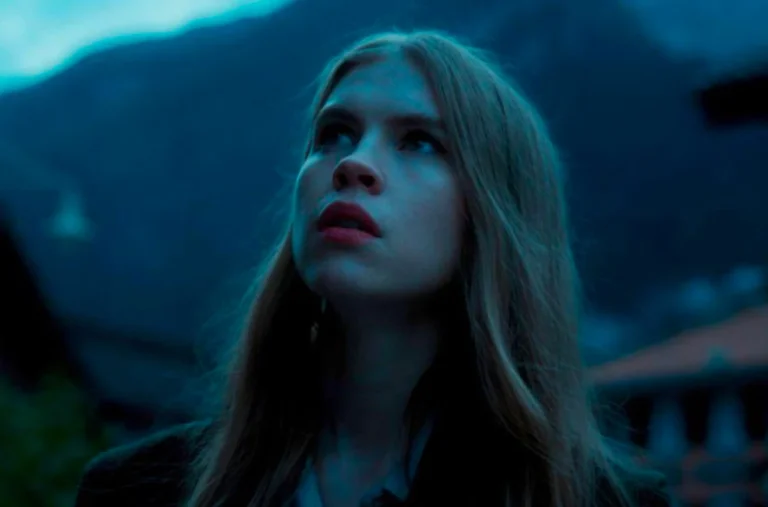
The Conjuring: Last Rites doesn’t just revisit the world of the Warrens; it drags them into a black pit of paranormal dread that demands the final measure of their faith and strength.
It’s a calculated, deeply traumatic cinematic experience that uses every shadow and silence to craft a suffocating sense of terror. Prepare for a film that doesn’t just deliver scares; it leaves a lingering, spiritual bruise.
Ed and Lorraine Warren (Patrick Wilson and Vera Farmiga) return, exhausted and seeking quiet after decades of spiritual warfare.
However, the malignant forces they’ve dedicated their lives to fighting are never truly at rest. A final, deeply personal case surfaces that is too close to home and too profound to ignore. The setting is a quiet corner of America, where a supernatural entity terrorizes an unassuming family.
The haunting doesn’t start with a dramatic entrance; it begins with an insidious presence that manipulates perception and twists familiar comforts into instruments of fear.
A home meant to be a sanctuary becomes a cage, filled with bone-chilling phenomena that defy explanation and relentlessly chip away at the victims’ sanity. The stakes quickly escalate from saving a family to protecting the very soul of their life’s work.
This is a story of a final, desperate fight against an entity of immense, cunning intelligence with a clear motive: to obliterate the foundations of everything the Warrens hold sacred.
✅What Works
The Unbearable Weight of the Past: The film brilliantly weaves in elements from the Warrens’ history without cheap nostalgia. Every scare and every confrontation feels like the cumulative consequence of their life’s work.
Vera Farmiga’s Performance: As Lorraine Warren, Farmiga delivers an emotionally shattering performance. Her clairvoyance is portrayed not as a superpower, but as a grueling curse that leaves her visually and emotionally worn down, making her visions profoundly upsetting.
The Calculated Soundscape: The film eschews rapid-fire jump scares for a more patient, deliberate dread. The sound design is a masterclass in tension, using unsettling silence, sudden guttural noises, and a low, persistent hum to create continuous psychological unease.
A Focus on Family Devastation: The terror is rooted in how the haunting systematically ruins the lives of the victims. The visual and emotional depiction of a family tearing itself apart under supernatural siege is deeply resonant and agonizing.
The Final Act’s Visceral Intensity: The climax is an unflinching battle of wills and faith. It’s an exhausting, high-octane exorcism sequence that feels appropriately grand and definitive for the series’ final installment.
❌Where It Falls Short
The Supporting Family’s Depth: While the haunted family’s predicament is compelling, a few key members lack the detailed characterization needed for audiences to understand their pain.
Familiar Visual Language: Despite the excellent execution, the film occasionally relies on familiar visual tropes established by the franchise (creaking doors, sudden figures in the distance), which may be predictable for seasoned horror viewers.
The “Final” Feeling: While billed as the last rites, the conclusion leaves a small, almost too-clean opening that could potentially allow for future spin-offs, slightly undercutting the promised sense of definitive finality.
Final Verdict 🎯 3/5
The Conjuring: Last Rites is a phenomenal and fittingly terrifying conclusion to the central saga. It’s a film built on trauma, faith, and the immense cost of confronting true evil.
This is not simply a monster-of-the-week entry; it is a meticulous, emotionally draining examination of two people who have spent their lives standing between the living and the relentless dead.
If you want a horror movie that respects its audience while delivering a brutal, unforgettable final act of spiritual horror, this is the one. It is a must-see event that cements the franchise’s legacy as modern horror royalty.
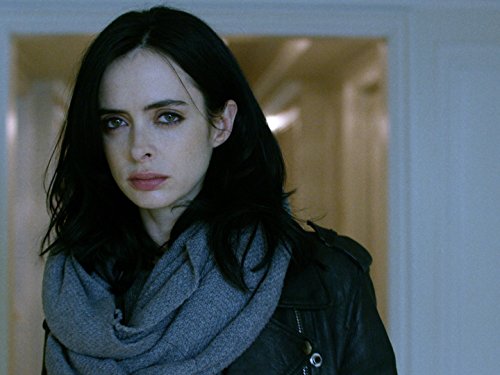
A new scream queen may be stepping onto the horror stage. Krysten Ritter, best known for her roles in Jessica Jones and Don’t Trust the B, in Apartment 23, has officially signed on to star in the upcoming horror thriller Claire.
The film will be introduced to buyers at the American Film Market (AFM) this month, with Twenty-Nine Palms Entertainment and OGM Worldwide handling production and international sales. While plot details are being kept under wraps, Claire is described as a tense and deeply atmospheric horror experience that dives into psychological unease and personal dread.
Ritter’s casting is already generating buzz among horror fans. Known for her dark wit and magnetic screen presence, she brings both strength and vulnerability to her characters, traits that make her a natural fit for modern horror’s more character-driven storytelling. Her move into this genre suggests a fresh creative turn after years of success in television and comic-adaptation drama.
Industry watchers are also paying attention to Claire’s unveiling at AFM, which often serves as the launchpad for the next wave of festival-bound genre hits. With indie distributors and international buyers on the lookout for smart, original horror, Claire could emerge as a breakout title heading into 2026.
No release window has been announced yet, but sources indicate that filming is expected to begin soon after AFM wraps, with more casting and production details expected before year’s end.
Whether Claire leans into supernatural chills or psychological breakdowns, one thing’s certain, Krysten Ritter’s return to darker material has fans and critics eager to see what nightmares she brings to life next.
Horror streaming platform Shudder is launching November with a bold move: the exclusive streaming premiere of Sew Torn, dropping today in the United States.
Directed by Freddy Macdonald, Sew Torn follows the story of a seamstress who steals a briefcase from a botched drug deal, only to become entangled in multiple possible timelines of violent consequence. The unique “choice-driven” plot structure gives the film an edge of unpredictability as the protagonist’s decisions cascade into drastically different outcomes.
This premiere marks more than just another release. For Shudder, the move signals the service’s commitment to original and exclusive horror content, not merely licensing older titles. For viewers, Sew Torn is precisely the kind of fresh, high-stakes horror many have been waiting for.
Additionally, Shudder’s November lineup features other strong titles, both films and series, making it a stacked month for horror enthusiasts.
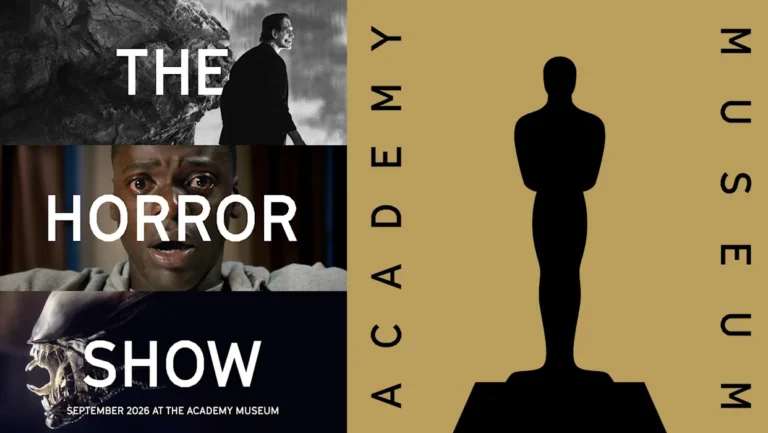
LOS ANGELES: The Academy Museum of Motion Pictures has revealed a major new exhibition dedicated entirely to horror cinema. Titled “The Horror Show”, the immersive experience will explore the cultural, psychological, and cinematic impact of horror films, and will be on display from September 20, 2026 through July 25, 2027.
According to the museum’s announcement, the exhibition will not simply show posters or props in a static format, instead, visitors will walk through recreated sets, interactive installations, and virtual-reality experiences that trace horror’s evolution from early monster films through psychological thrills to modern boundary-pushing genre works. The museum emphasises that this will be a “cine-experience” as much as a retrospective, and aims to “bridge the gap between cinema and experience, celebrating horror’s enormous cultural power and enduring popularity.”
The timing of the announcement is noteworthy: horror has recently enjoyed box-office strength, streaming popularity, and growing recognition as a legitimate film form that reflects wider social fears. For fans of the genre, The Horror Show offers a rare chance to engage with horror not just as entertainment but as art, history, and immersive spectacle.
What makes the exhibition especially compelling is its scope. It promises to highlight how horror has served as a mirror to societal anxieties, identity shifts, technology fear, and even cinematic innovation. Items expected to be included- though the museum has not released an official list, may range from early Universal-era monsters to contemporary found-footage thrillers, with contextual installations helping to tie the visuals to real-world fears and filmmaking techniques.
How do you feel horror reflects the fears of its time, and which film best captured your era’s anxiety?
Horror stories continue to dominate as the most popular genre in movies and TV. And while there are multiple reasons why horror is so enduring, which we will delve into later, among the most popular stories in this genre are those dealing with the supernatural and paranormal, particularly those ‘based on’ or ‘inspired by’ actual events. One of the big reasons for this is the global fascination and ever-growing demand for all things supernatural and paranormal.
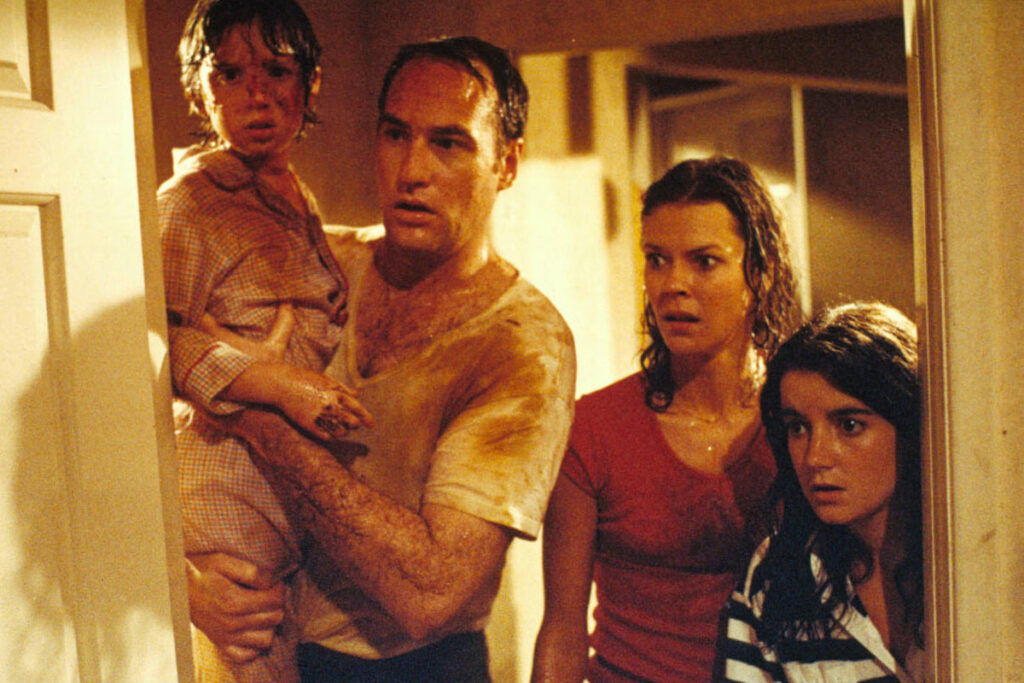
Poltergeist (1982) haunted house horror classic
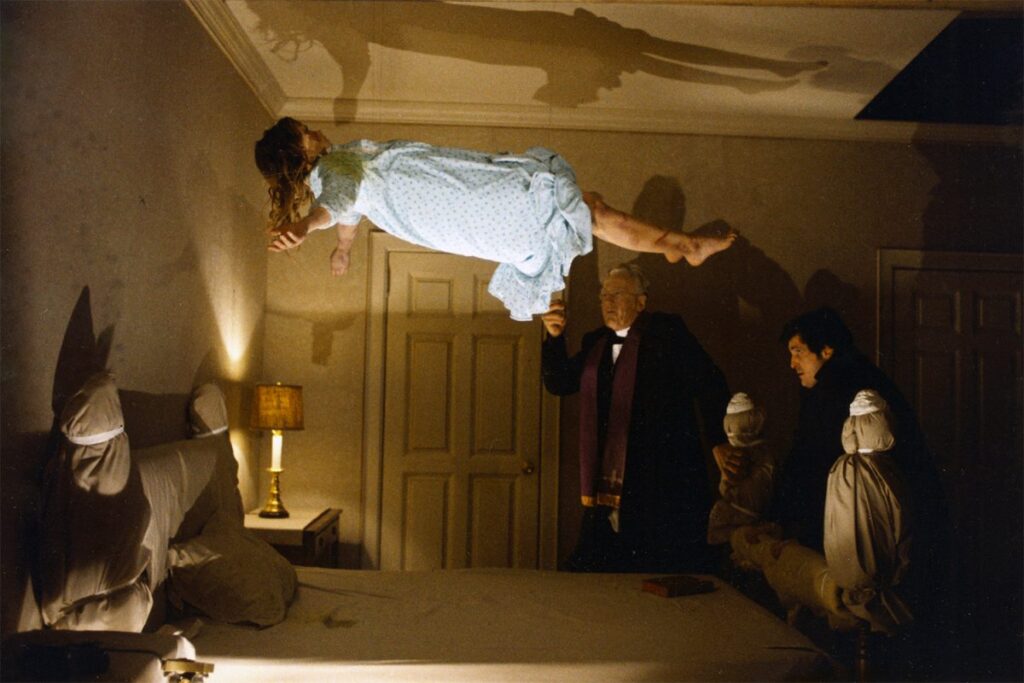
Iconic movies like “The Exorcist” and “Poltergeist” have left indelible impressions on the psyche of the movie-goer, not only because they are brilliant film creations, but because every aspect of the cinematic experience feels integral and natural, suspending the audience’s sense of disbelief. Now add to that the realization that the origins of both these creations were loosely inspired by actual accounts and experiences of real supernatural phenomena, their cinematic status leaps to a whole other level! Consider “Paranormal Activity”; arguably one of the most financially lucrative horror film franchises ever made. Its novel and still enduring take, now referred to as “foundfootage”, utilizing a first-perspective, cinema vérité style, creates the beguiling illusion to its audience that they are ease-dropping on “real events”, blurring the lines of reality and thereby creating a very chilling realistic experience! And in that regard, the brush with disturbing pseudo-real paranormal phenomena is more than enough to grip audiences the world over! It is again this brush with aspects of our real world that captivates and transcends that of a traditional fictitious horror film.
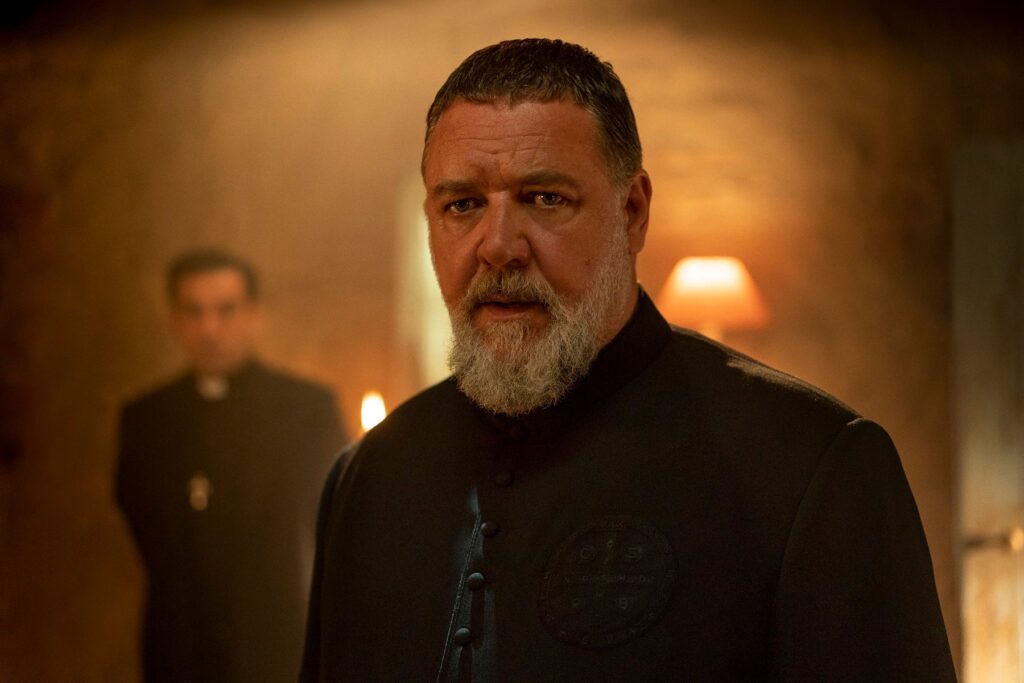
The Pope’s Exorcist (2023) exorcism horror with Russell Crowe
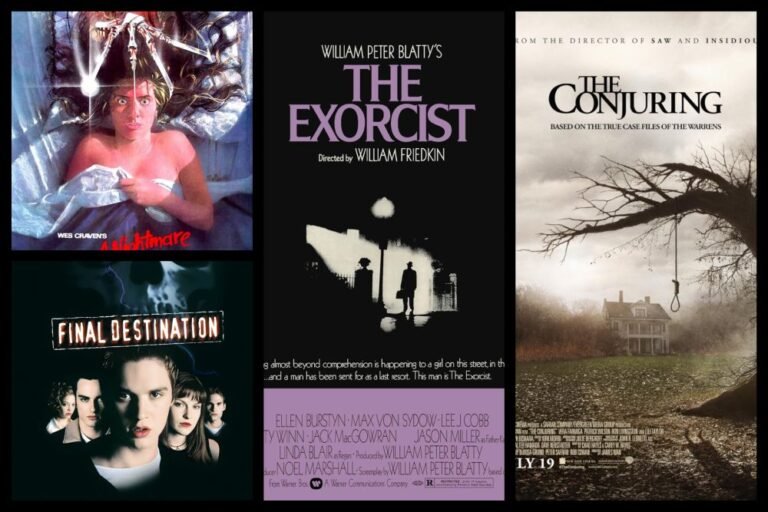
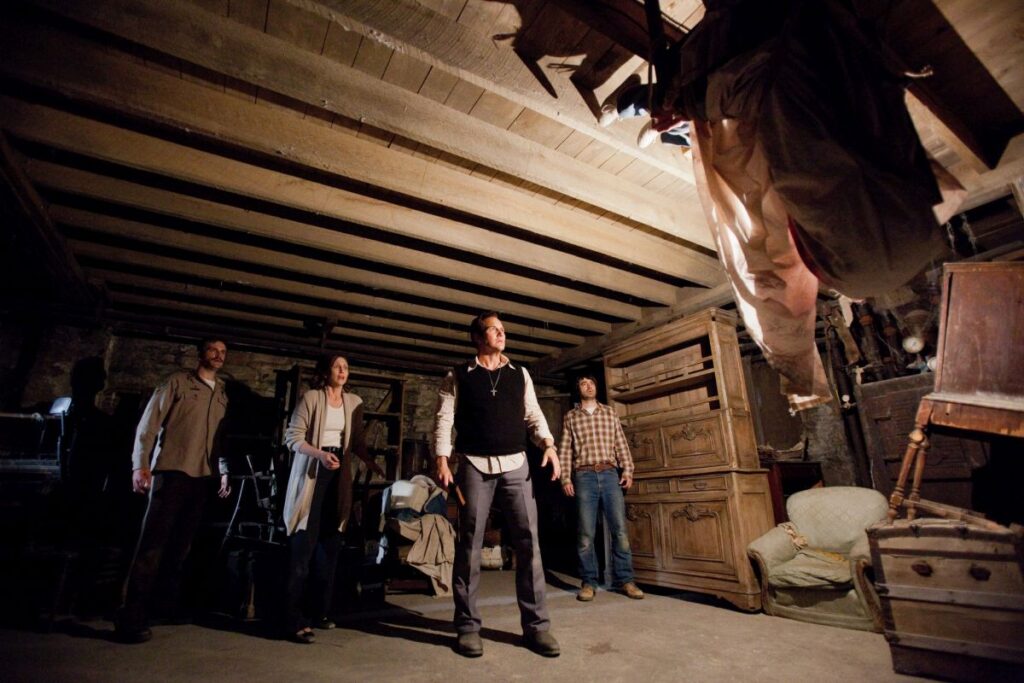
Countless writers, directors and producers have given credit to actual experiences and anecdotal accounts of real paranormal events that spawn stories behind horror movies. Movies like, “The Amityville Horror”, “The Serpent and the Rainbow”, “The Exorcism of Emily Rose”, “Fire in the Sky”, “The Mothman Prophecies”, “The Conjuring” and “The Pope’s Exorcist”, all inspired by or based on some manner of true accounts. Audiences of these films were not only entertained by chilling film experiences, but they were also haunted (for lack of a better word) long after leaving the theater with the unsettling fact that there was some degree of truth to these horrifying stories! Surprisingly enough, even some of the most popular fictional horror films contain elements that are similar to actual reported cases, including “The Shining”, “IT”, “Final Destination”, “A Nightmare on Elm Street” and “The Grudge”, just to name a few, proving that the ongoing real-life encounters with the paranormal and supernatural, interfused into some form of entertainment, all but ensure for a well-received chilling experience. But how true and accurate are the depictions in movies and claims of real-life events?
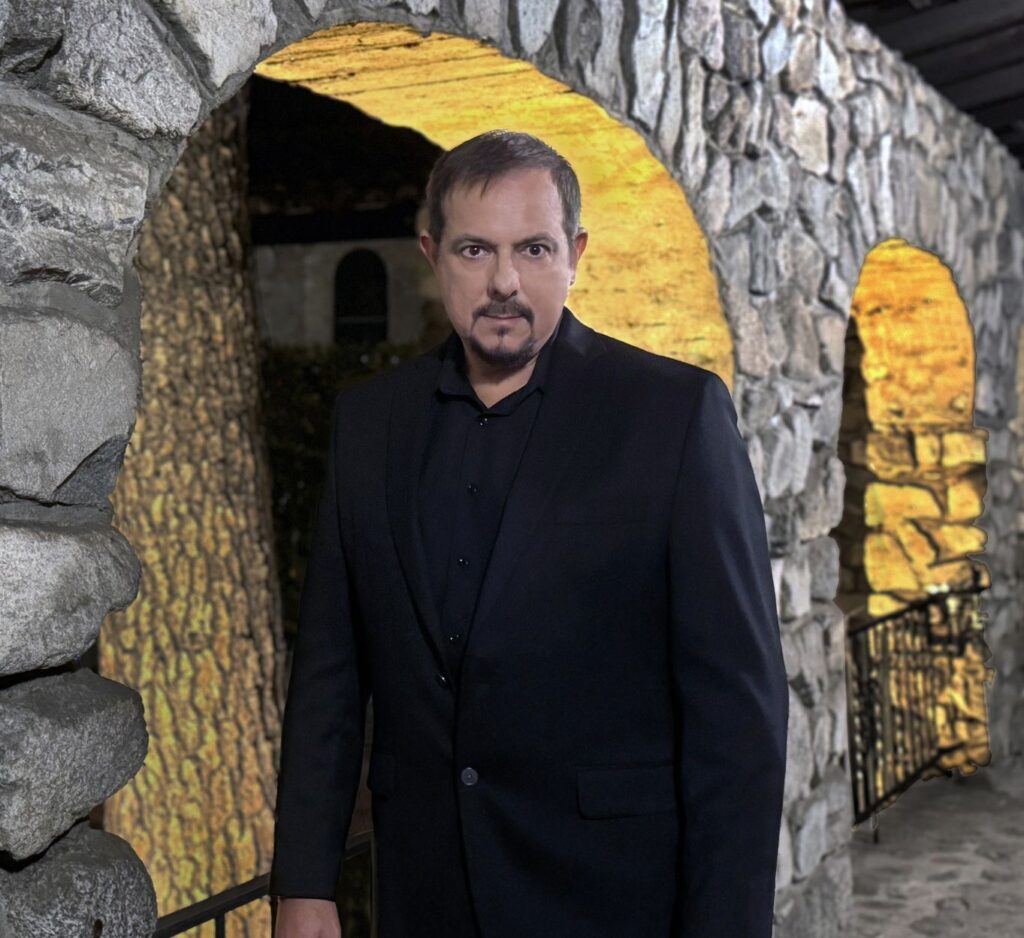
To answer this and other related questions I asked Christopher Chacon; who has one of the most fascinating résumés in showbusiness! A writer, producer and director for TV and film that got his start as a professional Magician/Illusionist, he is also one of the world’s foremost authorities on supernatural, occult, paranormal and anomalous phenomena. A preeminent Parapsychologist, Anomalist and UFOlogist; Chacon has an extraordinary background of almost 50 years of traveling the world; conducting hands-on investigating, researching every type of phenomena imaginable; from demonic possessions to hauntings and poltergeists, from UFOs and alien abductions to all manner of psychic phenomena, from unknown creatures and life-forms to miracles. Chacon is also regarded as a top expert on ancient and arcane witchcraft, sorcery and occult-practices involving every culture, religion and spiritual belief system. Additionally, his research involving supernatural mythologies and legends worldwide is unparalleled, having conducted indepth investigations and research on countless legends, myths and folk-tales around the world. Chacon’s reputation as a world-renowned scientific investigator of the paranormal has been the inspiration and fodder of many films and TV series, Stephen King being inspired to create “1408” after hearing Chacon being interviewed on the radio discussing investigations of some of the most haunted hotels in the world.
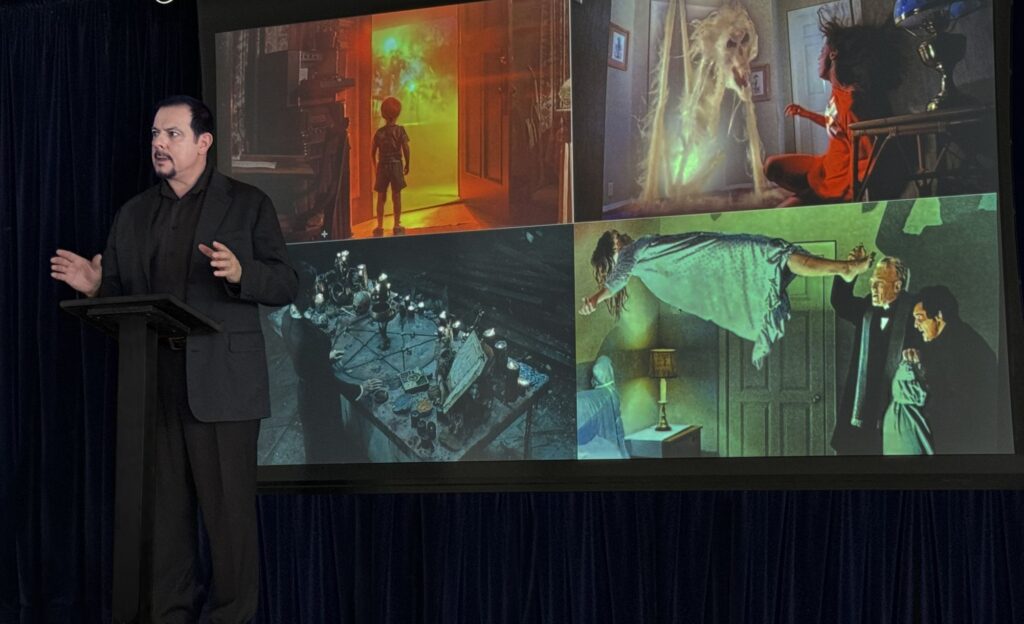
Christopher Chacon – writer, producer and director for TV and film
Chacon’s one-of-a-kind expertise and unparalleled life experiences equips him with a perspective that’s innovative, thought-provoking, even revolutionary at times, which is invaluable to developing and creating stories dealing with other-worldly topics. He has worked with a huge range of entertainment creative geniuses, from Jan de Bont (“The Haunting”, “Twister”) to David Gordon Green (“Halloween”, “The Exorcist: Believer”), he has even worked with “Ghostbusters” creator himself, Dan Aykroyd, who starred in Chacon’s paranormal-adventure TV series, “PSI Factor: Chronicles of the Paranormal”. The stories in the series were inspired by real paranormal encounters investigated by a real-life scientific think tank. Chacon was the Creator/Writer and Executive Producer of the one-hour scripted dramatic series that also starred Matt Frewer and Michael Moriarity, with an 88-episode run that was broadcast in over 30 countries. Countless writers, directors, producers and studio executives have brought-in and utilized Chacon for some of the most successful movies and TV series dealing with the paranormal and supernatural.
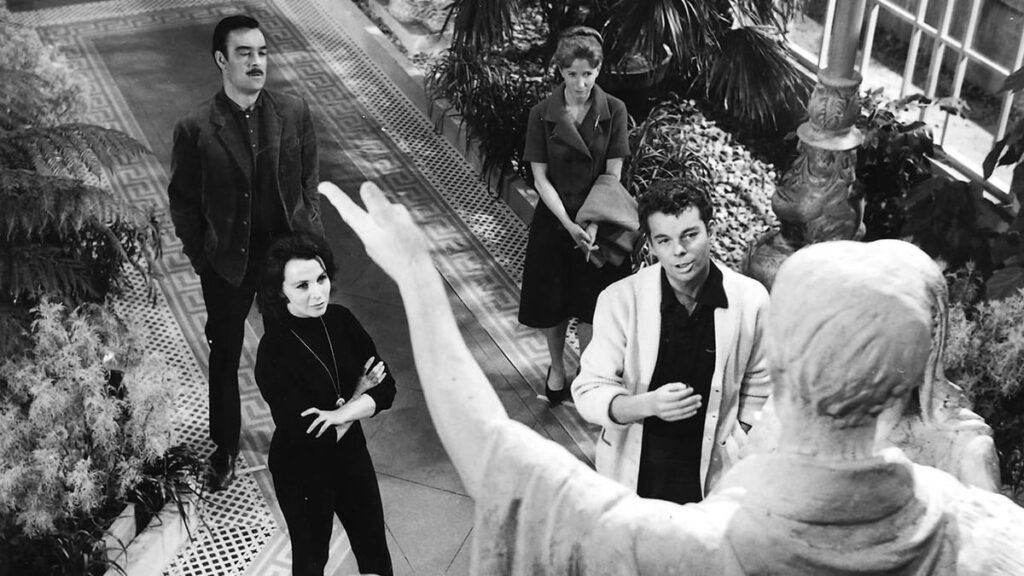
The Haunting (1963) gothic haunted mansion horror
Chacon juggles his work in film and TV with his work traveling around the world dealing with every imaginable type of paranormal phenomena. He confidentially takes-on cases that are referred from clients that include religious organizations, medical and academic institutions, government and law enforcement agencies and private corporations. The majority of clients and cases Chacon receives primarily deal with the most volatile, unstable and destructive phenomena, many involving traumatized victims and casualties. Additionally, he does this work free of charge!
I was fortunate enough to attend two lectures by Chacon; one at the Los Angeles Latino International Film Festival and the other at a special movie presentation at the Arclight Cinemas in Hollywood, and recently had the opportunity to speak with him briefly when he was at Warner Brothers Studios doing a taping for TCM Presents for ‘National Paranormal Day’.
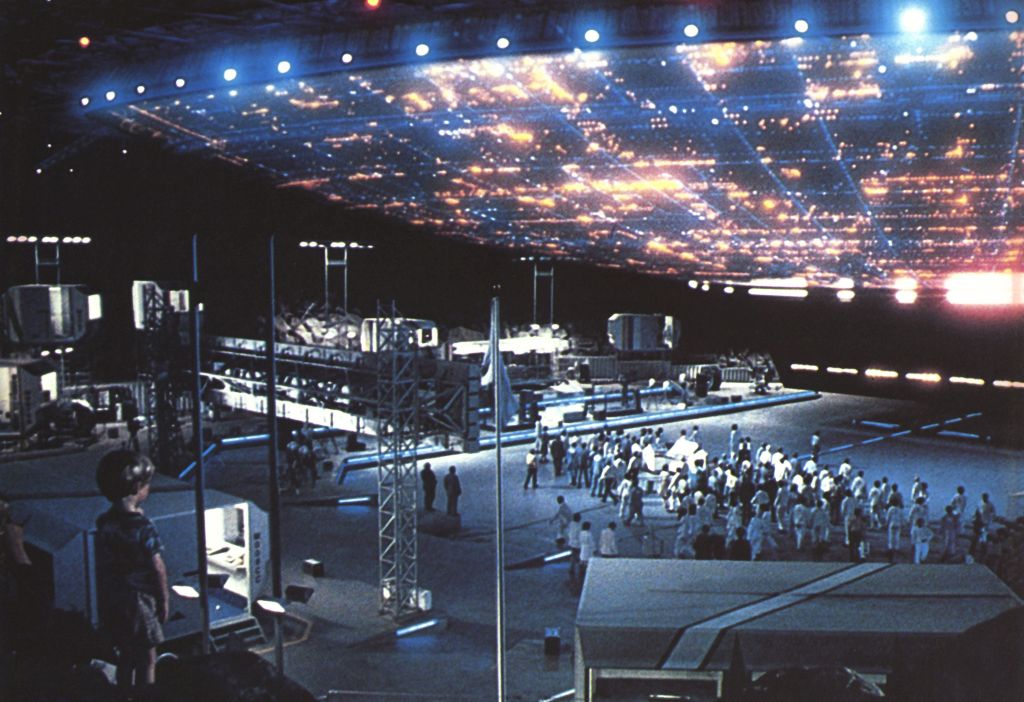
Chacon admits that the degree of truth between what is depicted in produced stories and what is reported by investigators and researchers into phenomena varies greatly; he personally knowing many of them, from Dr. J. Allen Hynek, the scientist that coined the “close encounter” terms behind “Close Encounters of the Third Kind”, to Ed and Lorraine Warren, the demonologists behind “The Conjuring” film franchise. “The elements of truth in stories that springboard off of the experiences of researchers vary greatly, with some interjecting astounding facts in every encounter, and others only serving as an anecdotal kernel to base an entirely fictional story on. The interpretations and adaptions of course lying in the hands of the writers, directors and producers” says Chacon. But with the power of dramatic license at the creators’ control, at what point does a story depart from what it is based-on or inspired-by and becomes entirely fictional? Chacon said it is a slippery slope when it comes to the use of dramatic license with such an already extraordinary topic. Writers, directors and producers really need to examine their agendas in telling a story and be mindful when adaptations are made and at what point it goes too far. Whether for good or bad, Chacon admits that the use of dramatic license to some degree should probably be expected when experiencing any type of dramatic interpretation, “Unless it’s a documentary, it should surprise no one when stories stray greatly from reality, as it is for the primary objective of writers, directors and producers of films and TV shows to entertain first and foremost above all else.”
The Conjuring (2013) supernatural horror based on real cases
So just how accurate are the depictions of the supernatural and paranormal in films? Chacon states, “The disparity between fact or fiction for film stories dealing with the paranormal varies a great deal. For example, movies like, “The Birds”, “Scanners” and “Flatliners” possess elements that are similar to documented events, whether the writers intended it or not. Whereas the majority of phenomena depicted in “Close Encounters of the Third Kind” was representative of multiple reported phenomena.” Chacon continues, “Generally speaking, if you were to analyze each individual paranormal event in every paranormal film, you’d be surprised by how similar depictions are with reported real-life phenomena around the world that occurred prior to the creation of each film, but that’s just with reported events. Obviously, horror stories tend to exaggerate the phenomenon by amplifying the frequency and intensity, among other aspects, creating a mash-up of collective phenomena that enhances drama to suit the story. That is rare in the real world.” But the realization that the hair-raising paranormal events we experience in movies is indeed being experienced around the world is both extraordinary and unsettling! Whether we believe in these phenomena in real-life or only embrace them in our imaginations, many of us have created assumptions about the supernatural and paranormal based on what we grew up hearing and then reinforced by movies, TV and literature. As it turns out, many of these assumptions were incorrect. After having investigated and researched thousands upon thousands of cases around the world, Chacon’s findings challenge traditional thinking and rewrite the books about many types of phenomena. “Time and time again I encounter phenomenon that re-defines their dynamics, functions, mechanics and even origins, defying long-held beliefs, many that are as different and unique as the situation and/or the people experiencing them”, said Chacon. He emphasizes that things are not always as they appear when dealing with any situation. It is this fact, he explains, that can be utilized to help enhance and craft a truly riveting story that is refreshing and unpredictable.
Close Encounters (1977) UFO contact sci-fi classic
Some of the amazing cases that Chacon has dealt with included; a mass-possession of twenty-three people, a giant gargoyle-like flying creature that attacked skydivers, a black magic curse that tormented its victim that included swarms of insects, corpses that dug themselves out of their graves, several people that were abducted at sea by a UFO and witnessed by naval vessels, a child that caused everything around her to freeze when she would tantrum and a powerful poltergeist that would sporadically take the form of a massive black cloud that could crush furniture and bones!
Chacon was quick to point out that the majority of reported phenomena around the world actually has rationale, explainable causes. “Approximately 70% to 80% percent of reported recurrent phenomena is explainable and falls into one or more categories that include, psychological, physiological, environmental and circumstantial explanations. Many of these explainable events occur in such a unique way that the majority of people would misinterpret them as genuine phenomenon. That is why it is imperative to first rule-out rational explanations” says Chacon. But that leaves some 20% to 30% percent of reported phenomena that is authentic and very real, which is terrifying if you consider the many types of phenomena that includes! It is these types of encounters that make the most unforgettable horrifying stories!
The Exorcist (1973) demonic possession horror
Chacon’s methods of investigating and researching phenomena put to shame all depictions in film and TV. He utilizes a hybrid model with a wide spectrum of various techniques and methods; from anomalistic/advanced scientific (with next-generation technology) to parapsychological to ancient occult/metaphysical. His process of investigating, assessing and analyzing a phenomenon is unlike anything depicted in films or TV and are far more comprehensive. When asking Chacon about his overall favorite films when it came to realistic depictions of phenomena and investigating, he replied, ““The Haunting” (1963 version) and “Poltergeist” (1985 version) both depicted the haunt/poltergeist phenomenon quite well, along with the parapsychological model (at the time) for investigating. Another would be “The Exorcist”; not only did it depict the possession phenomenon and Roman Catholic Rite of Exorcism accurately and the church’s protocol, but it also realistically depicted the painstaking scientific procedures to find a rational explanation for the phenomenon. The other thing that all three of these films depicted quite accurately was the emotional responses and trauma connected to each experience. And lastly, the phenomena in each of these films was for the most part, unresolved, which is frequently the outcome for cases dealing with these phenomena.” So why don’t all horror films and TV series depict investigations and resolving the phenomena accurately? Chacon says, “There could be any number of possible reasons; from the vision, direction and agenda of the creators and their belief systems, to the logistical restraints of the production. Additionally, many believe that audiences won’t be satisfied without a resolution and answers to the “why” and therefore want to satisfy this need with various types of exposition and explanation.”
Whether they’re authentic stories based on actual events or completely fictitious, the growing demand and eager audience for paranormal and supernatural stories in entertainment doesn’t seem to be waning! That could very well be because of the consistently spreading belief of these other-worldly phenomena. Polls and surveys conducted by Gallup, YouGov and Pew Research Center in recent years all show a growing percentage of Americans that believe in numerous types of paranormal and supernatural phenomena, including psychic phenomena, ghosts, demons and possession and that UFOs are ‘extraterrestrial’ in origin. These percentages are even higher internationally. The consistent demand and ongoing fascination for supernatural and paranormal fuels the entertainment industry, making the category the biggest in demand among movies, TV series and books, defying presumed cyclic trends.
Christopher Chacon at lecture
So, is it simply the popularity of paranormal topics that’s drawing audiences to horror films and TV series, or is it perhaps something more visceral? Even with the gut-wrenching revelation that some horror movies are inspired by actual events and might leave you with nightmares, audiences continue to flock to be terrified. Like a moth drawn to a flame, why are we so drawn to experience horrifying entertainment and feel the uncomfortable sense of fear? The science of fear is a complicated and intriguing study that explores intricacies of human behavior. Whether by movies, TV, literature or live attractions, Chacon explains why many people love to be scared, “Scary forms of entertainment allow audiences to experience fear in a controlled, enjoyable and safe manner. At anytime you want the experience to stop, you need only leave the theater, change the channel or close the book. The experience of coming face-to-face with something terrifying without actually any real threat is gripping and exhilarating at the same time; an experience to many that can be somewhat addictive. There are many reasons why people would subject themselves to an experience of terrifying imagery. Scary supernatural content taps into our primal instincts; the fear of death, the unknown, losing what means most to us, and allows audiences to confront these fears in a controlled safe manner, thereby embracing fears and allowing ourselves to cope with them in the real world. While most people hate to experience fear, a significant number also love to be scared by this type of entertainment and experience the psychological and physiological stimulation that it triggers. The scares produced in horror movies not only trigger the natural defenses of fight or flight (also called hyperarousal or acute stress response), but also the calming feeling following this biological process commonly known as rest and digest. The process can produce an addictively calming state that makes you feel better.” It is this love of being frightened that is one of the key intrinsic factors that has always fueled the success of paranormal horror, as well as all horror in general.
With no end in sight for the insatiable hunger for horror and for the scares that come with it, it goes without saying that paranormal and supernatural horror movies and TV shows will continue to be one of the most popular and in-demand forms of entertainment. The realization that so many of these darkly disturbing horror stories depict real-life encounters with phenomena around the world is mind-blowing and whether I like it or not, causes me to experience entertainment horror in a whole new light—or should I say, dark.
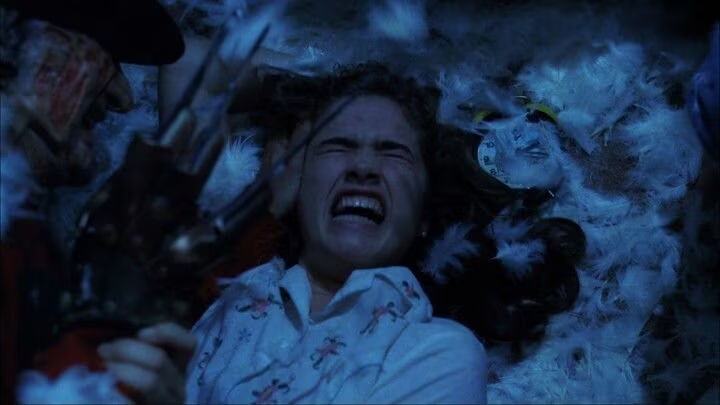
A Nightmare on Elm Street was among the first independent films in the genre to achieve major commercial success, transforming New Line into what fans call “the house that Freddy built.”
The mid-1980s marked the golden age of the slasher genre, and any great film released during that period had a good chance of gaining attention. Its budget, which was over one million dollars, gave it an advantage over many contemporaries, most of which cost far less to produce.
The director Wes Craven already had experience crafting terror, which further elevated the project. Still, these factors alone cannot explain why the film stood out so profoundly.
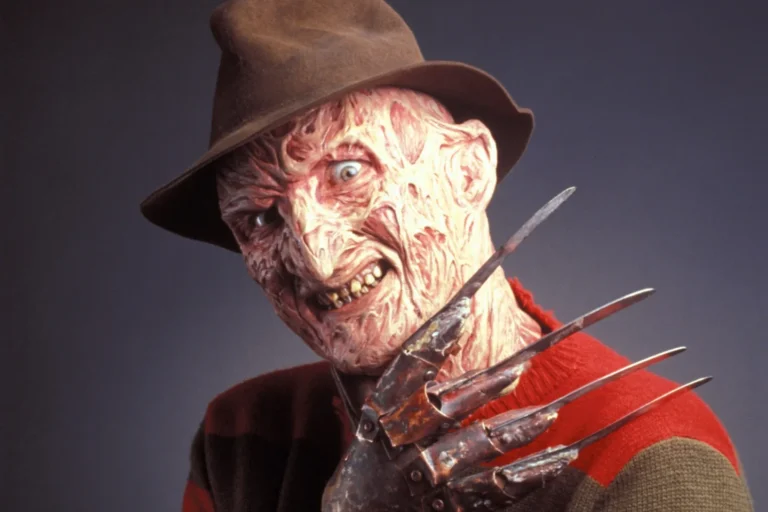
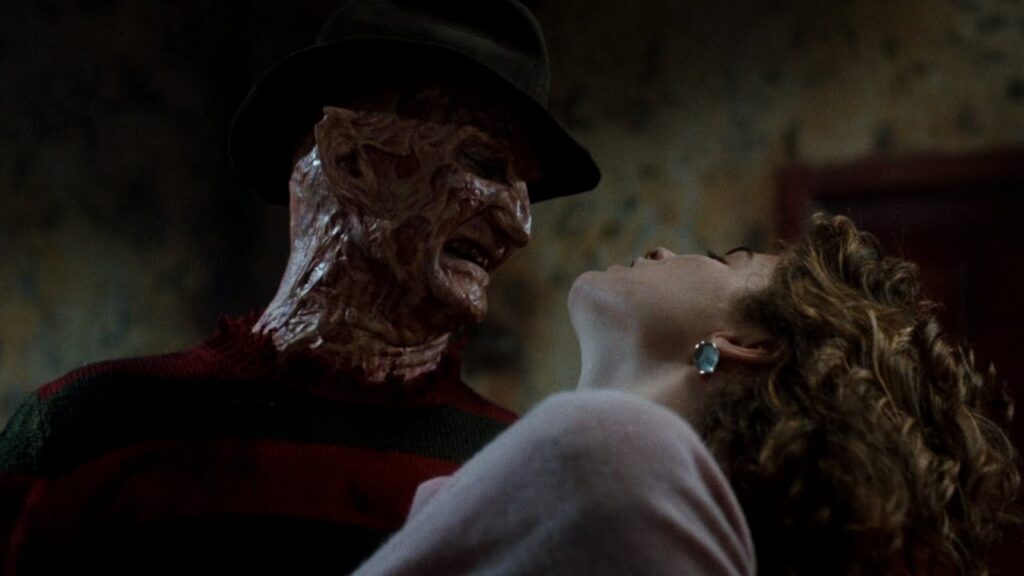
What defined A Nightmare on Elm Street was not the timing, budget, or even its technical execution, but rather its central figure, Freddy Krueger, and the eerie mythology built around him.
He was not merely a killer who stalked streets and alleys, but a supernatural being who claimed dominion over dreams themselves. He made his home in the one space every person must eventually enter, no matter how far they run.
The dream world became his hunting ground, and he renders his victims powerless.
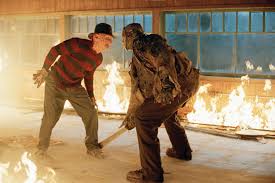
Each film struggled to balance its mythic invincibility with the need for closure. Audiences needed to see him fall, yet the story demanded that he always return.
Across the franchise, Freddy is known to be an unstoppable, eternal force, but each time, he is often defeated by ordinary teenagers. His demise usually comes through clever twists or psychological awakenings rather than physical conquest. But these victories never last.
He always finds his way back, revealing a tension between narrative necessity and thematic truth. The endings that show his return are not simply hooks for sequels; they are part of his design. Freddy exists in the subconscious, and the subconscious has no true ending.
Follow horror beyond the headlines. Visit the Like Studios Hub for original projects, indie features and future behind-the-scenes updates. Join the Hub →
Freddy as Fear, Trauma, and Reflection
So long as nightmares exist, Freddy exists. His presence does not fade with death or defeat; it lingers.
Freddy’s power is drawn from fear, and whenever that fear is denied, he momentarily loses his grip. This is why Nancy’s story is so vital in understanding him. By refusing to fear him, she strips him of power, causing him to fade away.
Each film becomes more about the characters than about Freddy himself. He does not drive the story; their fears, traumas, and buried guilt do. Freddy is the reflection of what they hide. He is the dream given shape. Every time a character confronts him, they are confronting themselves. In this light, Freddy becomes more than a monster. He is a metaphor for unresolved trauma, shame, and fear.
This psychological truth is what gives his legend such longevity, painting him as the very concept of nightmares, endless, repetitive, and deeply human. As long as people dream, Freddy exists.
His connection to trauma is also reflected in the film’s broader symbolism. Many of the characters are maltreated, with some being haunted by the sins of their parents in the lynching of Freddy.
Freddy, being a manifestation, could hold more truth than most think. His existence extends far beyond the metaphysical forces or psychological states of others and is deeply rooted in his own backstory and ancestry.
The timeline of his life is soaked in trauma, from his horrifying conception, when his mother was brutally assaulted by hundreds of mentally unstable patients, each one already burdened with psychological torment.
This inherited darkness continued through his formative years, marked by relentless cycles of abuse and torment. He endured ridicule and pain from others, inflicted harm upon himself, and eventually became the inflictor of suffering. It is as if he was destined, almost bred, for possession by whatever supernatural force later inhabited him, shaping him into a living embodiment of terror that found its home in the dream world’s 1428 Elm Street.
The fifth film strips him further, reducing him to the innocence of an unborn child, peaceful, unaware, and untouched by the world’s horrors. In a poetic reversal of his origins, where his mother’s trauma condemned him to darkness, it is his own daughter who releases him, exercising the demons that have long bound his soul and granting him peace in death.
The Endless Return and the Power of Myth
After nearly a decade and five installments of Freddy’s relentless returns, the sixth film— Freddy’s Dead: The Final Nightmare, arrives as an attempt at closure. By this time, the audience has watched him fall again and again, Nancy’s psychological breakthrough in the first film, Jesse’s internal struggle in Freddy’s Revenge, the purification of his remains in Dream Warriors, his psychological implosion in The Dream Master, and finally, his symbolic “unbirthing” in The Dream Child. Yet none of these provided true finality.
The sixth installment, however, stands out. It succeeds not only because it closes without the traditional cliffhanger but also because it intelligently ends Freddy’s reign by exercising the very demons that fuel his supernatural being. It removes the demons from the “Krueger,” leaving behind a dead “Freddy,” broken, defeated, and stripped of his unholy essence.
The finality in this film resonates deeply.
For the first time, viewers could echo the words, “Freddy’s dead,” and believe them.
Unlike its predecessors, which confined Freddy’s actions within the dreamscape, New Nightmare proposes that the root of his being transcends that realm entirely. The film suggests that the ancient supernatural entity behind the fictional Freddy Krueger seeks entry into the real world.
The film ended with Craven’s note, thanking Heather Langenkamp’s Nancy for keeping Freddy imprisoned by playing her role. It marks the end of Freddy but the eternal preservation of his myth. The same Nancy who defeated him in 1984 returns to end his reign in 1994, not by destroying him but by ensuring that his existence remains confined within art and fiction.
Unlike the original ending, which left room for sequels by suggesting hope for his permanent destruction, this final scene removes that illusion entirely. It asserts that Freddy can never be permanently defeated, not because of narrative tricks or fan demand, but because the very concept that animates him, the embodiment of fear and imagination, cannot be erased.
Conclusion
Every film, past and future, becomes part of a grand design not to kill Freddy but to keep the nightmare alive, and his story must continue because his existence represents the inescapable truth of human fear.
Thus, the so-called end only reaffirms the beginning. The eternal nightmare that began with his conception, rooted in the trauma of Elm Street, continues unbroken. It was temporarily ended by Maggie, reborn by Wes Craven, and eternally sustained through the imagination of every viewer who dares to dream. Freddy Krueger is not merely a slasher icon, he is the never-ending nightmare that inhabits Elm Street.
New to LikeHorror? Explore our best lists, reviews, videos, fun posts and horror picks worth saving. Explore Highlights →
The ocean is about to turn red. Scream star Melissa Barrera has officially joined Renny Harlin’s new survival-horror film Black Tides- a brutal aquatic thriller that pits humanity against nature’s most intelligent predators: killer orcas.
The movie also stars John Travolta and his daughter Ella Bleu Travolta, marking one of their first major collaborations on screen. The story begins as an emotional family reunion at sea but takes a terrifying turn when their research vessel is attacked by a pod of highly intelligent orcas seeking vengeance. What starts as a voyage of healing becomes a desperate fight for survival beneath the unforgiving waves.
Director Renny Harlin, known for cult aquatic horror Deep Blue Sea, returns to familiar territory, mixing high-stakes action with terrifying creature realism. “This isn’t just a monster movie,” Harlin said in a statement. “It’s about humanity’s arrogance colliding with nature’s revenge. The orcas aren’t villains, they’re a mirror.”
The script is penned by Chris Sparling (Buried, Greenland) and Ángel Agudo, promising a smart blend of environmental horror and emotional storytelling. Production is already underway in Gran Canaria, Spain, where Harlin and his crew are using cutting-edge practical effects alongside digital enhancements to make the ocean sequences as immersive as possible.
For horror fans, Black Tides carries echoes of Jaws, The Meg, and Harlin’s own Deep Blue Sea, but early insiders describe it as darker and more grounded- anchored by Barrera’s intense performance. After her departure from the Scream franchise, this film could mark her major comeback in the genre that made her a fan-favorite.
With killer whales as the new apex predators of the big screen, Black Tides promises to turn marine beauty into sheer terror. Expect churning water, heart-stopping chases, and a sobering reminder that nature always bites back.
The apocalypse is about to get a whole lot more personal.
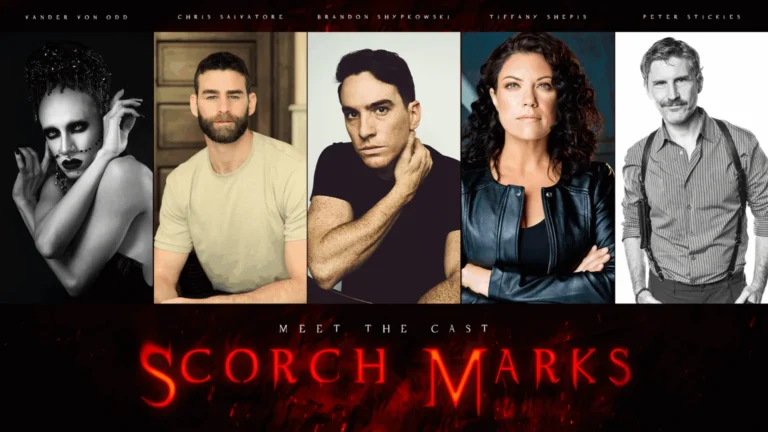
Dekkoo Films has officially announced its latest project, Scorch Marks- a chilling LGBTQ-centered survival horror movie written and directed by Brendan Haley, known for his sharp storytelling and fearless voice in queer cinema.
The film stars Brandon Shypkowski, Chris Salvatore, Tiffany Shepis, Peter Stickles, and Vander Von Odd, blending familiar faces from cult horror and queer entertainment. The story follows Beckett, a man trapped at a secluded luxury rental in a world where the sky has literally been burned away. Alone and disoriented, he faces terrifying visions, a haunting ex-husband, and a primal supernatural force that lurks beyond the “scorch marks.”
According to Fangoria, Scorch Marks is more than an apocalypse thriller- it’s a symbolic journey through grief, repression, and rebirth. Haley described it as “a meditation on the destructive nature of heteronormative culture, told through the language of survival horror.”
The film’s production signals a growing wave of queer-driven horror that refuses to be sidelined. Horror has always been about the “outsider” experience, and Scorch Marks takes that legacy to the next level, putting identity and emotion front and center while keeping the scares raw and real.
With Dekkoo Films backing the project, audiences can expect bold storytelling, striking visuals, and psychological tension that hits as hard emotionally as it does viscerally. The film is slated for a 2026 release, and production is expected to begin early next year.