
The Shining: How Stanley Kubrick Turned a Haunted Hotel into a Cinematic Nightmare

0

Even after 40+ years, The Shining remains one of the most haunting, complex, and endlessly dissected horror films ever made. Stanley Kubrick didn’t just adapt Stephen King’s novel—he transformed it into something colder, stranger, and more psychologically unsettling.

From labyrinthine cinematography to psychological terror, let’s break down how Kubrick made horror history—and why The Shining still refuses to leave our minds.

Kubrick’s Obsession with Horror

By the late 1970s, Kubrick had already tackled war, sci-fi, political satire, and historical epics. But horror? That was uncharted territory.

According to legend, Kubrick spent days skimming horror novels in his office, tossing aside book after book, unimpressed—until he picked up The Shining. After a few pages, the room went silent. He had found his story.

But rather than treating The Shining as just another ghost story, Kubrick reshaped it into something far more ambiguous. Gone were the novel’s traditional hauntings and fiery climax—instead, the film became a cold, surreal nightmare, where horror seeps in through the walls.
Why Stephen King Hated the Film

Kubrick’s vision was far from King’s original intent, and the author never forgave him for it.

Jack Torrance in the novel – A good man struggling with alcoholism, slowly corrupted by supernatural forces.
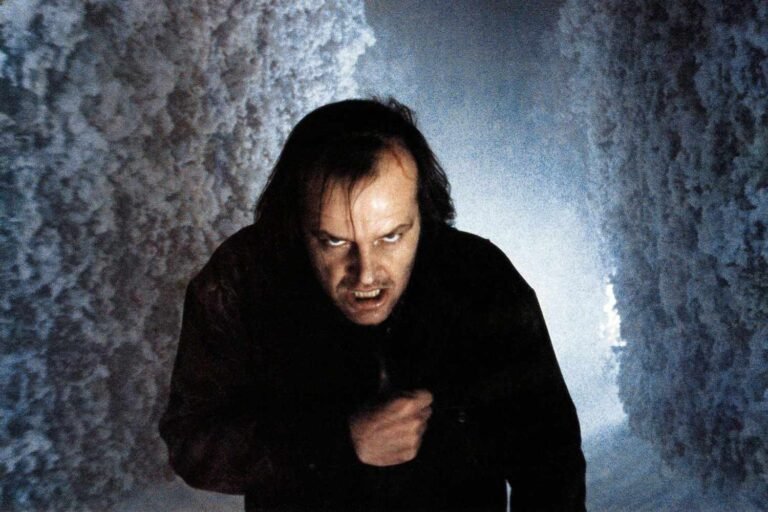
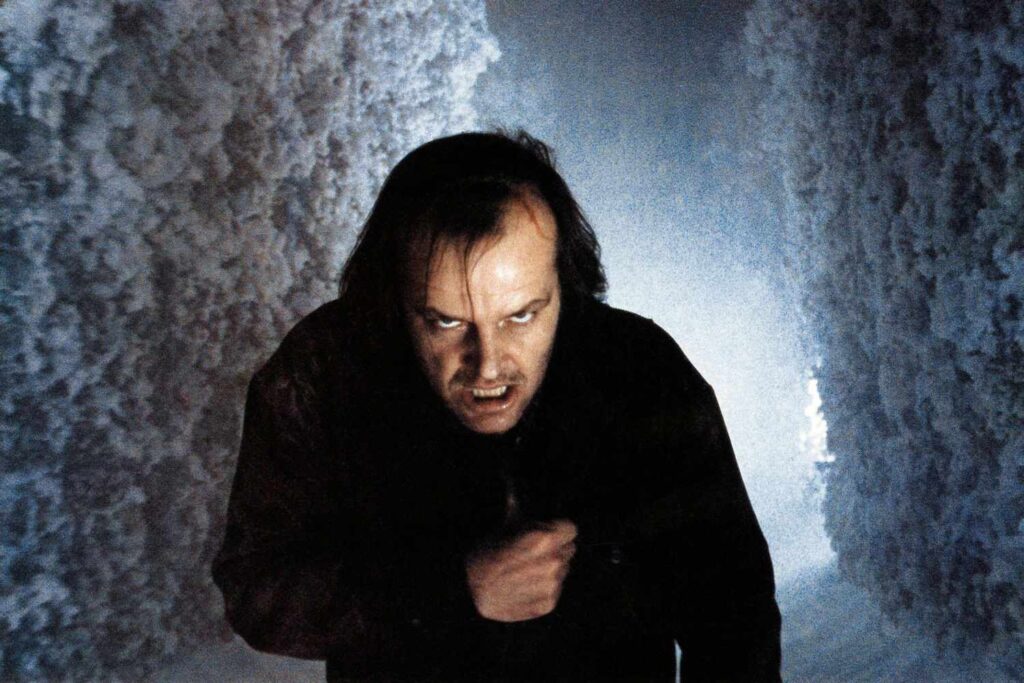
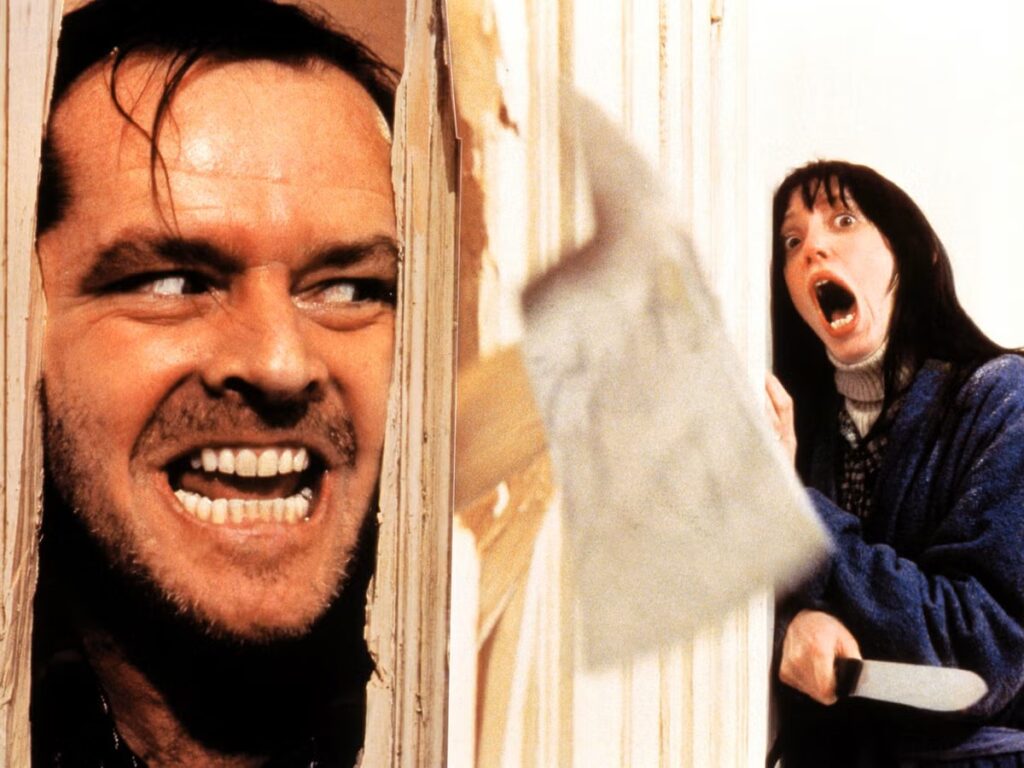
Jack Torrance in the film – From the first frame, Nicholson looks like he’s already on the edge of madness. Kubrick wasn’t interested in Jack as a tragic figure—he was a ticking time bomb from the start.

King hated the casting of Nicholson, arguing that it ruined the slow descent into insanity. Kubrick didn’t help matters when he bluntly stated:

“Jack hates his son. Even without the ghosts.”

And then there’s Wendy.

Wendy in the novel – A strong-willed, resilient woman fighting to save her son.
Wendy in the film – A fragile, hysterical wreck, played by Shelley Duvall in a relentlessly tormented performance.

King called Kubrick’s Wendy “one of the most misogynistic characters in horror”, reducing her to a trembling victim rather than an equal protagonist.
What Kubrick Changed – And Why It Worked

Kubrick stripped away many of King’s key elements—including the haunted hotel’s fiery destruction—to create something more ambiguous and psychologically disturbing.

Are the ghosts real, or is Jack simply losing his mind?
Why does the Overlook Hotel seem alive, yet never fully explained?
How does Jack appear in that eerie 1921 photograph at the end?

Kubrick was obsessed with ambiguity, forcing the audience to question everything. The Overlook Hotel isn’t just haunted—it’s a living, breathing entity, a labyrinth of the subconscious where past and present blur together.

By the end, it’s not about a man possessed by ghosts—it’s about a man who was always doomed.

A Horror Film That Feels Like a Nightmare

Kubrick didn’t just want The Shining to be scary—he wanted it to feel like a nightmare you can’t wake up from.

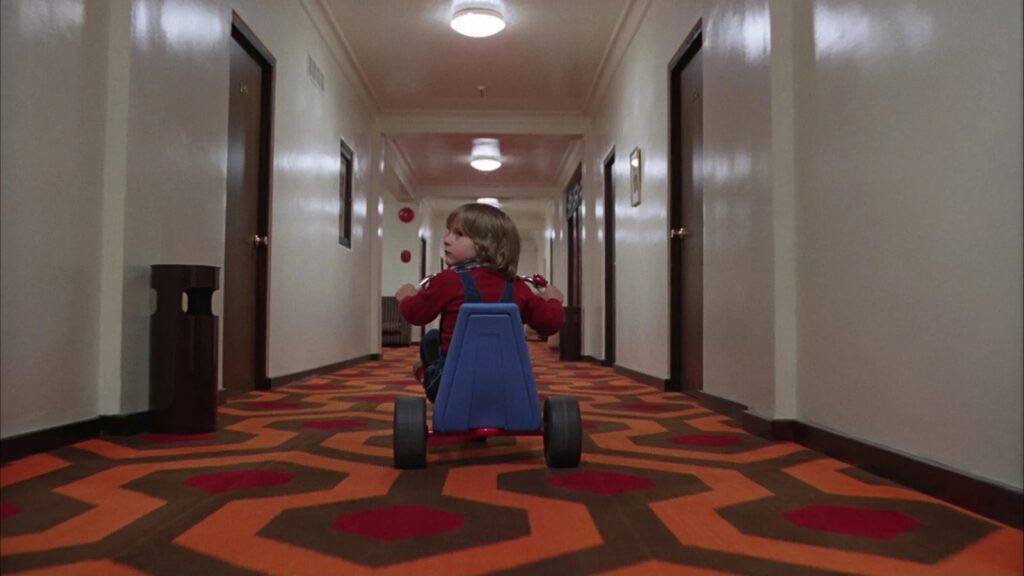
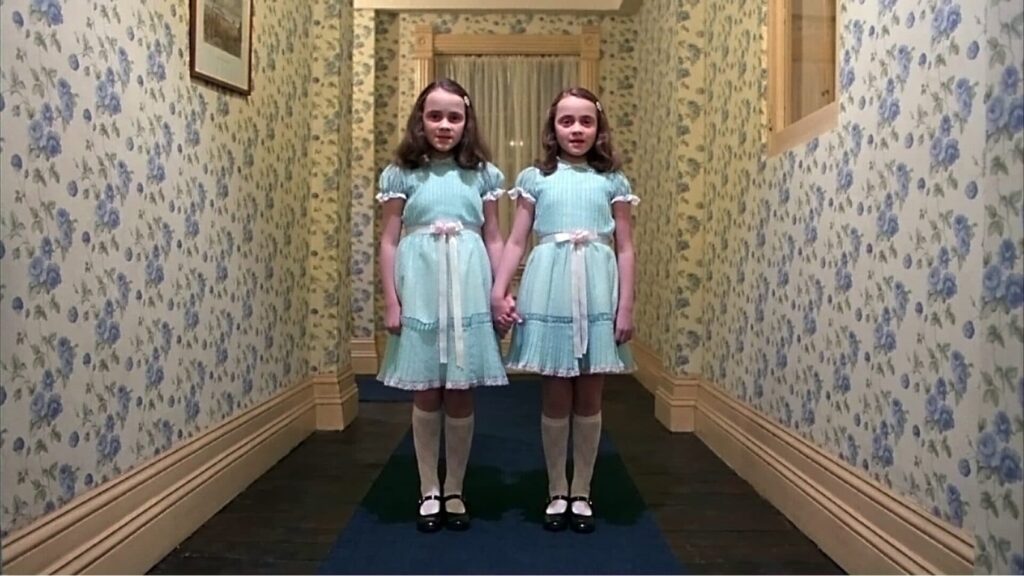
The Overlook’s Impossible Architecture – Hallways lead nowhere, windows exist where they shouldn’t, and rooms shift sizes. The hotel defies logic, leaving the audience subconsciously unsettled.

The Soundtrack is Pure Dread – The film is filled with atonal, anxiety-inducing music by Ligeti, Penderecki, and Bartók—turning even silent moments into unbearable tension.
The Steadicam Creates an Inescapable Maze – The use of Steadicam (a revolutionary technique at the time) makes the viewer feel trapped inside the Overlook, following characters through its winding, endless corridors.

Every frame is carefully composed to feel “off”, yet so subtle that you don’t realize why it’s disturbing—just that it is.

The Shining’s Hidden Meanings (Or Just Fan Theories?)

Over the years, fans have come up with countless theories about The Shining’s deeper meaning. Some are plausible—others? Completely insane.

Kubrick Faked the Moon Landing – Conspiracy theorists point to Danny’s Apollo 11 sweater, believing the film is Kubrick’s confession that he staged the moon landing for NASA. (Yeah, sure.)
The Native American Genocide Theory – The Overlook was built on an Indigenous burial ground, and references to Native American imagery suggest the film is about America’s violent history.
The Minotaur & Labyrinth Theory – The Overlook’s maze-like design, Jack’s descent into madness, and Danny’s escape through the snowy hedge maze mirror the Greek myth of the Minotaur.

Kubrick, of course, never confirmed any of these theories. But one thing is clear—The Shining is more than just a ghost story.
How The Shining Changed Horror Forever

At the time of release, The Shining received mixed reviews—some critics found it cold, confusing, and lacking traditional horror scares.

Today? It’s recognized as one of the greatest horror films of all time.

It inspired generations of filmmakers – You can see The Shining’s DNA in everything from Hereditary to The Haunting of Hill House.
It made horror more psychological – No cheap jump scares—just pure, slow-burning dread.
Jack Nicholson’s performance is iconic – His manic, unhinged energy redefined the horror villain.

And then there’s Doctor Sleep (2019)—the sequel that tried to merge King’s book with Kubrick’s vision. While it gave us closure on Danny Torrance, it only further proved how singular, unsettling, and untouchable The Shining truly is.

Final Thoughts

The Shining isn’t just one of the greatest horror films ever made—it’s one of the most complex, haunting films in cinema history.

Kubrick took King’s novel and turned it into something colder, stranger, and infinitely more disturbing. Whether you see it as a ghost story, a psychological descent, or a metaphor for America’s past, one thing is certain—the Overlook Hotel never really lets you leave.

What’s your take on The Shining? Do you believe in the ghosts, or was Jack always doomed? Let’s hear your theories!
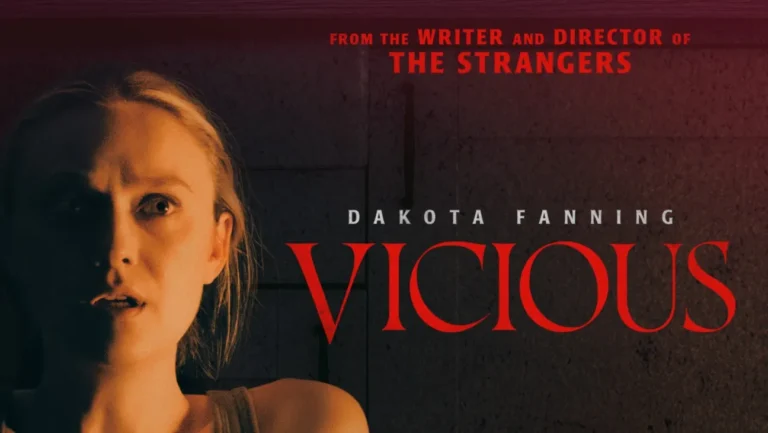
Dakota Fanning Horror Movie ‘Vicious’ to Debut on Paramount+ After Removal From Theatrical Calendar

0

Writer-director Bryan Bertino’s feature will premiere at Fantastic Fest after having previously been slated to hit theaters earlier this year.

The Dakota Fanning-led horror movie Vicious is set to debut via streaming later this year after it was previously removed from Paramount Pictures‘ theatrical release calendar.

Writer-director Bryan Bertino’s feature will premiere at Fantastic Fest in Austin next month before its release on Paramount+ and digital formats Oct. 10. Kathryn Hunter, Mary McCormack, Rachel Blanchard, Devyn Nekoda, Klea Scott and Emily Mitchell round out the cast.

Vicious centers on Polly (Fanning), who receives a gift from a late-night visitor and becomes trapped in a world where reality is not what it seems.

The film had initially been scheduled to hit theaters in August of this year, before its theatrical release was moved up to Feb. 28, 2025. Late last year, the studio took the project off of its calendar amid a search for a better date for the film.

The decision to debut Vicious on the streamer was made by the previous Paramount regime, prior to its recent Skydance merger, with the aim of giving viewers an at-home option ahead of Halloween.

Smile 2 (2024)

0

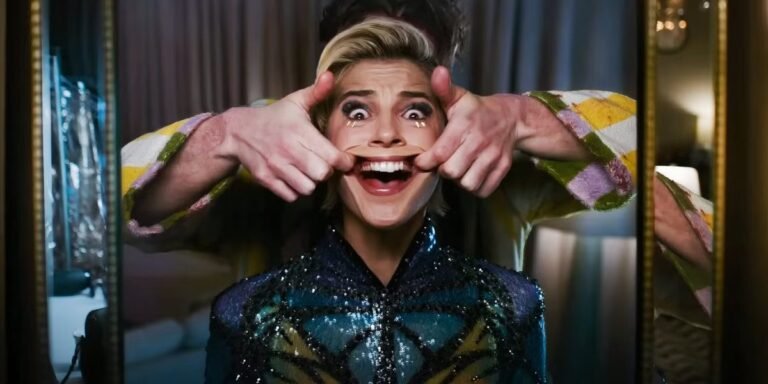
Just when you thought it was safe to smile again, Smile 2 comes along and makes you question every grin you see. Parker Finn returns with a sequel that’s bigger, bolder, and even more unsettling than the first, proving that this franchise has real staying power in the horror world.

So, does Smile 2 live up to the hype, or is it just more creepy grins? Let’s break it down.

The Setup: Fame Meets Fear

This time, the curse targets Skye Riley (Naomi Scott), a mega-famous pop star about to embark on her biggest world tour. On the surface, she’s living the dream—millions of fans, flashing cameras, and a career at its peak. But when the sinister smiles start creeping in, she realizes something horrifying is following her.

Between hallucinations, eerie grins, and a growing sense of paranoia, Skye must fight for her life—all while trying to keep up appearances in front of the entire world.

What makes Smile 2 unique is how it blends psychological horror with the pressure of celebrity culture. Imagine being hunted by a supernatural force AND the paparazzi—nightmare fuel on all fronts.

What Works: More Than Just Jump Scares

✔ Naomi Scott delivers a star-making performance. Her portrayal of Skye is raw, emotional, and deeply compelling—she’s more than just a scream queen.
✔ Horror meets social commentary. The film brilliantly explores the pressures of fame, using the smile demon as a metaphor for public scrutiny.
✔ Visually stunning, deeply unsettling. The use of lighting, shadows, and eerie camera work makes Smile 2 a true cinematic horror experience.
✔ The concert scene. No spoilers, but one sequence on stage is both breathtaking and absolutely terrifying—one of the best horror moments of the year.

Where It Falls Short

✖ Predictable at times. While the film expands the Smile lore, it still follows some familiar horror beats.
✖ A bit too long. Some moments feel stretched out, making the tension dip slightly in the middle.

Final Rating: 4/5 – A Bigger, Scarier, and Smarter Sequel

Smile 2 is a sequel done right—expanding the mythology, raising the stakes, and delivering unsettling horror that sticks with you. Naomi Scott is phenomenal, Parker Finn’s direction keeps you on edge, and the film’s social commentary adds extra depth.

If you liked Smile, this one will have you sleeping with the lights on—again.

Midsommar’s Ending Explained: What It Really Means

0

Ari Aster’s Midsommar isn’t just a horror movie – it’s a breakup film wrapped in folk horror, trauma, and surreal daylight terror. From its unsettling opening to its fiery, cathartic conclusion, the film leaves viewers with a lot of questions. Why did Dani’s parents die? What’s the deal with the bear suit? And what does that final, eerie smile really mean?

Let’s break it all down.

Is Midsommar Based on a True Story?

Not exactly. Ari Aster has confirmed that Midsommar is deeply personal, but it’s not based on any real events. He wrote the film after a painful breakup, using the story as a way to explore toxic relationships and emotional devastation.

“This is my attempt to make a big film about separation,” Aster explained. “I wanted to convey that feeling when it seems like the end of the world has come.”

So while Midsommar isn’t autobiographical, its emotional core comes from a very real place.

Are the Rituals in Midsommar Based on Real Swedish Traditions?

Sort of. The real Midsummer Festival in Sweden is a lively celebration with flower crowns, dancing, and feasting – not human sacrifice.

However, Aster and his team pulled from various Scandinavian folklore and myths to create the film’s eerie traditions.

Attestupa: The disturbing elderly cliff-jumping ritual was inspired by old (and mostly debunked) Scandinavian legends.
The Hårga Song: The myth about a devilish fiddler making villagers dance until they die is real Swedish folklore.
Runes and Symbolism: The runes seen throughout the film were researched with the help of experts and hold real meanings tied to fate and sacrifice.

But the bear sacrifice? That one’s all Aster’s creation.

Why Was Christian Burned in a Bear Suit?

Christian’s fate is one of the film’s most shocking moments – drugged, paralyzed, and stuffed into a hollowed-out bear carcass before being burned alive.

The bear is a powerful symbol in Norse mythology, often representing wild, untamed nature. In Midsommar, it’s used to strip Christian of his identity before he’s sacrificed.

For Dani, Christian’s death represents a final, brutal severing of their toxic relationship. She’s no longer the abandoned, emotionally neglected girlfriend – she’s the May Queen, fully accepted into the Hårga community.

Which leads us to…

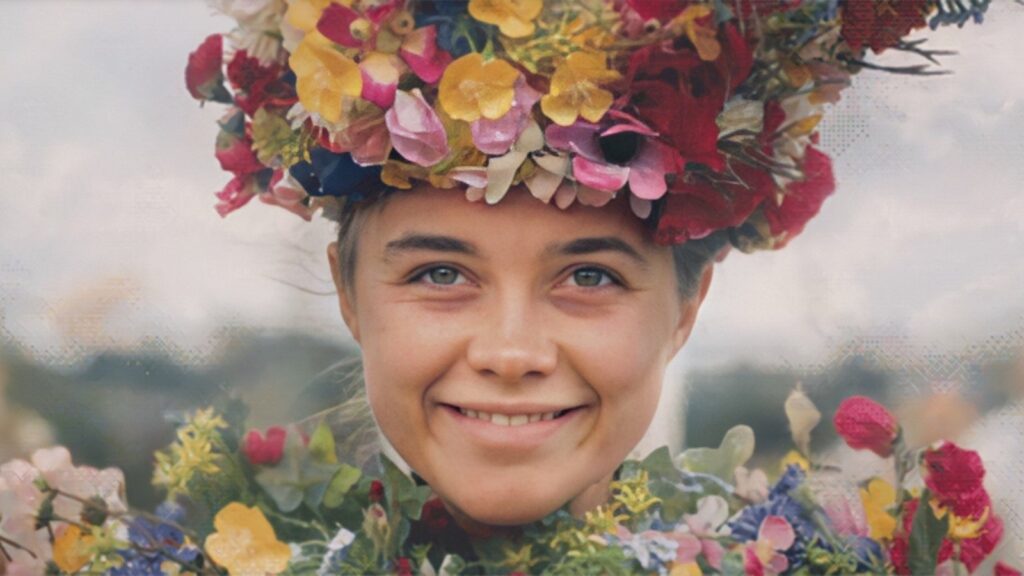
Why Does Dani Smile at the End?

Dani’s final expression is one of Midsommar’s most haunting images – her face slowly shifts from devastation to a wide, unsettling smile as Christian burns.

So, what does it mean?

Drug-Induced Euphoria: Before the final ritual, Dani drinks a hallucinogenic tea, heightening her emotions.
A Newfound Family: Throughout the film, Dani has been searching for belonging. The Hårga cult accepts and embraces her, unlike Christian.
Madness and Liberation: Aster himself explained that Dani’s smile represents a terrifying, manic kind of freedom – she’s finally let go, but at what cost?

Did Pelle Kill Dani’s Parents?

One of the biggest fan theories suggests that Pelle, the friendly Swedish guide, orchestrated Dani’s tragedy from the start.

The theory goes like this:

Pelle saw Dani as the perfect May Queen – someone isolated, grieving, and vulnerable.
He subtly manipulates her throughout the film, pointing out Christian’s neglect and making her feel safe with him.
Some fans believe he may have even arranged the deaths of Dani’s family, ensuring she would be emotionally dependent on the Hårga.

While Aster has never confirmed this, it adds an even more sinister layer of predestination to the story.

What Happens to Dani After the Film Ends?

Midsommar leaves Dani’s fate open-ended, but there are a few possibilities:

She stays in the Hårga and thrives as the May Queen. Some believe she’s fully accepted into the cult and will live out her days in their traditions.
She’s used for breeding. The Hårga need outsiders to mix the bloodline, which means Dani could be part of their future rituals.
She’ll eventually meet the same fate as the elders. At 72, Dani could be expected to jump off a cliff, just like the elders before her.

Whatever happens, it’s clear that Dani is no longer the same person – she’s become something else entirely.

So, Is Dani the Villain or the Victim?

Aster doesn’t give us a clear answer, and that’s what makes Midsommar so unsettling.

Dani is undeniably a victim. She’s emotionally neglected, manipulated, and thrown into a horrifying situation.
But by the end, she’s complicit in Christian’s murder. She doesn’t just watch – she chooses.

Aster himself has said that while Dani finds a kind of peace, she’s also trading one toxic relationship for another. The Hårga love-bomb her, then trap her in their world – she hasn’t truly escaped anything.

Final Thoughts

Midsommar isn’t just a horror movie – it’s a psychological spiral, a breakup allegory, and a folk horror nightmare all at once. Its daylight horror, unsettling rituals, and gut-wrenching emotional weight make it one of the most unforgettable films of the decade.

Whether you see Dani as a tragic hero or a terrifying villain, one thing’s for sure – her journey is disturbing, hypnotic, and impossible to look away from.

Would you survive Midsommar? Let’s hear your theories in the comments.

First Trailer for Football Horror Him Promises a Bloody Clash Between Glory and Madness

0

The first full-length trailer for the upcoming football horror Him has dropped – and it’s a brutal look at the cost of chasing fame.

“What are you willing to sacrifice?” a voice asks as the footage begins. The film stars Marlon Wayans as Isaiah White, a legendary quarterback on the brink of retirement, and Tyriq Withers as Cameron Cade, a rising star about to break into the NFL. But on the eve of the all-important Scouting Combine, Cameron suffers a devastating brain injury that threatens to end his career before it starts.

According to the official synopsis:

“Just when all seems lost, Cam gets a lifeline from his hero, Isaiah White — an eight-time championship winner and cultural icon — who invites him to train at his secluded compound with his influencer wife, Elsie White. But as training intensifies, Isaiah’s charm begins to twist into something far darker, pulling Cam into a dangerous spiral that could cost him far more than his career.”

The trailer teases Isaiah’s disturbing methods: “In this game, violence is rewarded,” he tells his protégé. “So learn to enjoy it.” Elsie (Julia Fox) warns Cameron that he doesn’t have to go through with it, but he insists he’s “never been more certain of anything” in his life.

Produced by Jordan Peele (Get Out, Us, Nope), Him is directed by Justin Tipping, who co-wrote the screenplay with Skip Bronkie and Zack Akers. The cast also features Tim Heidecker, Jim Jefferies, and Naomi Grossman.

Him hits theaters on September 19.