
Arcadian (2024)

0

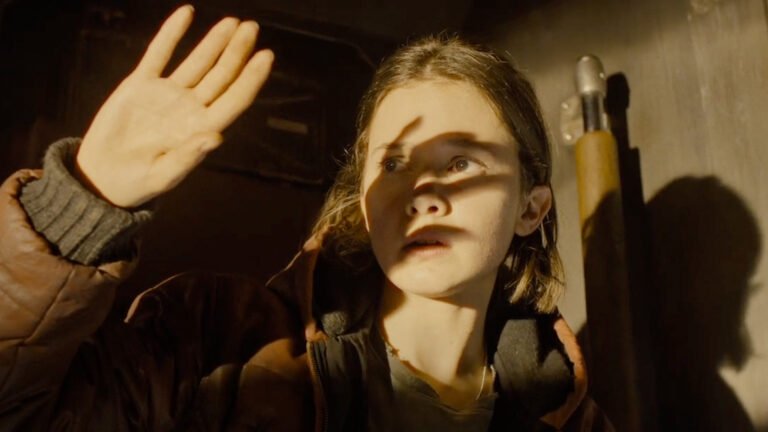
Post-apocalyptic horror is nothing new, but every now and then, a film emerges from the wasteland and demands attention. Arcadian, directed by Benjamin Brewer, is one of those films. It delivers tension, heart, and just the right amount of monster mayhem, all wrapped in a gripping survival story. And of course, Nicolas Cage brings his signature intensity—but it’s the film’s emotional depth that truly sets it apart.

The Setup: Apocalypse with a Side of Parenting Nightmares

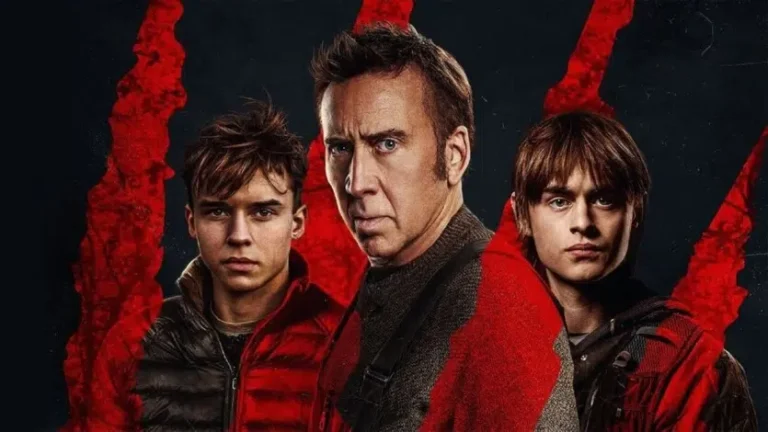
The story follows Paul (Nicolas Cage) and his two sons, Joseph and Thomas, as they struggle to survive in a world that’s been decimated by mysterious creatures. Humanity is gone, the land is barren, and the night belongs to the monsters.

Living in a secluded farmhouse, Paul is not just fending off external threats—he’s also desperately preparing his sons for a future without him. Teenage rebellion, survival lessons, and fatherly love collide in a setting where making a single mistake means getting torn apart.

Survival Meets Family Drama

On the surface, Arcadian might look like another A Quiet Place-inspired horror flick, but it quickly proves to have its own identity. The monsters are terrifying, but they act more as a backdrop to the real story—the fragile, deeply human bond between a father and his sons.

This focus on character over creature horror makes the scares hit even harder. The tension isn’t just about what’s lurking outside—it’s also about the choices the family has to make.

Nicolas Cage, known for his over-the-top performances, actually delivers a subtle, haunting take on Paul, a father driven by fear, love, and the weight of inevitable loss. But the real stars are the young actors playing his sons—they carry the emotional core of the film, making every moment feel raw and authentic.

Monsters, Mayhem & A Third Act That Goes Off the Rails

The buildup in Arcadian is masterful—the film drips with dread, keeping you on edge even in its quieter moments. But when the third act arrives, all hell literally breaks loose.

The creatures, which were kept largely in the shadows, finally get their moment to shine (or terrify), and the result is pure chaos. While the finale delivers on thrills, it also gets a bit messy—some narrative threads feel rushed, and the emotional weight that grounded the film gets slightly overshadowed by pure action spectacle.

The Verdict: Is It Worth the Watch?

Tension so thick, you could cut it with a knife.
Strong performances, especially from Nicolas Cage and the young cast.
A perfect blend of horror and family drama.
Creative cinematography that maximizes dread.

The third act gets a little too chaotic, losing some of its emotional weight.
The premise doesn’t break new ground.

Final Rating: 2/5 – Tense, Emotional & Brutal

While Arcadian might follow some familiar post-apocalyptic horror beats, it nails the execution. With strong performances, palpable dread, and a heartfelt core, it stands out as one of the more gripping survival horrors of recent years.

So if you’re in the mood for a monster movie that actually makes you care, give Arcadian a shot. Just… maybe don’t watch it before bed.
Colors from the Dark Series: Blue in Horror

0

“I have a blue house, with a blue window…”
You already know where we’re going with this.

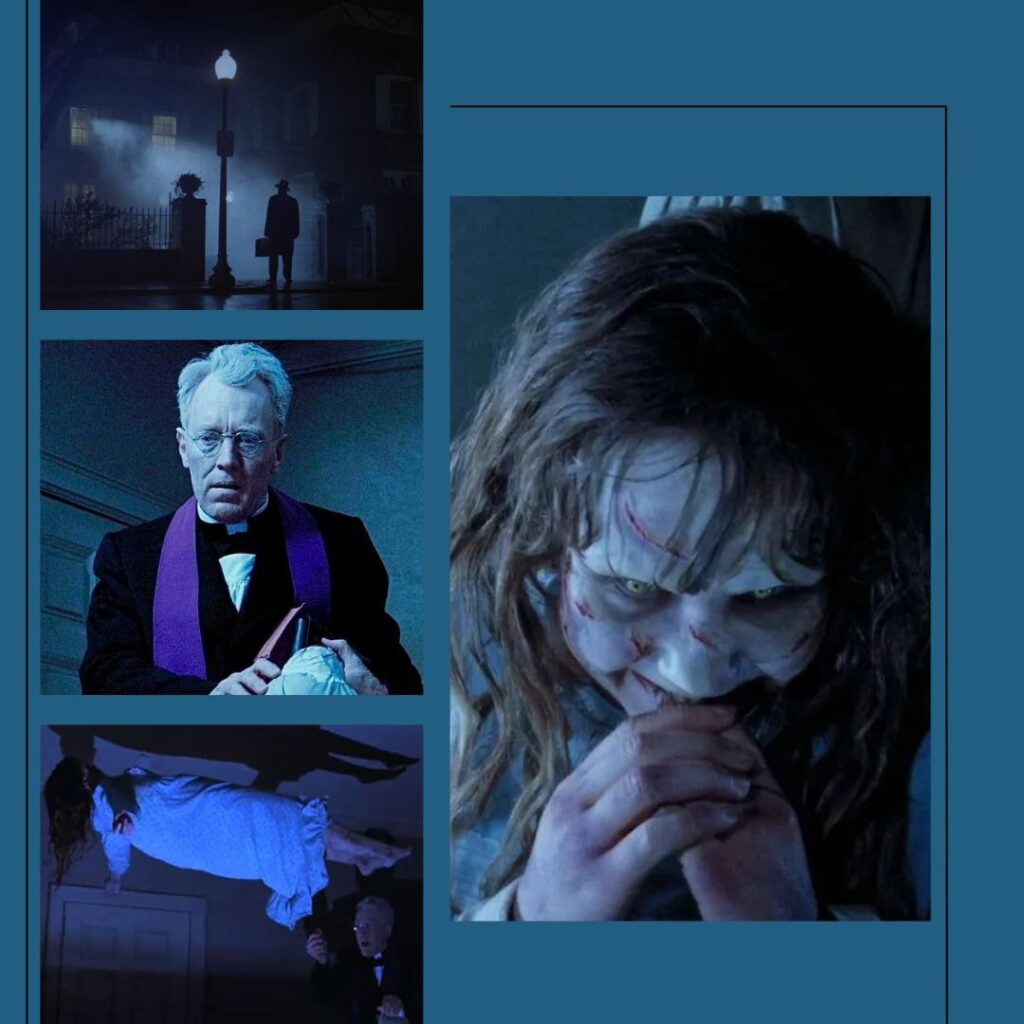
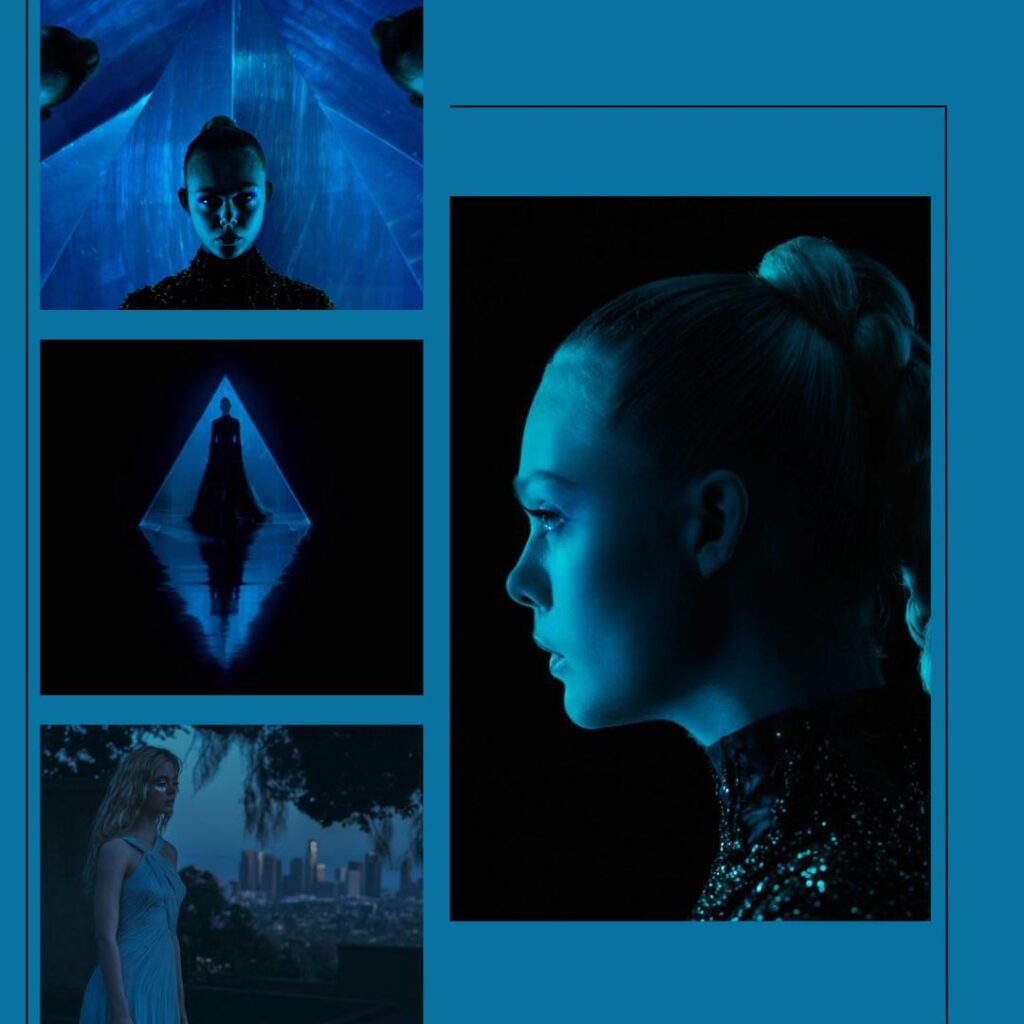
Today on Colors From DarkWorlds, we’re talking about blue — and its colder cousin, light blue. Unlike the fiery energy of red or the consuming black void, blue in horror is quiet. It doesn’t scream — it lingers. It freezes. It haunts.

Blue might not always be the color of blood, but it’s often the color of what’s left behind after it’s spilled.

Coldness and Isolation

Blue is the color of ice, snow, and everything frozen in time.

In John Carpenter’s The Thing, the eternal blue of Antarctic ice and sky isn’t just a backdrop — it’s a prison. That blinding cold builds an atmosphere of isolation, where the horror is as much about being cut off from the world as it is about the monster itself.

In 30 Days of Night, the cold blue filter enhances the feeling of endless winter. It’s a visual death sentence — no sun, no hope, no way out. The blue tones aren’t just about temperature. They’re about emotional frostbite — numbness, dread, and inevitability.

Melancholy and Emotional Dread

In English, we say “feeling blue” for a reason.

Blue in horror often signals grief, depression, and spiritual fatigue. It’s the color of long nights, empty beds, and too-quiet houses.

In The Babadook, the entire film is drenched in cool blues and pale grays, reinforcing the central metaphor of depression. It surrounds the characters like a fog — constant, inescapable, and quietly crushing. The Babadook himself might be black, but he lives in a world built out of blue.

Blue doesn’t lash out like red — it sinks in slowly. It represents emotional numbness and the absence of joy, a palette of quiet despair.

Spirits, Demons, and the Uncanny

Red demons burn with rage. Blue ones just stare into your soul.

While horror often leans into red for monsters and hellfire, blue brings something more alien — cold, unfamiliar, and unfeeling. A blue ghost doesn’t need to scream. It just watches, waiting in the static.

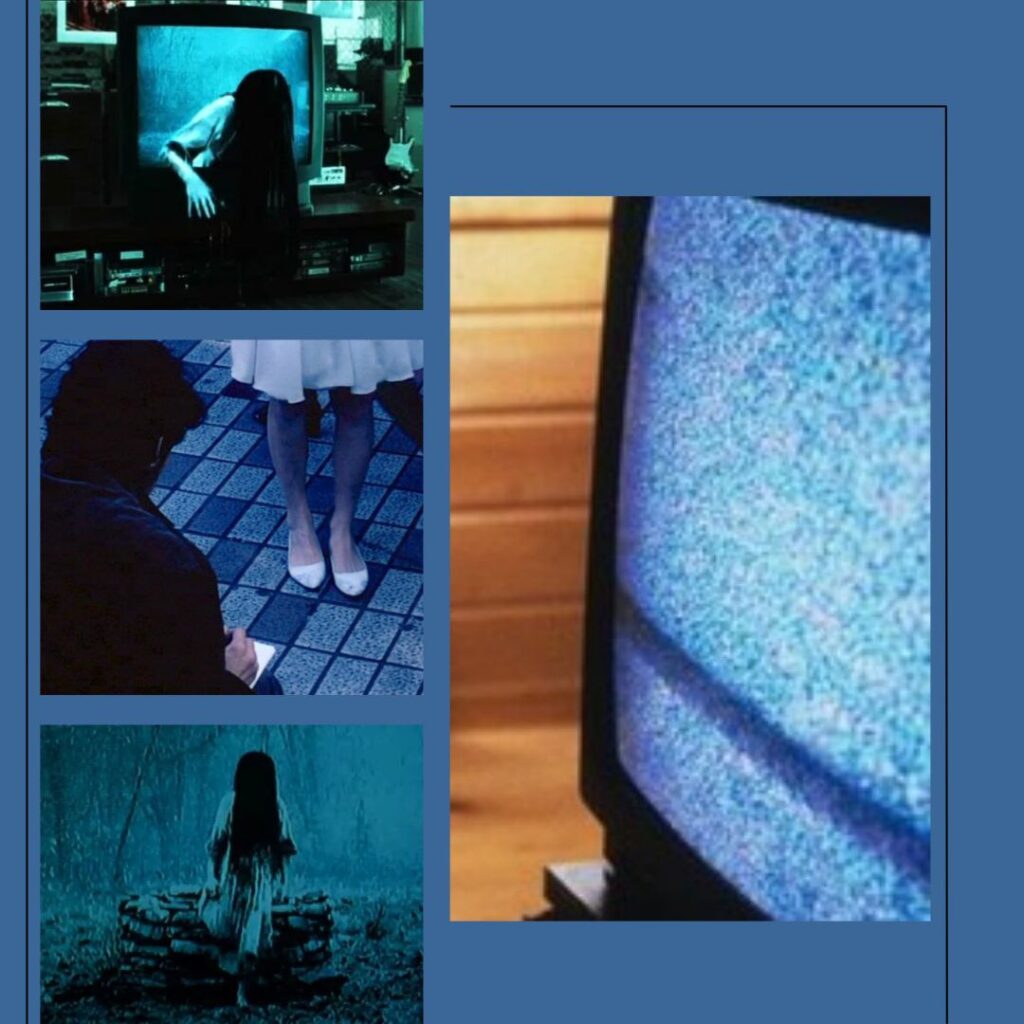
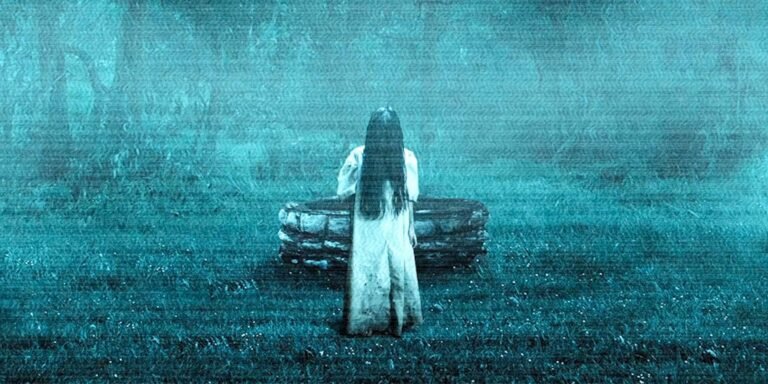
Take The Ring. That TV glow? Eerie, ghostly blue. The tape? Washed in cold light. When Samara (or Sadako in the original Ringu) crawls out of the screen, it’s not just the action that chills you — it’s that blue light, detached from reality, like something seeping through the veil.

Blue is the color of the uncanny. Of things that should not be.

Depth, Drowning, and the Unknown

Blue is also the color of deep water — and deep fear.

It’s the ocean at night. The sky before a storm. That endless drop when the flashlight beam disappears.

In movies like 47 Meters Down or Deep Blue Sea, blue is suffocating. The deeper the water, the darker the shade — and the closer to death. It symbolizes being cut off from the surface, from air, from clarity. It’s not just claustrophobia — it’s existential.

Blue in these films isn’t just water. It’s the loss of direction, the silence of drowning, the terror of something brushing your foot in the dark.

Final Thoughts: Blue Doesn’t Bleed — It Freezes

In horror, blue is a trap. It lulls you with quiet, distant beauty — and then it isolates, smothers, and numbs. It’s the color of monsters who don’t need to growl, just exist. It’s sadness in visual form. Loneliness without a cure. Fear that chills instead of burns.

So the next time the world turns cold and quiet onscreen…
watch out.
Something blue is coming.

Colors from the Dark Series: Black in Horror

0

Time to go really dark.

In this post for our ongoing series Colors From DarkWorlds, we’re diving into the most iconic horror color of them all: black. If red is the scream, black is the silence that follows. It’s the abyss. The unknown. The shadow in the corner that might be nothing… or might be the end of everything.

Black in horror doesn’t need an introduction — it’s everywhere. But its meanings go far beyond the obvious. From grief and madness to seduction and death, black is horror’s ultimate shape-shifter. So let’s pull back the veil and explore how filmmakers use black to scare us, move us, and drag us into the void.

Grief and Mourning

Black isn’t sadness — it’s sorrow.

Unlike the melancholic blues we associate with quiet depression, black in horror is used to express a deeper, more consuming grief — one that swallows characters whole.

In The Babadook, the creature itself is the embodiment of grief. While the home is saturated in cold blues, the Babadook is pitch-black — not just in look, but in essence. It’s a manifestation of unprocessed mourning, and its shadow spreads as the protagonist sinks further into despair.

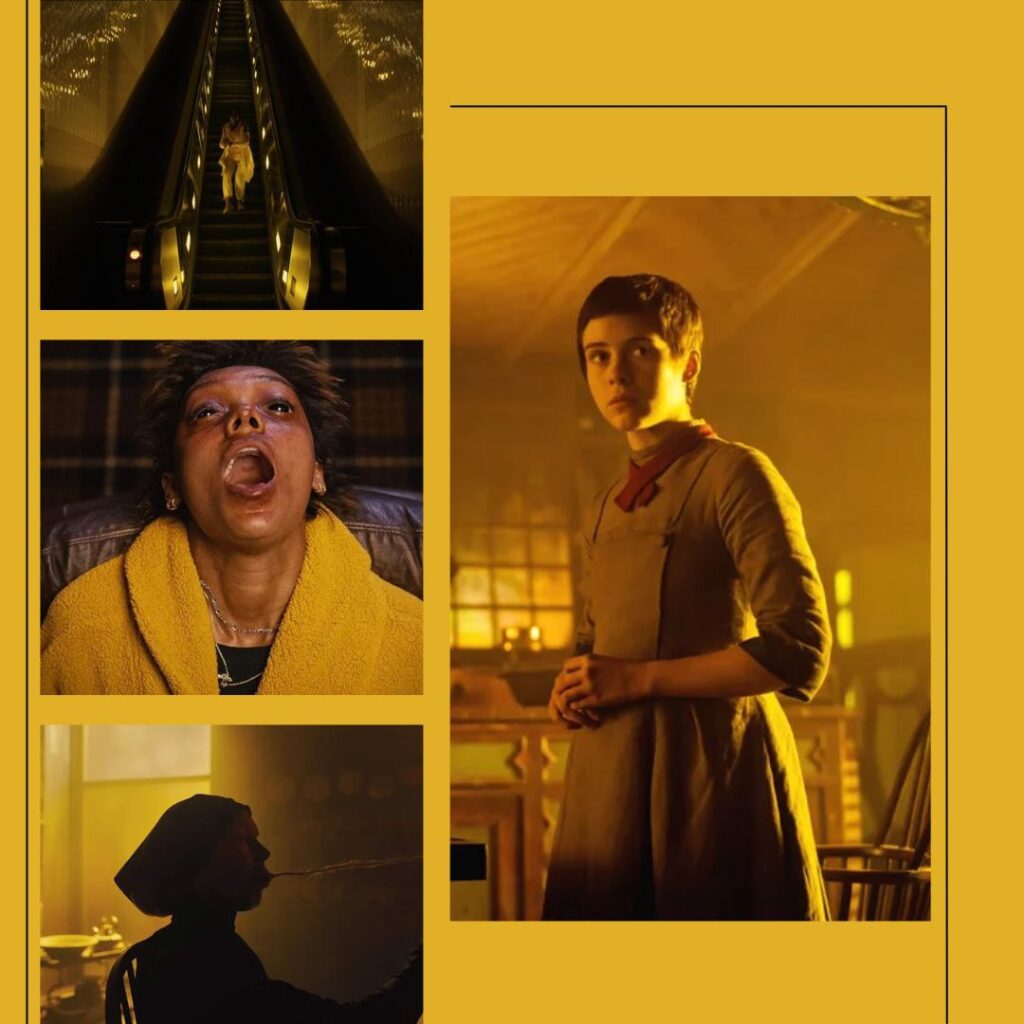
In The Woman in the Yard, the black-clad figure haunting the courtyard isn’t just a ghost — it’s a visual metaphor for the main character’s depression and suicidal ideation. Her presence is quiet, constant, and terrifying in its stillness. In these stories, black doesn’t kill. It remains — an inescapable weight pressing down on the soul.

The Unknown, the Void, the Darkness

Black is the absence of light, of color, of understanding.

In horror, black often represents the unknown — that liminal space between sanity and madness, life and death, or this world and the next. In Get Out, when Chris is hypnotized, his mind is sent to the Sunken Place — a vast black void, terrifying in its silence and helplessness.

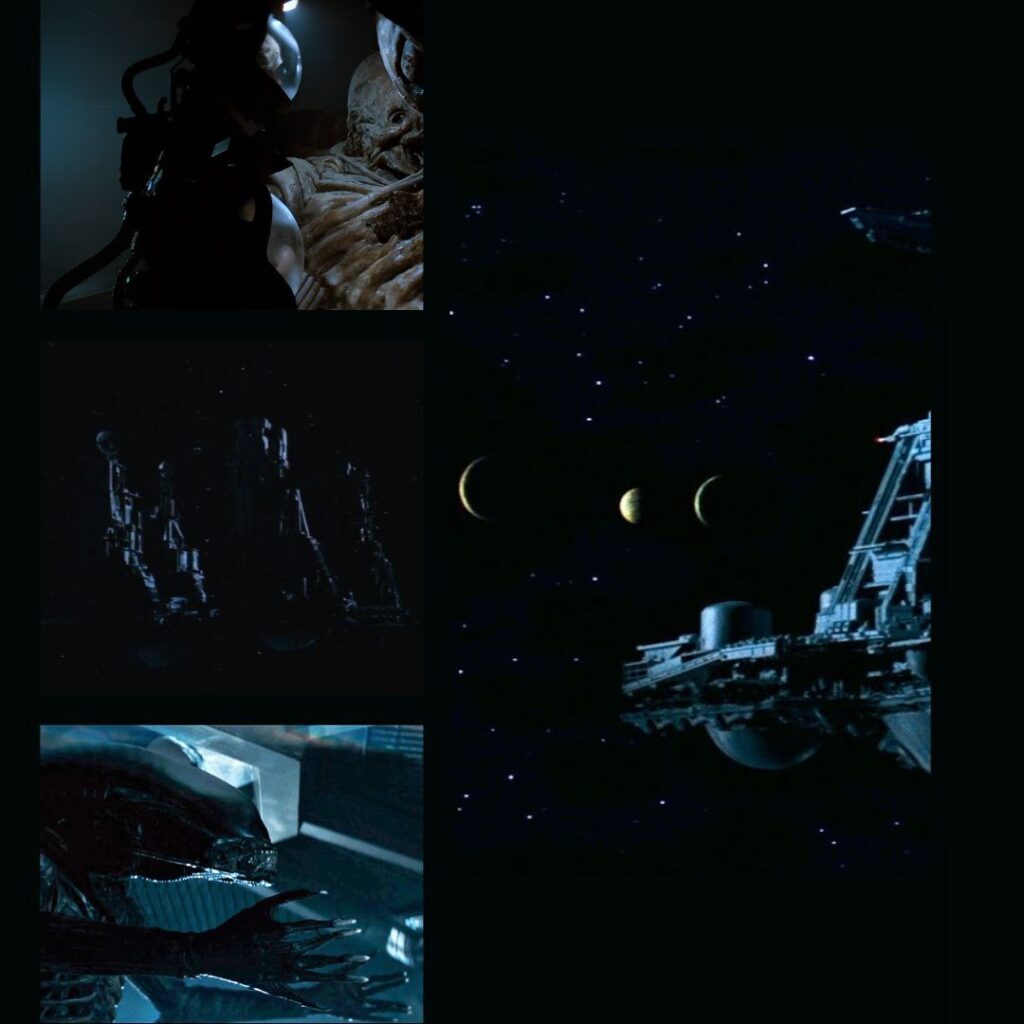
In Alien, the Nostromo is surrounded by the endless black of space, and the xenomorph itself — slick, black, and eyeless — becomes one with the shadows. You can’t fight what you can’t see. Black hides the enemy — and sometimes, it is the enemy.

Death, Evil, and the Inescapable End

Black is the color of finality — and the final act.

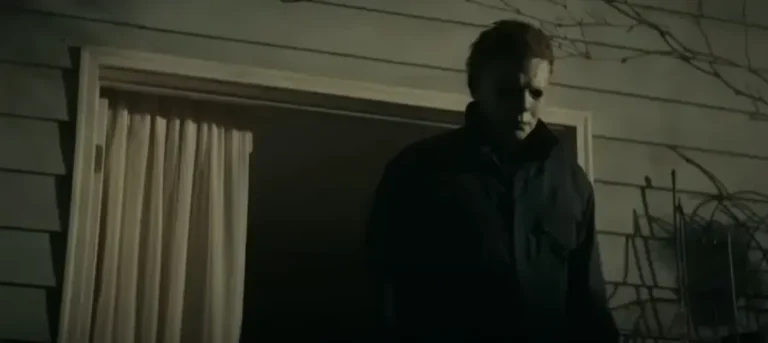
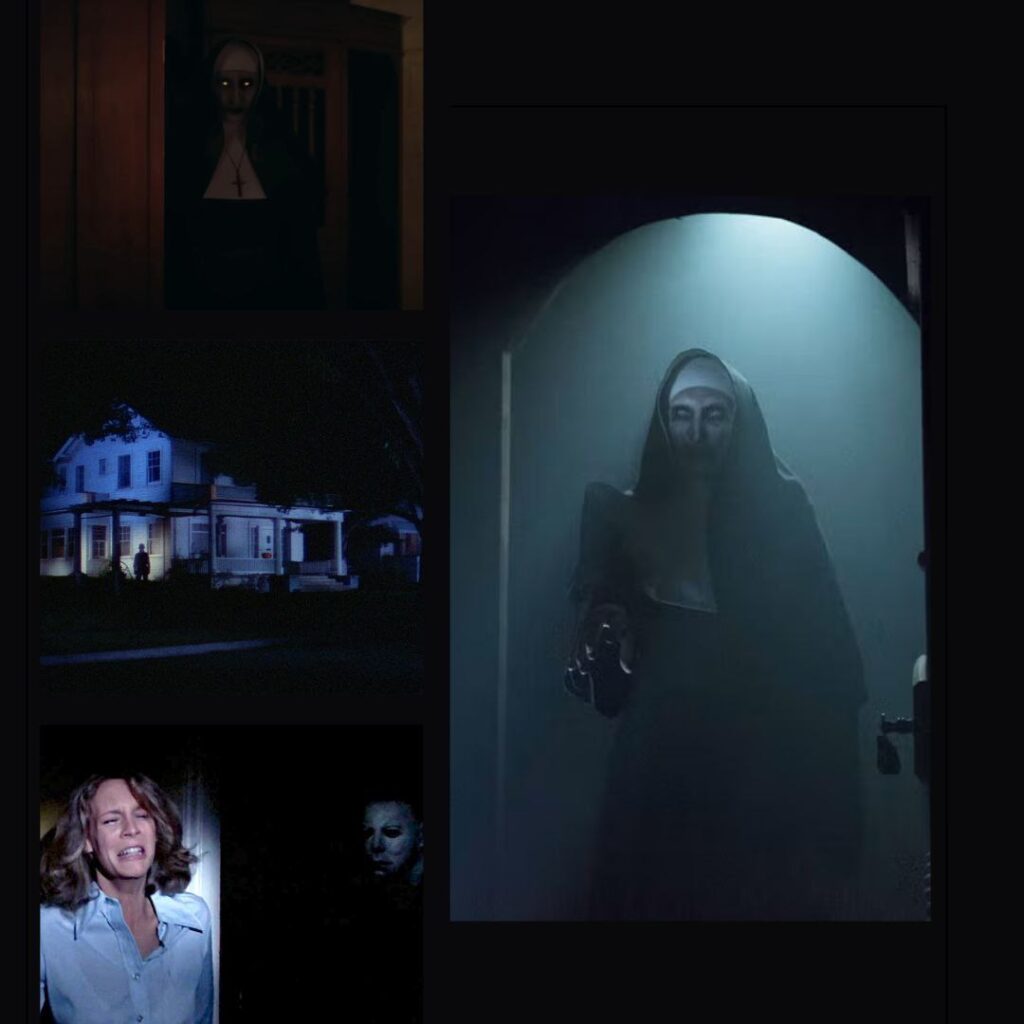
Horror’s most iconic killers? They love the dark. Michael Myers, Valak the Nun, Leatherface — all wrapped in black or emerging from the pitch-dark to claim their victims.

In Hereditary, death hides in the corners — literally. Figures linger in shadowy frames, barely visible but unmistakably there. The blackness becomes a character of its own, a silent harbinger of doom.

Lights Out takes it a step further: the creature only exists in darkness. You flick the switch, it disappears. You turn it off — and it’s already right next to you. Black isn’t just a background — it’s a threat.

Bad Omens and Curses

Black is also a signal — one of warning and dread.

In The Woman in Black, the titular ghost appears in mourning attire. Every time she’s seen, a child dies. She doesn’t scream, doesn’t chase — she simply appears, dressed in black, and fate does the rest. The color itself becomes a curse.

Other dark messengers? Think of the black dog in The Omen, or the crow in The Crow, or the black cat in Ju-On (The Grudge). These creatures aren’t inherently evil, but they’re signposts — if they show up, you probably won’t be sticking around for the sequel.

Forbidden Desire and the Allure of Pain

Black doesn’t just represent evil — sometimes it’s sexy. Dangerous. Erotic.

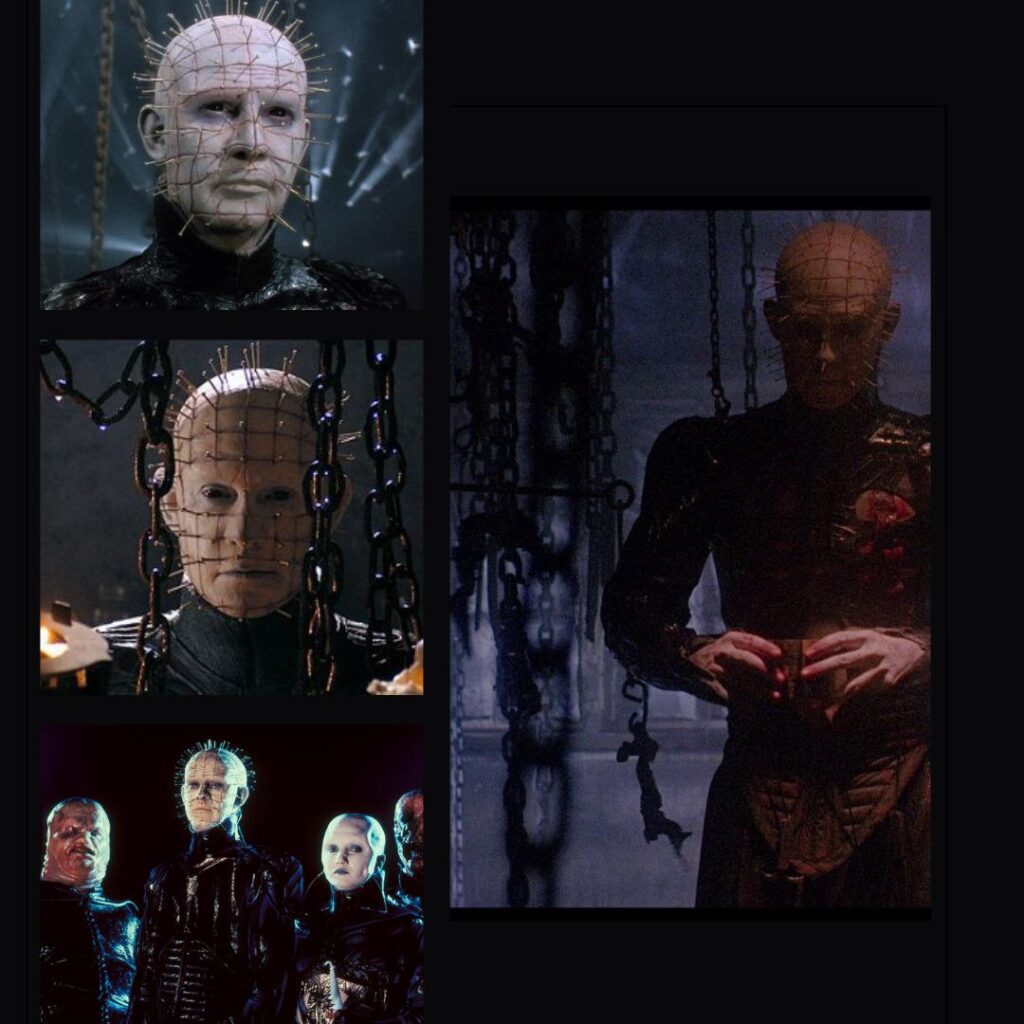
In Hellraiser, the cenobites are clad in leather and chains, evoking the aesthetics of BDSM and the blurred line between pleasure and pain. Their world is black: slick, cold, seductive. You can’t tell if it’s heaven or hell — and they like it that way.

Black here symbolizes taboo and transformation. Once you cross the line, there’s no going back. Pain is pleasure. Curiosity is destruction. And the color of both? Always black.

In The Substance, a shadowy frame of a mysterious phone call feels lifted straight out of Lost Highway — another Lynchian nightmare where black becomes the visual language of mystery, deception, and identity loss.

Witchcraft and Dark Magic

Where there are witches, there is black.

In Gretel & Hansel, the witch’s house is unnaturally black, absorbing light like a void in the forest. Her fingers are stained like they’ve been dipped in ink — a recurring visual shorthand for witchcraft throughout horror cinema.

The color black doesn’t just symbolize the supernatural — it embodies the cost of wielding dark power. And it’s not always reversible. At the end of Gretel & Hansel, Gretel defeats the witch… but her own fingers begin to turn black. She wants to be a good witch — but power always demands a price. And black is the ink in that contract.

Final Thoughts: Black Is the Genre

In horror, black is more than color — it’s an environment, an emotion, a force. It is where horror lives and where characters go to die (or transform… or return as something worse).

It is grief. It is danger. It is the unknown. It is desire.
It is horror’s oldest ally — and its most terrifying mask.

So the next time you see a black shadow on the wall, or a figure standing in a pitch-black doorway… don’t just ask what it is.
Ask what it means.

Because in horror, black never shows up without a reason.

Colors from the Dark Series: Yellow in Horror

0

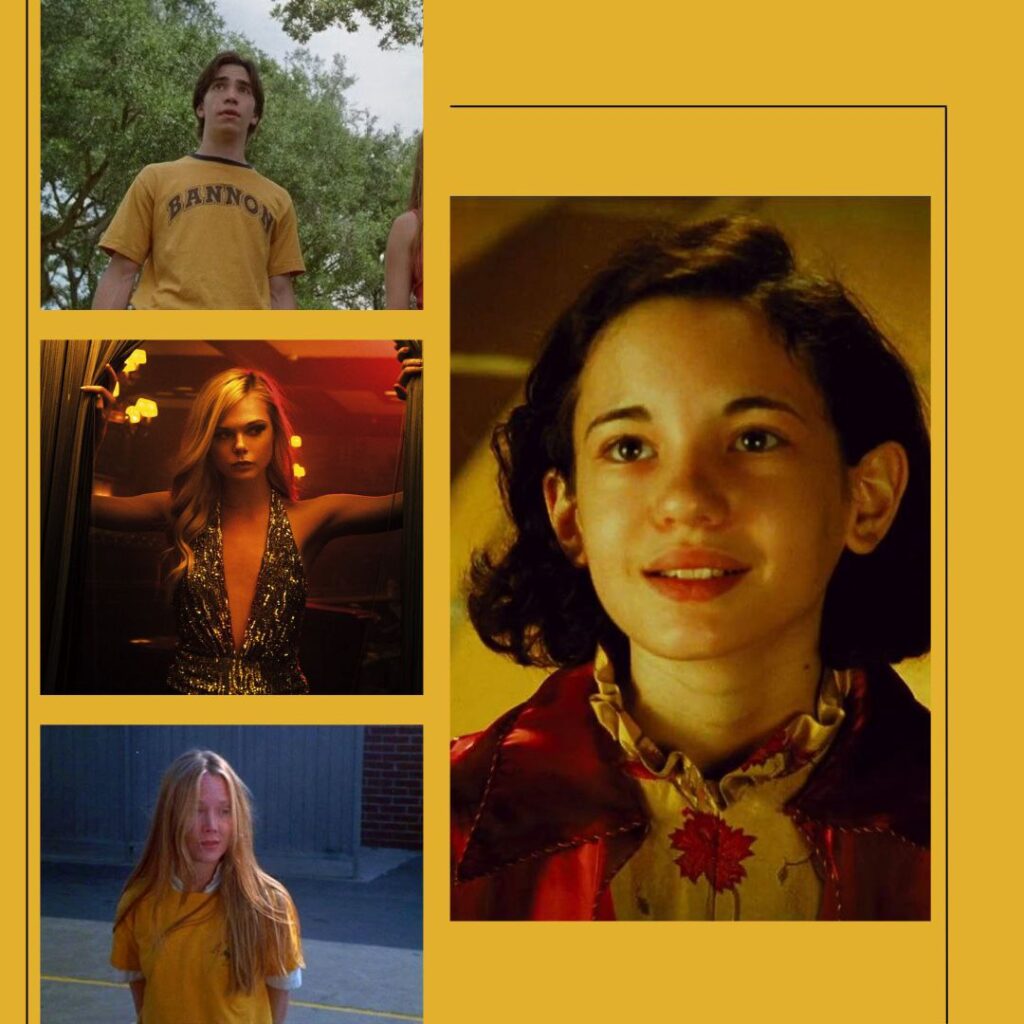
Lets dig into how horror movies use color to shape emotion, build tension, and scare the soul right out of you.

We’re kicking things off with one of the most deceptively complex colors in the horror spectrum — yellow. It might look sunny and harmless on the surface, but in horror, yellow has a dark side… or five.

Let’s unpack what this tricky little color is really saying when it shows up on screen.

Impending Danger

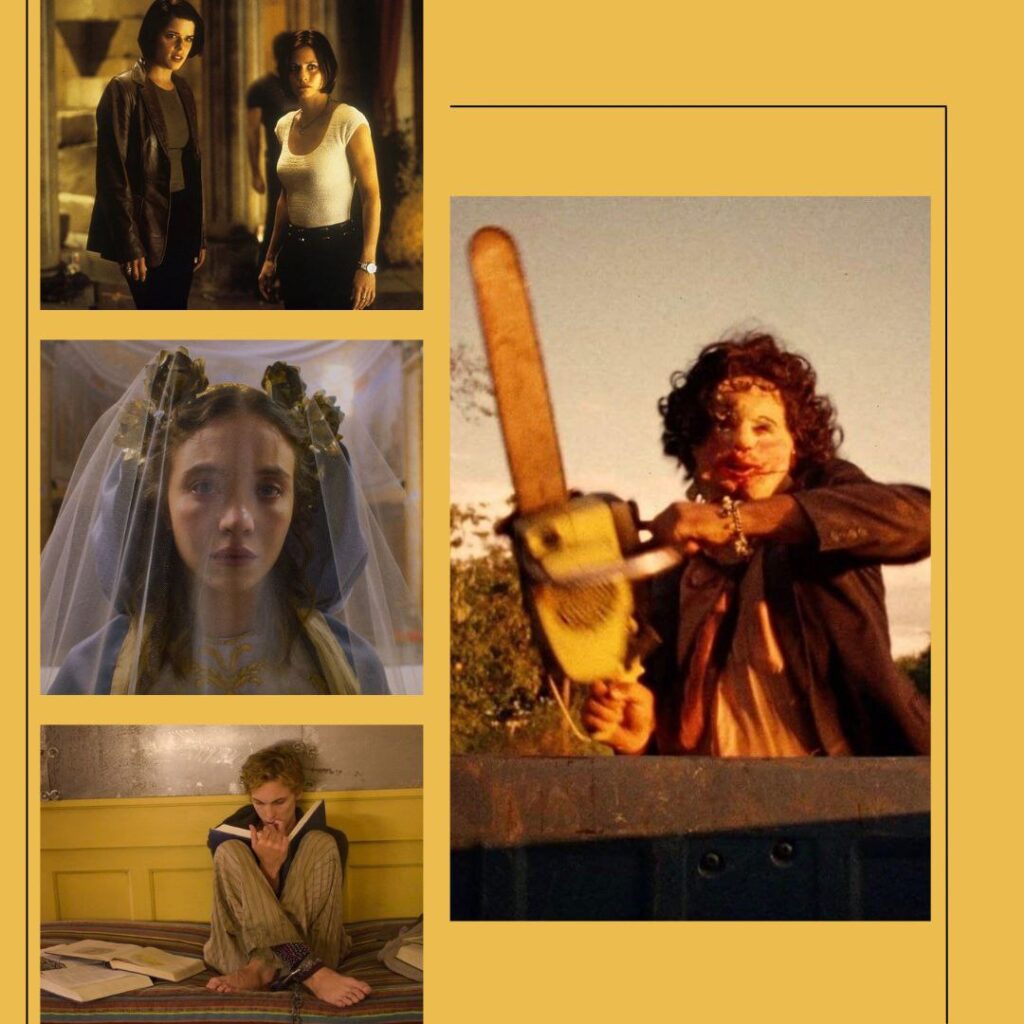
Yellow screams: Warning!

It’s the color of road signs, hazard tape, and all those flashing lights you see in your rearview mirror right before something bad happens. In horror, yellow often appears right before the world tilts sideways — when the characters (and we) should have seen the signs.

Think of Jaws — the bright yellow inflatable raft and float ring bobbing in the waves, just before the shark attacks. Yellow here doesn’t symbolize joy — it alerts us to blood in the water.

And then there’s the cursed yellow raincoat from It. Poor Georgie’s signature look is practically a walking red flag. It might as well say, “I’m about to meet a clown, and it’s not gonna end well.”

Yellow in these moments functions as a visual highlighter for horror — marking characters and spaces for doom before they even realize it.

Warmth and False Hope

Yes, yellow can still be warm, cozy, and sunny… at first.

It’s the color of light through your window on a safe morning. Of childhood. Of hope. But in horror, yellow rarely gets to stay innocent for long.

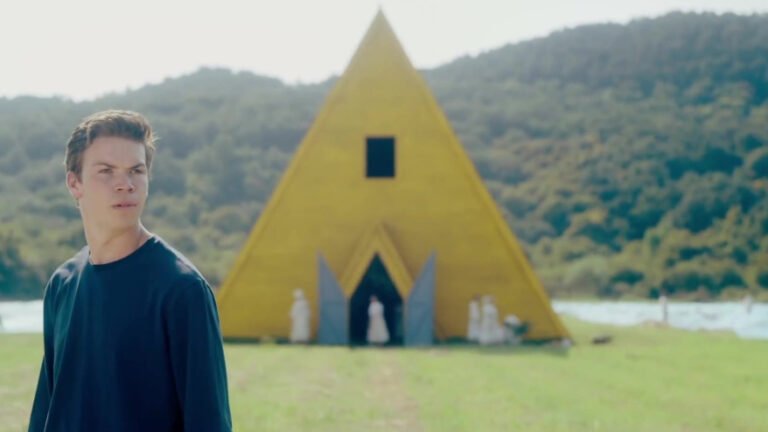
Often, yellow is used to lull us into a false sense of security — a warm tone that sets us up for the fall. Think of sun-drenched fields that hide a cult (Midsommar, we’re looking at you), or golden lighting that turns sickly once the truth creeps in.

Yellow offers hope… just long enough for horror to snatch it away.

Wealth, Power, and Fate

Yellow = gold. And gold = power.

In some horror films, yellow carries the symbolism of royalty, destiny, or divine status. It’s a color of high stakes — not because it’s scary itself, but because of what it represents.

In Pan’s Labyrinth, yellow appears in key moments to signal the protagonist’s path toward her true identity as a princess. The warm glow of yellow becomes a magical guide — something tied to fate and higher calling.

In this context, yellow isn’t danger — it’s destiny.

Madness and Mental Decay

Yellow has long been associated with insanity, especially in closed, sterile, or institutional spaces.

Ever since the wallpaper in The Yellow Wallpaper (yes, that’s a real 1892 horror short story), the color has been linked to claustrophobia, obsessive thought, and the descent into madness.

In films that feature yellow-tinted hospital walls, dim yellow lighting, or rooms painted in sickly beige-yellow hues, the implication is clear: someone’s mind is starting to crack.

This isn’t the warmth of a sunrise. This is the flickering yellow bulb in a place where reality no longer holds.

Decay, Disease, and Death

And then there’s the darkest reading of yellow: rotting flesh, jaundice, decomposition.

It’s the color of illness, of the body breaking down, of age catching up. A character might not be bleeding, but their skin is yellowing — and we know what that means. Whether it’s literal or metaphorical, yellow can indicate that someone is not long for this world.

Horror doesn’t need buckets of blood when a character just looks… off. A sickly yellow pallor can be more unsettling than any scream.

Final Thoughts: Yellow Is a Liar

In horror, yellow is never just cheerful. It can be a warning or a trick, a beacon or a trap. It might promise sunshine, but it often delivers something colder — and far more terrifying.

So the next time a character steps into a warm yellow light, don’t get comfortable.
That glow might be the last good thing they ever see. Let me know which color you’d love to explore next. Green envy? Blue sorrow? Or maybe the blackest black of them all?

Pretty in Pink: Why Horror Movies Love a Color That’s Supposed to Be Sweet

0

Pink is not your typical horror color. It’s soft. It’s sparkly. It’s something you’d expect to find in a unicorn sticker book or Barbie’s dreamhouse, not a slasher flick. And yet — it shows up in horror more often than you’d think.

That’s because pink isn’t just cute. It’s a layered color — one that can signal innocence or irony, girlhood or revenge, sweetness or psychological instability. In the right hands, pink doesn’t soften the horror — it sharpen it with contrast.

Let’s take a closer look at what pink means in horror, and how filmmakers have used it to unsettle, surprise, and terrify us.

Femininity & Girlhood

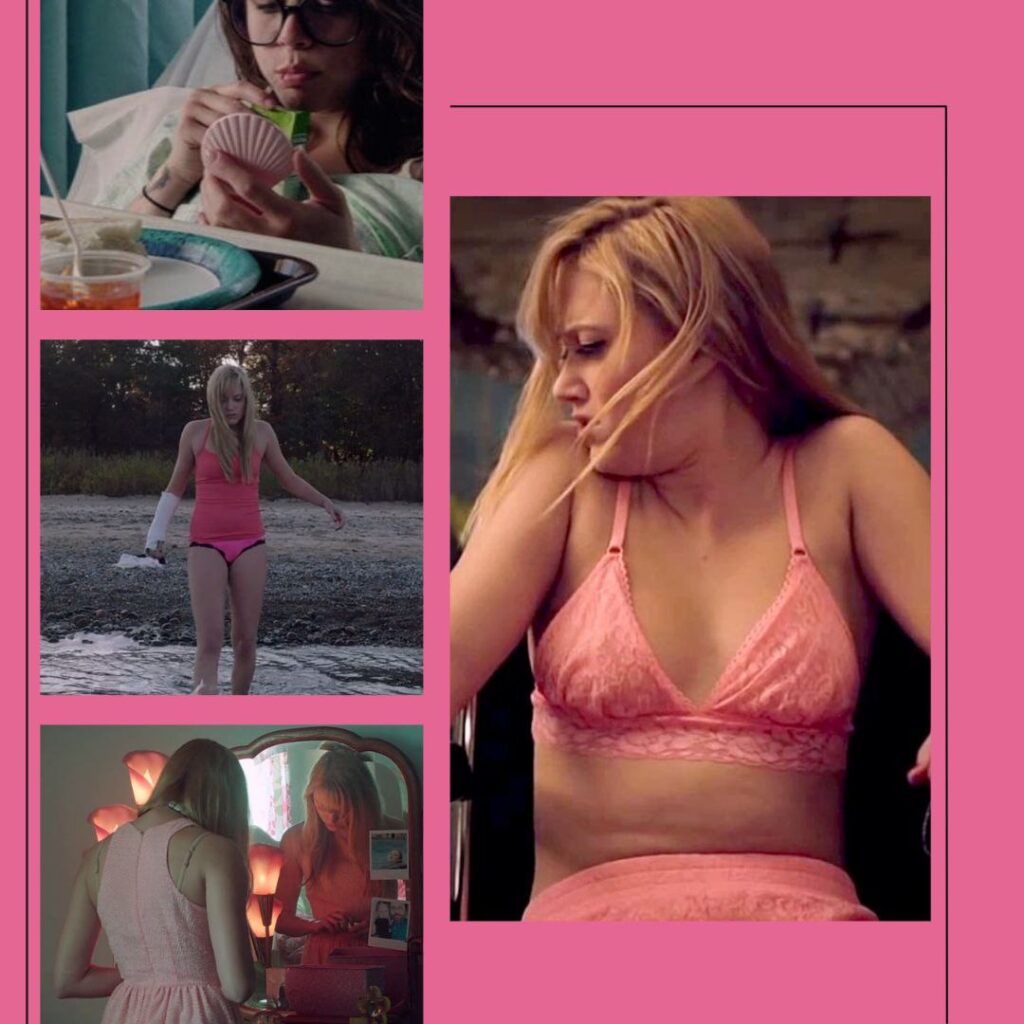
Jennifer’s Body (2009)

Let’s start with the classic association: pink = feminine, girly, delicate. It’s the go-to shade for gender reveal parties (“It’s a girl!”) and toy packaging. In horror, this stereotype gets flipped on its head.

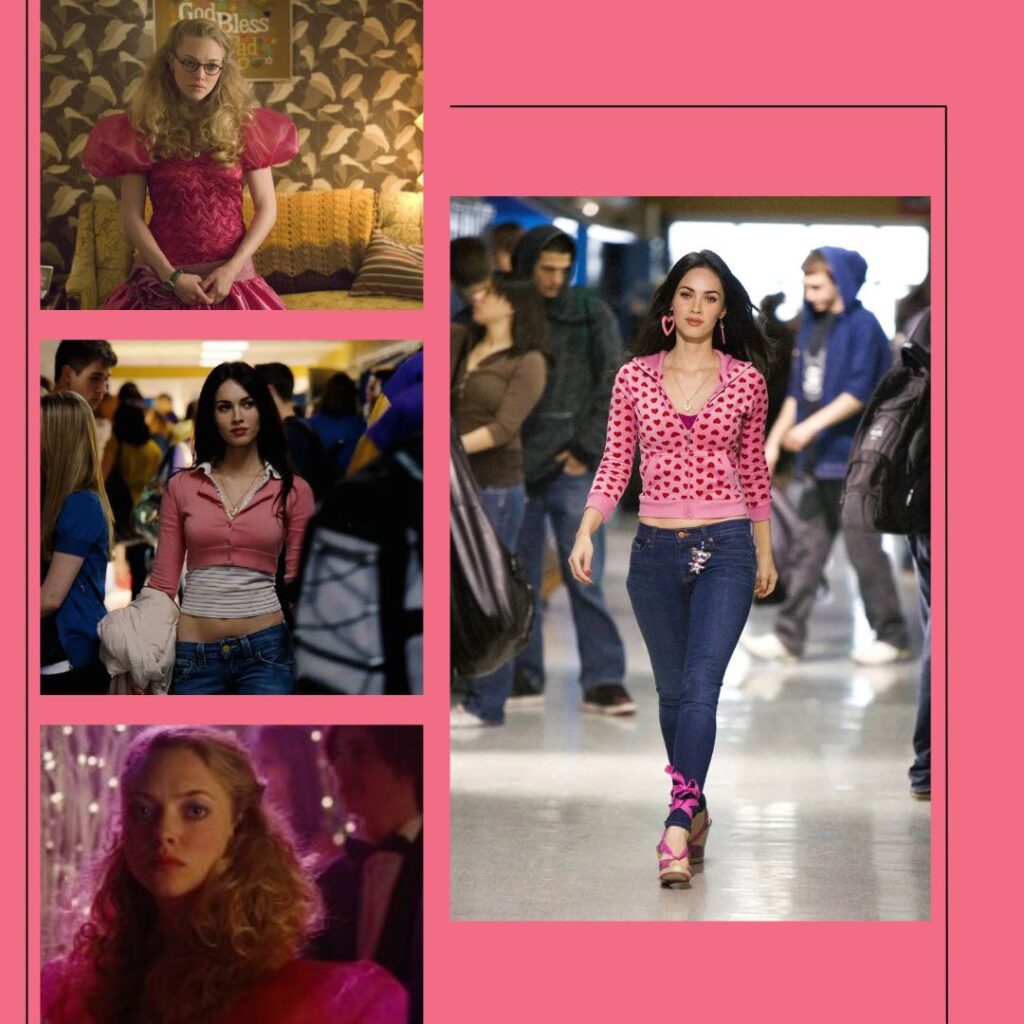
Take Jennifer’s Body. Megan Fox struts through high school in a bubblegum-pink sweater, all shiny lip gloss and cheerleader vibes. But after dark? She’s devouring teenage boys and soaking the floor in blood. Her outward softness becomes a weapon — the ultimate “girly girl” turned predator.

The genius here is in the contrast: pink as armor. Pink as performance. Pink as something that doesn’t make you weak — it lures them in.

Empowerment, Irony & Rage

Promising Young Woman (2020)

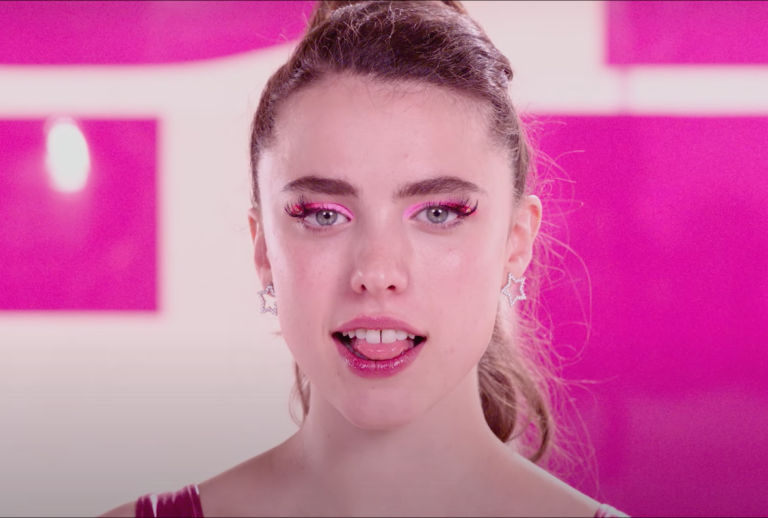
Pink can still be soft — but in the hands of the right woman, it’s a trap. In Promising Young Woman, Cassie (played by Carey Mulligan) wears pastel dresses, ribbons, and manicured nails, but behind the sweetness lies a brutal mission: to avenge her best friend and hold predatory men accountable.

Her candy-colored look throws people off. It disarms them. That’s the point. In horror and horror-adjacent thrillers, pink can be a coded warning — this woman may look fragile, but she’s not here to play nice.

Jennifer and Cassie are spiritual cousins: smart, hurt, and using femininity as a disguise for fury.

Innocence, Naivety & Vulnerability

Pink is also the color of first crushes, baby blankets, and soft childhood memories. It evokes a kind of pre-adulthood glow — the last moment of safety before the world gets sharp.

That’s why it works so well in horror — it creates a visceral contrast. When horror descends on pink-soaked scenes, the innocence makes the fear hit harder. Think of a bloodbath in a child’s bedroom with pastel wallpaper. A creepy porcelain doll in a rose-pink dress. A character in a pink hoodie walking straight into danger.

In horror, pink often signals someone who’s not ready — someone who’s still trusting, still unarmored, still believing the world is fair. That makes them a perfect target… or a character about to undergo a horrifying transformation.

“Rose-Tinted Glasses” and Shattered Fantasies

And then there’s the metaphor: pink as illusion. The color of rose-tinted glasses, daydreams, and comforting lies. In many horror films, pink represents the world before it breaks — before the monsters crawl out, before the betrayal, before the body count begins.

It’s a color that can signify the calm before the storm, or worse — denial in the face of it. The kind of false safety that makes the eventual horror feel like a sucker punch. And when that fantasy world comes crashing down? The shards often cut deep.

We see it in stories where a character’s dreams are replaced by nightmares, where innocence is corrupted, or where sweet aesthetics mask a rot underneath. In horror, pink doesn’t protect you — it deceives you.

Final Thoughts: Pink Has Claws

Pink is a trickster in horror. It can mean purity or poison, softness or strength, naivety or calculated vengeance. It’s a color that filmmakers use because it creates contrast — between what we expect and what we get.

So the next time you see pink lighting in a horror film, or a character dressed like a pastel princess, don’t get comfortable. That soft glow might be the last warmth before everything burns down.

Because in horror? Even pink bleeds.

Seeing Red: Why Horror Movies Love This Color

0

Red is everywhere in horror. It’s splashed across posters, soaked into lighting, dripping down walls, and stitched into costumes. From buckets of blood to crimson dresses, red is the genre’s go-to color – a symbol that rarely whispers and almost always screams.

At first glance, red might seem like a no-brainer: it’s the color of blood, danger, violence. But it’s also the color of passion, desire, power, obsession, and even transformation. In horror, these themes are often intertwined – and red brings them all to the surface in vivid, visceral ways.

So instead of listing off every scary red hallway in cinema history, let’s go deeper – through concrete examples that show how red is used in horror not just for style, but for storytelling.

Blood and Violence

Carrie (1976 / 2013)

Let’s start with the obvious. In Carrie, red isn’t just color – it’s destiny. From the film’s infamous opening scene, where Carrie experiences her first period in a high school locker room, to the final, iconic blood-soaked prom moment, red marks the beginning and end of her transformation.

Here, red symbolizes both literal blood and the violence that comes with it – psychological, social, and supernatural. She’s shamed for bleeding, ridiculed by her classmates, and emotionally brutalized by her religiously fanatical mother. The red prom dress she never wears is replaced by a deluge of pig’s blood, and with it, her descent into full-blown rage. Red doesn’t just represent violence – it triggers it.

Hunger and Lust

Raw (2016)

Julia Ducournau’s Raw might be the most deliciously disturbing film about color since Argento’s Suspiria. In Raw, red is tied directly to carnal hunger – both literal and metaphorical. As the protagonist discovers her taste for human flesh, her appetite grows alongside her awakening sexuality.

In one unforgettable scene, the entire party room is bathed in saturated red light. The camera lingers on her face, lit up like a predator eyeing its prey. Red becomes a reflection of both repressed craving and overwhelming desire – not just to consume, but to connect, dominate, and feel alive.

Danger and the Unknown

The Sixth Sense (1999) & The Village (2004)

M. Night Shyamalan doesn’t just use red – he weaponizes it. In The Sixth Sense, red marks the presence of the supernatural. It appears at the threshold between life and death: a red doorknob, a red dress, a red balloon. It’s a warning – something unnatural is near.

In The Village, red is literally called “the bad color.” The townspeople refuse to wear it, convinced it attracts the monsters lurking in the woods. They hide behind yellow cloaks – the “safe” color – as if red itself is a curse. In both films, red isn’t just symbolic. It becomes a narrative trigger, a signal to the viewer: brace yourself.

Rage and Brutality

Mandy (2018)

If Mandy had a mood ring, it would be permanently stuck on red. Panos Cosmatos drowns the screen in a crimson hellscape as Nicolas Cage’s character embarks on a grief-fueled revenge mission.

Here, red represents pure, unfiltered rage. Not the kind that burns out quickly – but the kind that transforms. As the film gets weirder, bloodier, and more nightmarish, Cage’s world turns entirely red – as if the film itself is bleeding with him.

Passion, Obsession, and Self-Destruction

Black Swan (2010), Suspiria (2018), and Pearl (2022)

Red isn’t just about violence – it’s also about obsession. In Black Swan, Natalie Portman’s character descends into madness in her quest for perfection. Red punctuates her hallucinations, her injuries, her metamorphosis. It represents the moment her identity fractures – when passion becomes pathology.

In Luca Guadagnino’s Suspiria, red isn’t just about blood. It’s about power and transformation. Witches, dancing, menstruation, ritual – red here symbolizes female energy unchained. It’s seductive, mystical, painful – and vital.

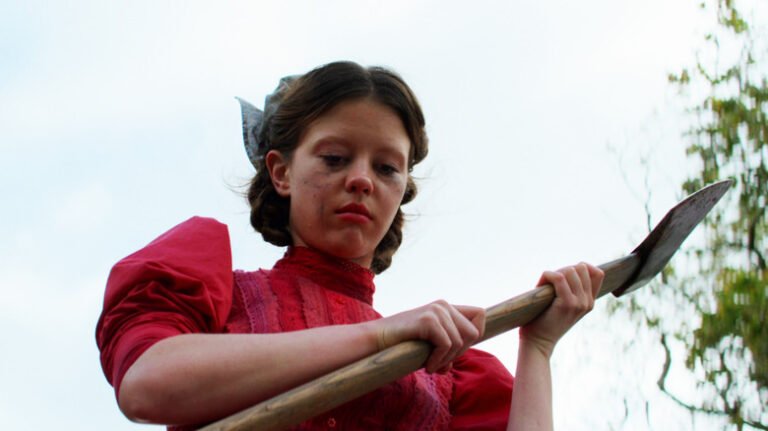
And then there’s Pearl. Her red dress is more than a costume – it’s a manifesto. Pearl wants to be a star, and she’s willing to kill to shine. Her passion burns hot and unrelenting, and red becomes the color of both her fantasy and her downfall.

Duality, Uniformity, and Protest

Us (2019)

In Jordan Peele’s Us, the red jumpsuits worn by the Tethered are instantly iconic. But they’re more than just costumes – they’re a symbol of blood, rebellion, and visibility.

The Tethered are the discarded, the forgotten – the literal shadow selves of privileged Americans. Their red uniforms turn them into an army, a unified symbol of rage and reclamation. Red makes them impossible to ignore – it screams for recognition. It demands that the audience confront what’s lurking beneath the surface – socially, politically, and personally.

Final Thought: Red Means More

In horror, red rarely means just one thing. It’s as layered as the genre itself – visceral, symbolic, and emotionally charged. Red can mean danger, but it can also mean desire. It can mark a monster’s presence or signal a woman’s awakening. It can reflect chaos, transformation, revenge, hunger, grief – or all of them at once.

That’s why it works. Horror is a genre of extremes, and red is its perfect language.

So next time the screen lights up crimson – whether it’s blood on the wall, a dress in the spotlight, or just a flicker of warning – ask yourself: what does this red want from me?

Because in horror, color always has teeth.

Top 20 Horror Movies of the 21st Century (So Far)

0

From haunted houses to cursed goats and cannibal soulmates — this is horror done right.

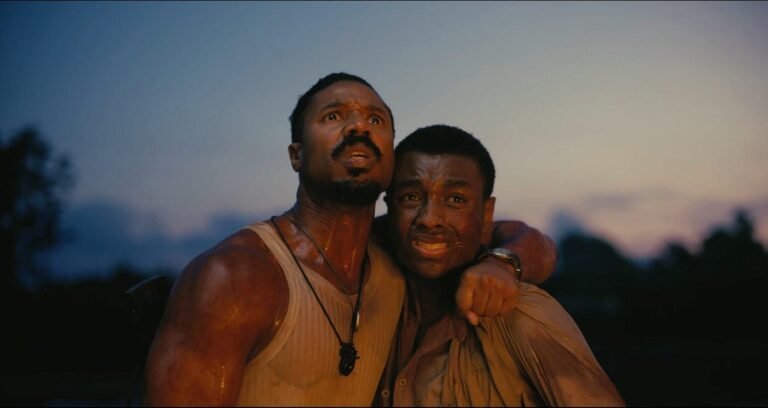
20. Sinners (2025)

Blues, blood, and vampires in the Jim Crow South.
Ryan Coogler goes full genre-bender in this bold, bloody, and politically loaded horror. Michael B. Jordan plays twin brothers running a juke joint… until the night creatures arrive.

19. Under the Shadow (2016)

War, oppression, and a flying demon in a chador.
Set in 1980s Tehran, this Iranian ghost story mixes feminist rage and cultural trauma into something deeply creepy and deeply human.

18. Bones and All (2022)

First love… with a side of flesh.
A dreamy cannibal romance starring Timothée Chalamet and Taylor Russell. Weirdly tender. Intensely disturbing. Surprisingly beautiful.

17. Talk to Me (2022)

A cursed hand, TikTok teens, and pure chaos.
This Aussie horror debut brings a fresh spin on possession, with brutal consequences and zero hand-holding.

16. His House (2020)

Refugees survive a war — but bring a curse with them.
A haunted house story with a powerful emotional core. One of the smartest horror films about displacement and guilt.

15. Presence (2024)

You’re the ghost. And you’re not welcome here.
Steven Soderbergh shoots this entire haunted house story from a first-person POV — and it works. Minimalist, eerie, and immersive.

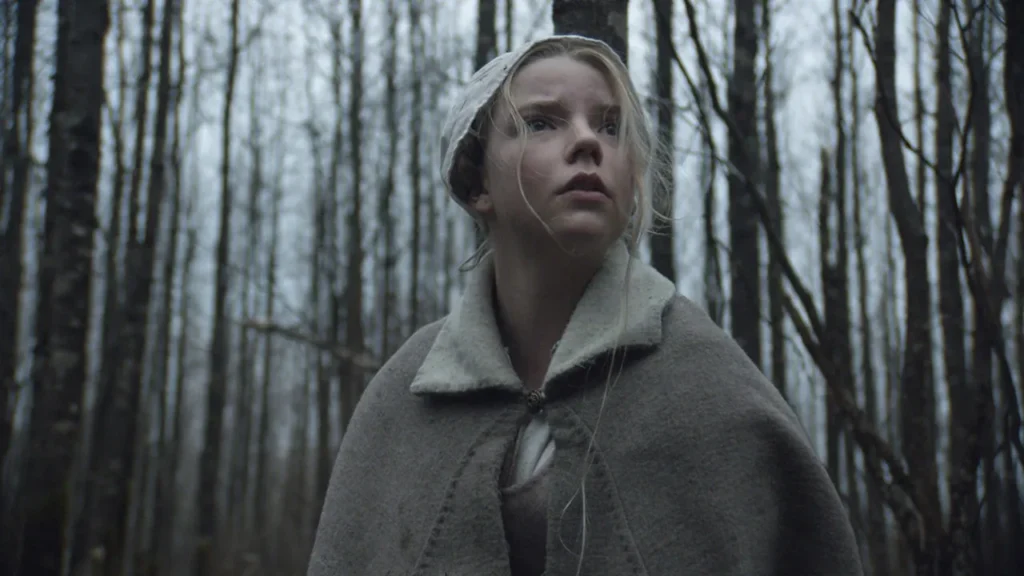
14. The Witch (2015)

Wouldst thou like to live deliciously?
Witchcraft, religious hysteria, and one truly charismatic goat. A slow-burn masterpiece that launched Anya Taylor-Joy and resurrected folk horror.

13. Get Out (2017)

Welcome to your worst in-laws’ weekend ever.
Jordan Peele turned racial tension into a nail-biting, genre-busting horror classic. Funny, sharp, and deeply uncomfortable.

12. Under the Skin (2013)

Scarlett Johansson as a seductive alien predator.
Hypnotic, strange, and unlike anything else. This is sci-fi horror with existential dread turned all the way up.

11. Pan’s Labyrinth (2006)

Monsters aren’t just in fairytales.
Guillermo del Toro blends Spanish history with dark fantasy and gut-punching tragedy. A modern fable that leaves a mark.

10. Let the Right One In (2008)

Swedish winter, childhood loneliness, and a vampire next door.
Quiet, chilling, and incredibly moving. This is Twilight’s cool, melancholic cousin with blood on its lips.

9. Nosferatu (2024)

He’s back. He’s terrifying. He’s beautiful.
Robert Eggers resurrects the vampire myth with gothic visuals, creepy vibes, and Bill Skarsgård at his creepiest.

8. The Others (2001)

Ghost story? Or something even sadder?
Nicole Kidman shines in this atmospheric twist-filled haunting that still holds up over 20 years later.

7. It Follows (2014)

Sex. Guilt. And a death monster that walks.
An eerie urban legend brought to life with unrelenting dread and lo-fi brilliance.

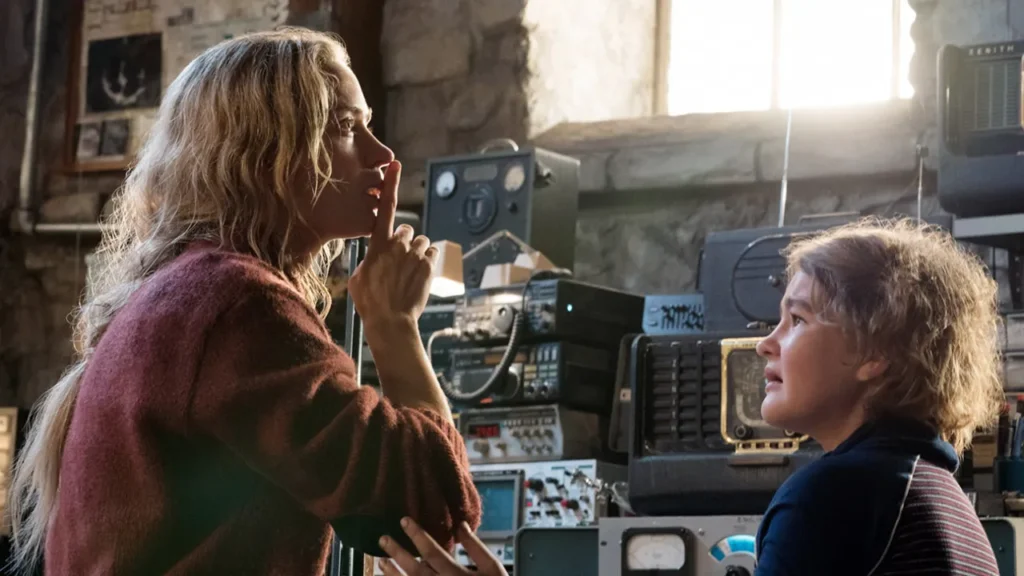
6. A Quiet Place (2018)

Silence is survival. And babies are the enemy.
John Krasinski makes sound the scariest thing imaginable. A smart, suspenseful creature feature with heart.

5. Drag Me to Hell (2009)

Demonic curses and projectile nosebleeds galore.
Sam Raimi delivers gross-out fun and slapstick horror in top form. A wild ride from start to screaming finish.

4. The Invisible Man (2020)

You don’t need to see a monster to feel terror.
Elisabeth Moss brings raw power to this domestic abuse allegory wrapped in invisible dread.

3. The Conjuring (2013)

Possession, hauntings, and that damn clapping game.
James Wan’s love letter to old-school horror — creepy, confident, and chilling. And it launched a whole universe of fear.

2. Train to Busan (2016)

Zombie outbreak… on a moving train. What could go wrong?
Korea’s answer to apocalyptic horror is fast, furious, and heartbreakingly human.

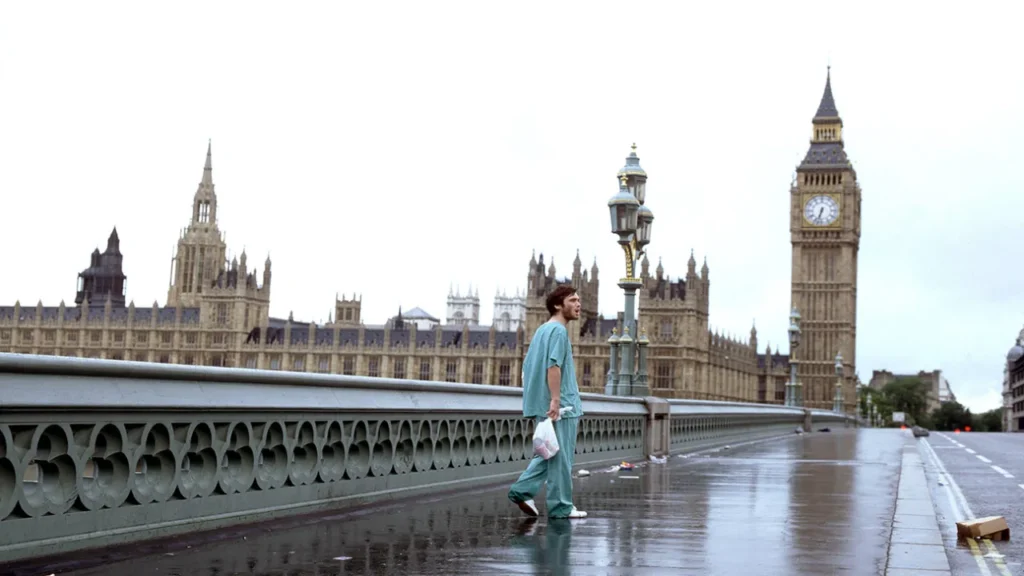
1. 28 Days Later (2002)

The end of the world never felt this close.
Danny Boyle redefined zombies with a dose of rage and realism. Bleak, brutal, and still unbeatable.

Got a favorite we didn’t mention? Want to swap out the goat movie for a haunted mirror?
Drop your takes in the comments — let’s talk horror like true fans.

Sinners (2025)

0

It’s 1932, Clarksdale, Mississippi. Prohibition is gasping its last breath, but Jim Crow laws are in full force. Twin brothers Smoke and Stack Moore (both played by Michael B. Jordan) return home with cash, scars from WWI and the Chicago mob, and a truck full of illegal booze.

They buy a rundown sawmill from a washed-up Klansman and hatch a bold plan: transform it into a juke joint—an all-Black temple of dance, music, and defiance. What starts as a gritty historical drama soon spirals into something far more sinister… and fang-filled.

✔ What Works

  • Original horror backdrop
    Vampires in 1930s Mississippi? That’s fresh. The setting is rich with tension, culture, and a legacy of pain that’s rarely explored in the genre.
  • Double dose of Michael B. Jordan
    As both brothers, he sells the brutal loyalty and bruised hearts of men trying to build something real—one with his fists, the other with his soul.
  • Electric supporting cast
    Highlights include Wunmi Mosaku as a voodoo-savvy ex-wife, Hailee Steinfeld as a bitter ex, and newcomer Miles Caton, whose blues performances on a Dobro guitar feel like they’re channeled from the dead.
  • Delta blues meets horror score
    Composer Ludwig Göransson and real-life blues legends like Buddy Guy and Bobby Rush cook up a soundtrack that’s not just authentic—it’s practically alive.
  • Vampire twist that bites back
    The film flips halfway through into a “From Dusk Till Dawn” switcheroo, with Jack O’Connell’s crooning bloodsucker Remmick serving major Elvis-gone-evil energy. Think gentrification, cultural theft, and literal soul-sucking.
  • Loaded with layered metaphor
    From juke joints to garlic to consent-based vampire rules, every element doubles as a commentary on appropriation, erasure, and survival.

✖ Where It Falls Short

  • Preachy at times
    The film wears its themes proudly—and sometimes too loudly. The race allegory isn’t always subtle, and certain lines feel like they came from a TED Talk, not a script.
  • Choppy pacing
    The first hour is slow, simmering drama, then the second half spirals into bluesy bloodbath. Some viewers might feel whiplash from the tone shift.
  • Stylized but not always smooth
    Visually, it’s stunning—but editing and transitions can feel rough, like someone freestyling a solo that just misses the beat.

 Final Rating: 4/5

A soulful, angry, and blood-soaked horror fable. Sinners may not be flawless, but it’s fearless—a genre-bending howl about identity, history, and who owns the sound of survival.

The Monkey (2025)

0

The Setup

Two twin brothers—Hal and Bill—stumble upon a vintage toy monkey while going through their missing father’s things. Cute? Think again. Every time the wind-up monkey bangs its drum, someone nearby dies in increasingly absurd and gory ways.

After a few freak accidents, the boys dump the cursed monkey down a well. Fast-forward 25 years: the deaths start again, the monkey resurfaces… and this time, Bill wants it back.

✔ What Works

  • Killer concept, killer execution
    Based on a lesser-known King short story, this isn’t your usual slow-burn adaptation. Director Osgood Perkins ditches the psychological dread for a full-on blood-splattered absurdist horror ride—and it works.
  • The monkey is pure nightmare fuel
    That creepy little grin. Those glassy eyes. The clacking drumsticks. It’s perfect horror meme material, and it orchestrates some of the most outrageous kills in recent memory.
  • Inventive, escalating deaths
    Harpoon through the chest?
    Accidental beheading while cooking?
    Cobra attack in Maine? (Yes, really.)
    Murder hornet swarm? Of course.
    This is Final Destination with a deranged circus flair.
  • Brothers locked in bloody conflict
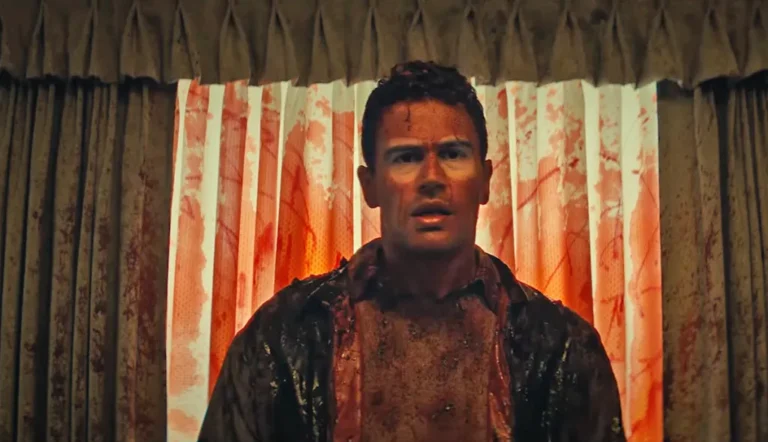
    The emotional core here is the toxic bond between Bill and Hal. As adults, they’re played by Theo James (yes, from The Gentlemen) in a dual role that balances broken man vs. full-on maniac.
  • Sharp casting across timelines
    Young twins are played by Christian Convery (Cocaine Bear kid!), and both age groups hit the right emotional notes—from tragic to unhinged.
  • Macabre humor with a purpose
    Beneath all the chaos is a bleak but honest worldview: life is random, death is absurd, and sometimes all you can do is laugh (or scream).

✖ Where It Falls Short

  • Don’t expect pure King
    King purists might be frustrated. Most of the original story’s tone—moody, psychological, and tragic—is swapped for something faster, bloodier, and way more unhinged.
  • Some kills teeter on cartoonish
    Depending on your taste, the gore may veer into full Looney Tunes territory. If you’re looking for slow dread, this isn’t your jam.
  • Theme overload in the back half
    While the absurdity is fun, the film tries to slip in existential musings on death, trauma, and fate. It doesn’t always land cleanly, but the ambition is appreciated.

Final Rating: 4/5

A killer monkey movie that delivers gore, dark laughs, and just enough emotional weight to make it hit harder than expected. Think Gremlins meets Final Destination, with a dash of childhood trauma.

Alien: Romulus (2024)

0

The Xenomorphs are back, and they’re scarier than ever. Alien: Romulus, directed by Fede Álvarez (Evil Dead 2013, Don’t Breathe), delivers a tense, claustrophobic return to the franchise, blending classic sci-fi horror with modern filmmaking. If you’ve been craving a nerve-shredding space nightmare, this one’s for you.

The Setup: Deep Space, Deep Terror

Set in the far future, Romulus follows a group of deep-space explorers who stumble upon an abandoned planet—or at least, that’s what they think. When their so-called groundbreaking discovery turns into a desperate fight for survival, they come face to face with one of cinema’s most terrifying creatures.

What sets Romulus apart from recent Alien films is its focus on psychological tension over body count. The film dials back on over-the-top action in favor of slow-burning dread, tight corridors, and a constant sense of impending doom.

The Horror, The Atmosphere, The Xenomorphs

Fede Álvarez knows horror, and he nails the paranoia-fueled terror that made the original Alien (1979) a masterpiece. Romulus thrives on claustrophobic environments, flickering lights, and the terrifying reality that something is always watching.

The Xenomorph itself is pure nightmare fuel—brought to life with top-tier practical effects that keep things looking real, slimy, and utterly terrifying. Álvarez uses CGI sparingly, ensuring that when the creature lurks in the shadows, it feels real.

Characters That Actually Matter

Unlike many horror films (including some Alien sequels), Romulus actually gives us characters worth caring about.

🔹 Cailee Spaeny leads the ensemble, delivering a strong, emotional performance that grounds the chaos.
🔹 The rest of the cast is diverse, well-acted, and full of personality, making their inevitable fates all the more impactful.
🔹 The script gives just enough character depth to invest in their survival without bogging down the pacing.

A Few Light Scratches on the Spacecraft…

No movie is perfect, and Romulus does have a couple of minor issues:

✖ Some pacing hiccups – The second act slows down a bit too much for a franchise known for its relentless tension.
✖ Familiar territory – While it brings a fresh take, it still relies on a lot of classic Alien tropes (which may feel predictable to longtime fans).

Final Verdict: 4/5 – A Terrifying, Worthy Return

Alien: Romulus doesn’t reinvent the wheel, but it sure makes it spin fast. It’s a nerve-wracking, atmospheric entry that honors the franchise while injecting fresh terror into its veins. Fede Álvarez delivers, the Xenomorph is horrifying, and if you love deep-space nightmares, this is one hell of a ride.

Recommended for: Hardcore Alien fans, sci-fi horror lovers, and anyone who enjoys watching humans make terrible survival decisions in space.