


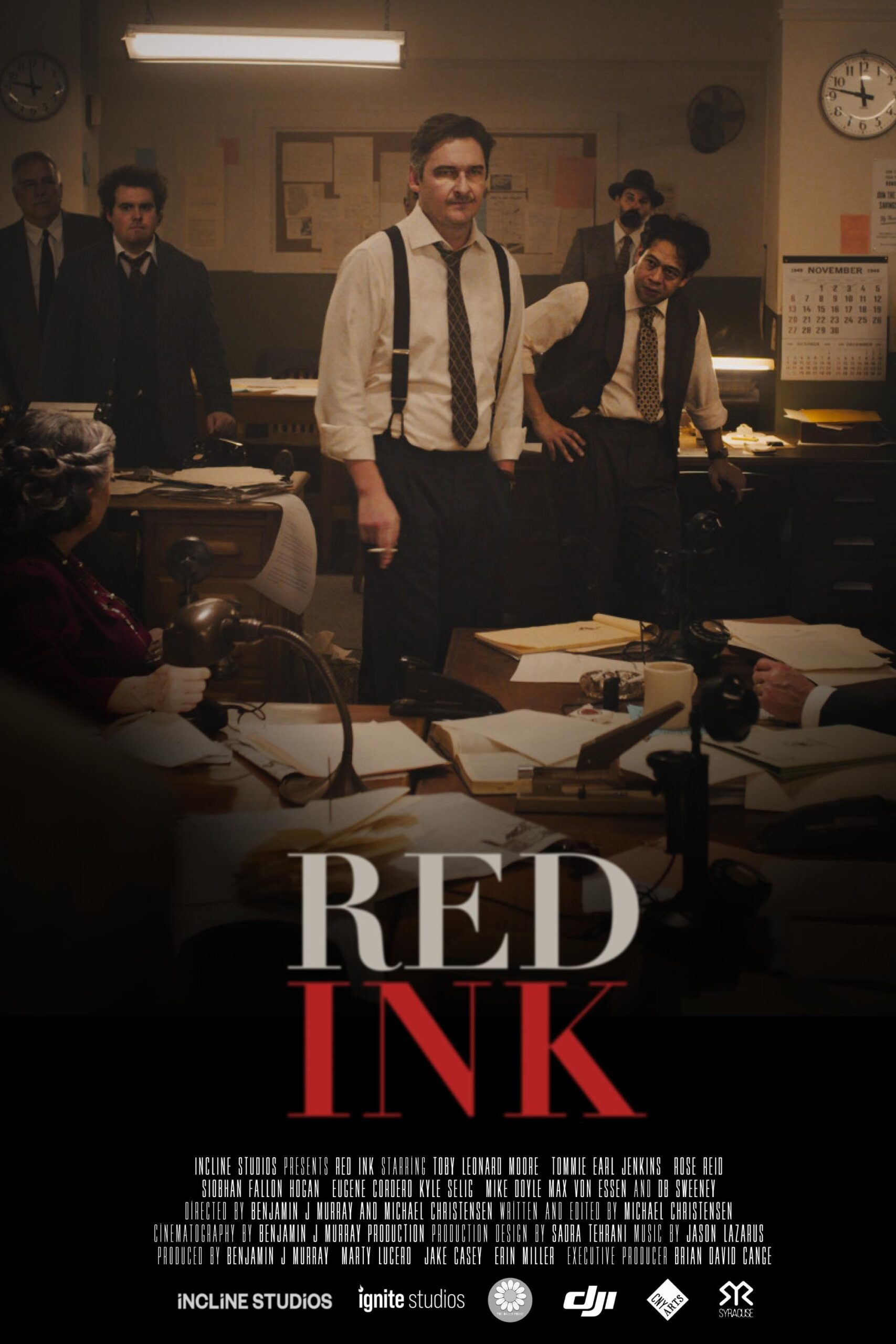
Single-take storytelling has become a favorite tool for filmmakers who want to ratchet up tension without a big budget. A newsroom is a natural place to use it, because everyone is under pressure and nobody can leave the room. Red Ink adds vampires to the mix, and its production story is as dramatic as the film itself. The directors are debut filmmakers, and this is the first film from their new company. The film is now looking for a US distributor.
The Film
Red Ink had its world premiere at the ToruńCamerimage festival this week. It screened in the Directors’ Debuts Competition. The story unfolds over a single morning in November 1949 inside the headquarters of Verity Press, a newspaper in the style of The New York Times. Toby Leonard Moore plays the editor tasked with crafting the nation’s response to a mysterious affliction sweeping the globe. His attempt to tell the truth brings him into conflict with institutional power.
How They Did It
Directors Benjamin J. Murray and Michael Christensen took a page from the Netflix hit Adolescence, shooting the film as a oner that plays out in real time. The single take is partly an illusion, though. Murray assembled the final version from around 13 shots of eight to ten minutes each. A post-credits sequence sets up the events of Blood Bank.
A Crisis Led to a Pivot
Blood Bank was originally planned as the debut for their New York indie company, Incline Studios, a darkly satirical vampire heist film about dissidents raiding a city’s blood reserve. The Los Angeles fires derailed that plan. Christensen said several people involved lost their homes, and the team knew they had to shut the film down. Incline had already invested heavily in upstate New York, planning to shoot in Syracuse to use the state’s tax incentives. So Murray and Christensen made a cheaper, faster prequel in the same fictional world. Murray called it a “monumental pivot” that meant one location, a fifth of the money, and a fifth of the time.
