


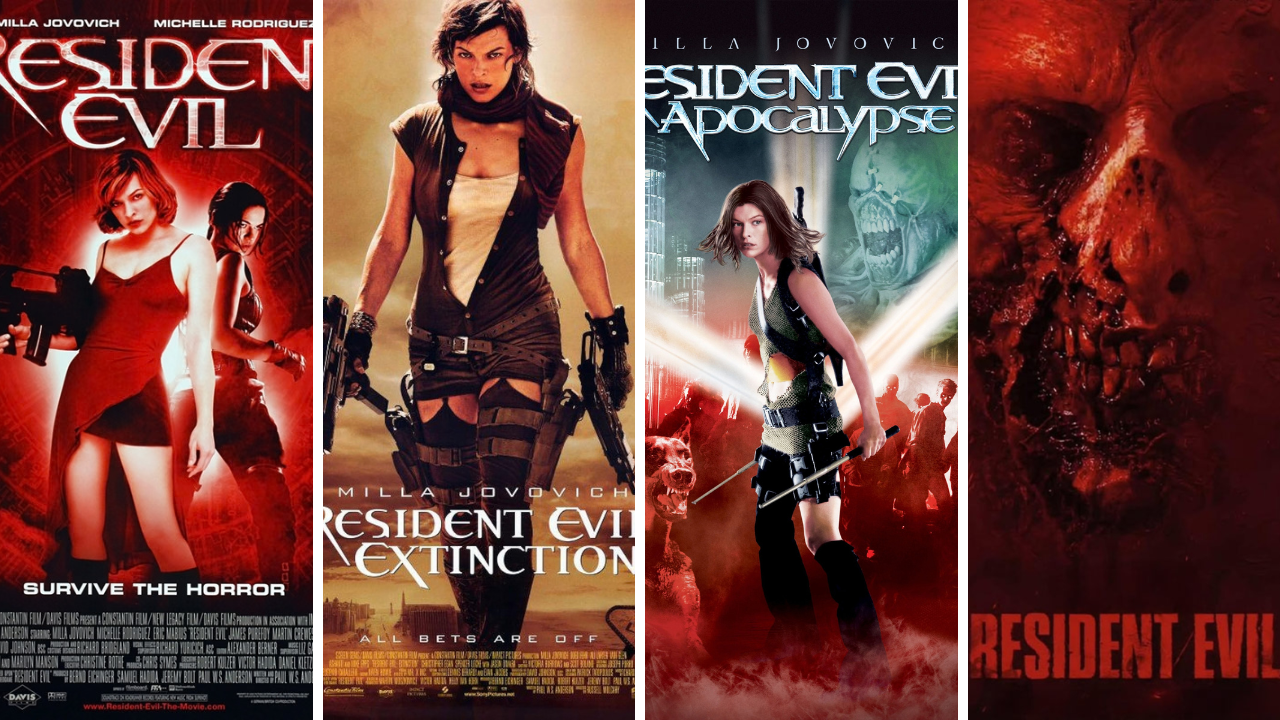
The Resident Evil franchise has come a long way from being one of the most loved video game series in the world to becoming a movie franchise that, if we’re being honest, has ranged from mediocre to just plain messy. Its journey on the big screen spans over two decades, starting with Milla Jovovich’s 2002 debut and stretching all the way to Zach Cregger’s freshly released reinvention.
Breaking the Curse: Zach Cregger’s Resident Evil
For years, live-action Resident Evil has been written off by fans as B-movie fare at best, entertaining in a campy way but never close to prestige horror. That perception shifted, at least a little, when Zach Cregger took the reins. His version isn’t a faithful retelling of any specific game; instead, he chose to tell an entirely original story set within Capcom’s series, following an ordinary medical courier rather than a trained operative. What it lacks in strict continuity, it makes up for in atmosphere, trading the usual action-movie bombast for fast-paced, comedy-infused dread and practical creature design, earning some of the strongest reviews the series has seen so far, sparking real excitement for where the franchise goes next.
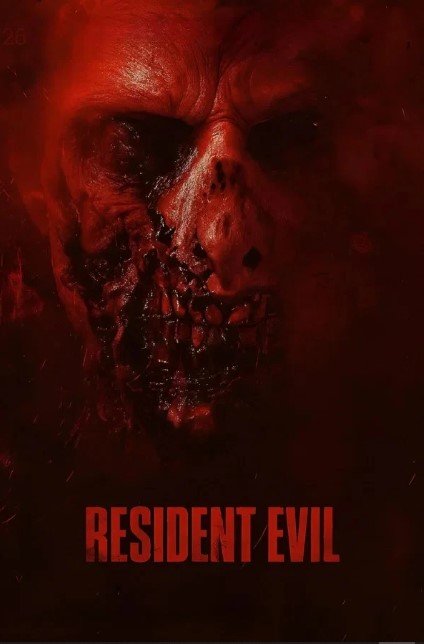
That excitement is exactly what brings us here, because before Cregger’s film, there were seven previous live-action features, beginning with Milla Jovovich’s original 2002 outing and ending, for the movies, with the 2021 reboot. The franchise also received a separate live-action Netflix series in 2022. Some told original stories loosely connected to the games, while others tried to stitch themselves into one continuous timeline, and their faithfulness, along with their reception among critics and audiences, varied wildly from one to the next. Here’s a look back at each one.
Resident Evil (2002)
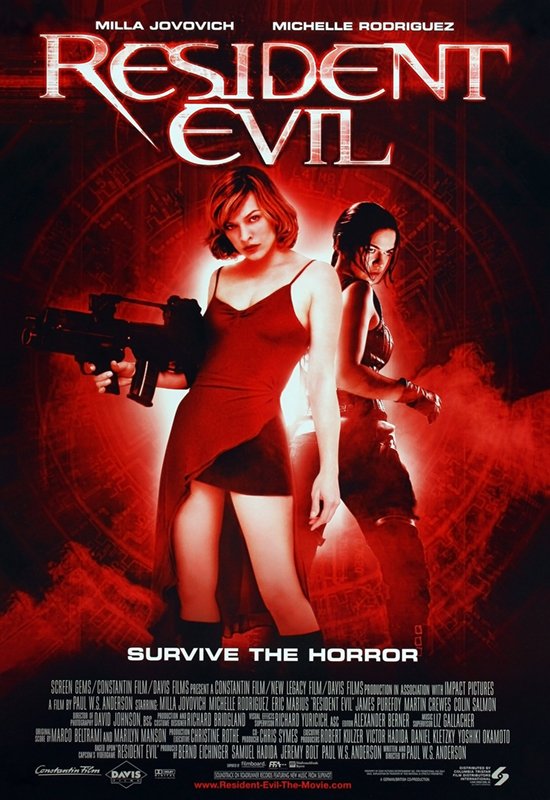
Paul W.S. Anderson kicked the whole franchise off in 2002, casting Milla Jovovich as Alice, an amnesiac woman waking up inside Umbrella Corporation’s underground facility known as the Hive, where a leaked T-virus has turned the staff into flesh-eating undead. Loosely drawing from the first two video games, the film swapped much of that slow-burn dread for a sleek, Matrix-inspired action thriller with little resemblance to its source material. What it did introduce was Alice herself, an original character who’d go on to anchor the next five films, along with the now-iconic laser corridor sequence, a set piece later echoed by a similar scene in Resident Evil 4. Jovovich’s performance was one of the film’s more positively received elements, even among viewers who weren’t sold on everything else going on.
Resident Evil: Apocalypse (2004)
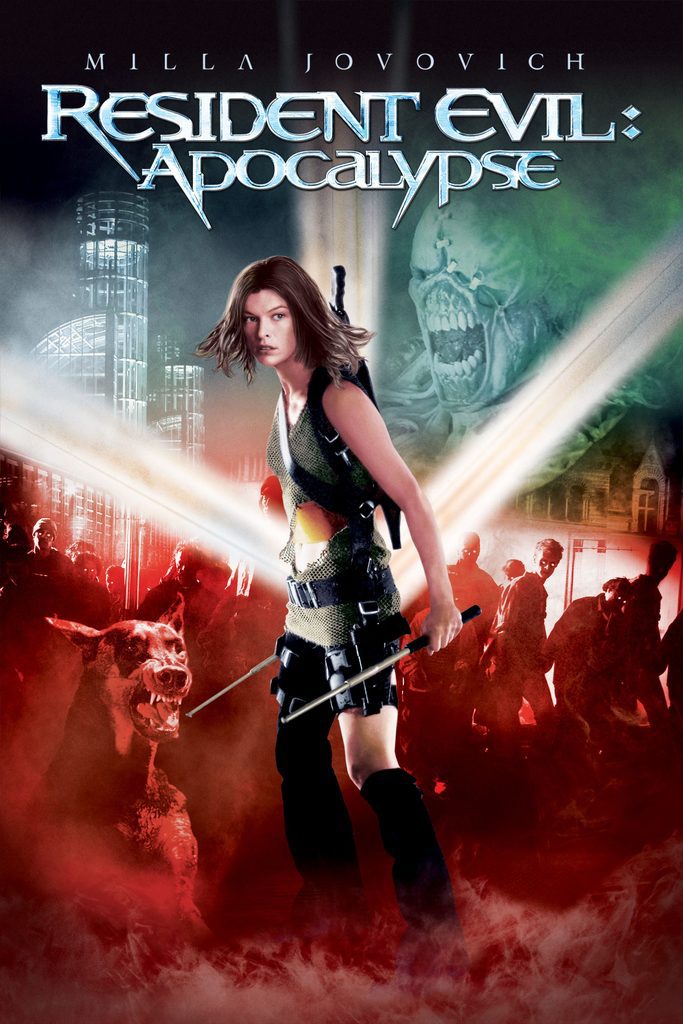
Two years later, Alexander Witt stepped into the director’s chair for Apocalypse, picking up right where the original left off, with Alice waking up in a Raccoon City that’s since been fully overrun. This time the film leaned harder into game references, bringing in Jill Valentine, Carlos Oliveira, and most notably the hulking bioweapon Nemesis, brought to life with a genuinely committed practical suit and makeup design. It was the first entry to properly explore Alice’s newfound superhuman abilities, setting the template for the increasingly over-the-top action the series would lean on going forward. This one landed rough with reviewers, and to this day it holds the lowest score of any film in the series on Rotten Tomatoes, though its added game characters and imagery gave longtime players more familiar material to appreciate.
Resident Evil: Extinction (2007)
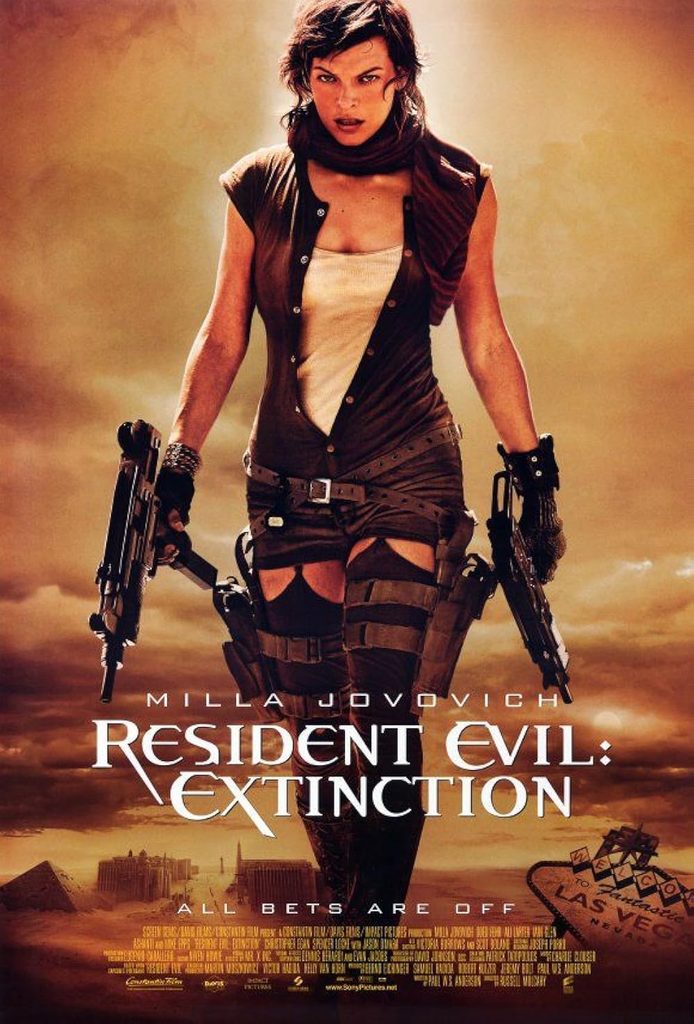
At the third entry, the series ditched its underground labs and city streets for a Mad Max-style desert wasteland, with director Russell Mulcahy sending Alice and a convoy of survivors trekking across Nevada desert toward a rumored safe haven in Alaska. Umbrella’s experiments with cloning Alice herself became a recurring plot thread here, tying the film’s mythology to its own growing obsession with biological experimentation, and the pivot toward a post-apocalyptic road movie gave the series a visual identity distinct from its predecessors. This one got hit with some of the harshest reviews of the franchise so far, even as its grittier survival tone appealed to viewers who preferred the wasteland setting to the earlier films’ enclosed facilities and urban action.
Resident Evil: Afterlife (2010)
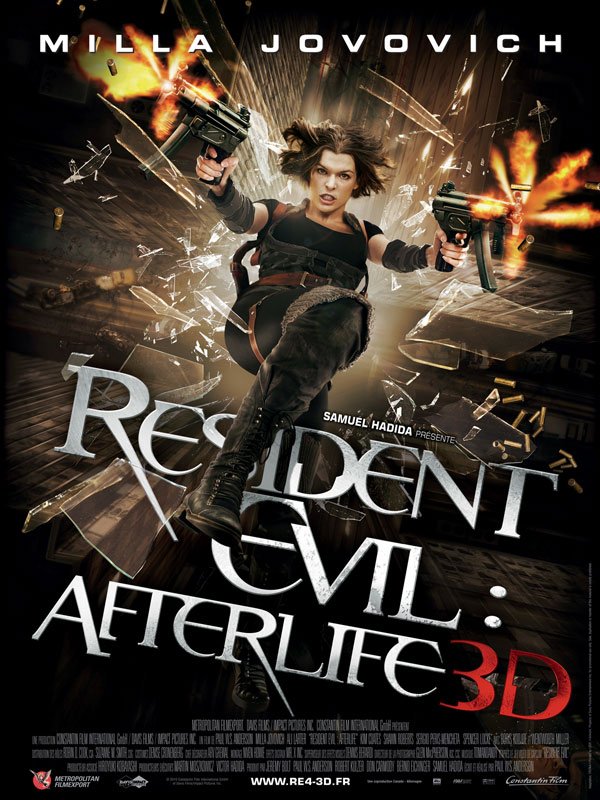
Paul W.S. Anderson returned to direct Afterlife, and this entry marked a genuine turning point for fan service, finally bringing series mainstays Chris Redfield, Claire Redfield, and Albert Wesker into the live-action fold. Alice, having lost her superhuman abilities after a confrontation with Wesker, is forced to rely on a ragtag group of survivors to search for a rumored safe haven called Arcadia, a shift that finally let other characters share the spotlight instead of leaning entirely on her. Shot and released in 3D, it also gave the franchise its most visually stylized entry yet, leaning into slow-motion set pieces built specifically for the format. The overall response stayed pretty lukewarm, but for fans, finally seeing familiar faces on screen felt like a small win.
Resident Evil: Retribution (2012)
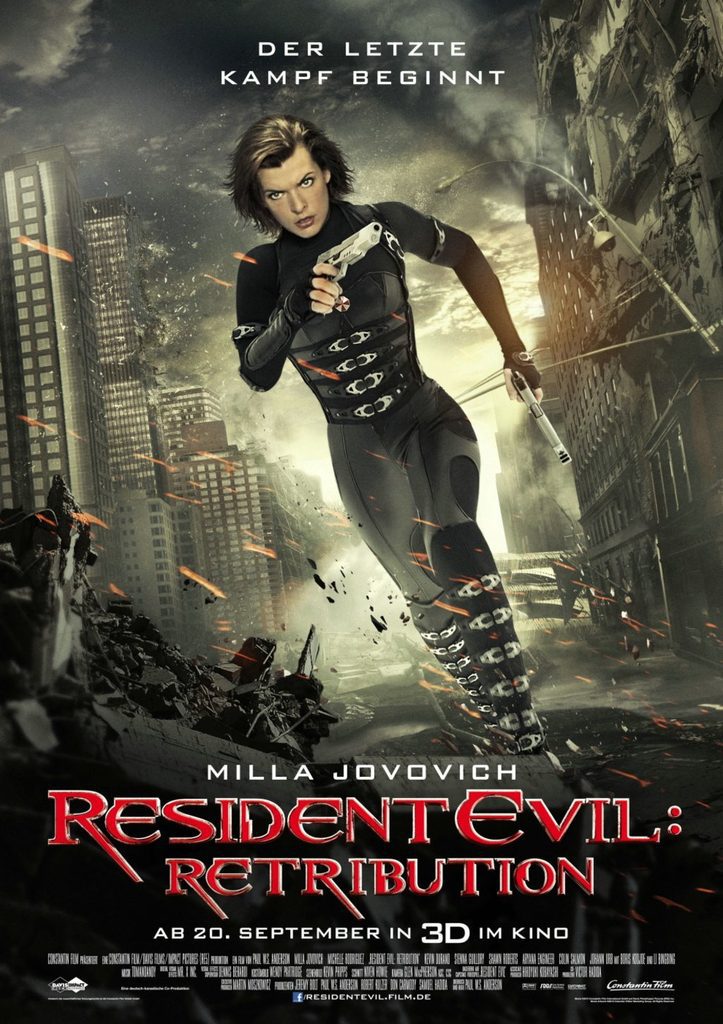
Retribution doubled down on the franchise’s growing obsession with clones and elaborate simulations, trapping Alice inside an Umbrella facility that simulates entire cities, complete with duplicate versions of Raccoon City, Tokyo, and Moscow used to test bioweapons, easily the strangest and most ambitious setting the series had attempted. The convoluted setup finally brought Leon S. Kennedy, Ada Wong, and Barry Burton into live-action, name recognition that pleased longtime players even as the plot itself left casual viewers baffled. The writing and character work remained divisive, though the visual effects and 3D presentation got some grudging credit, and by now a clear pattern had set in: one of ambitious ideas the writing just couldn’t keep up with.
Resident Evil: The Final Chapter (2017)
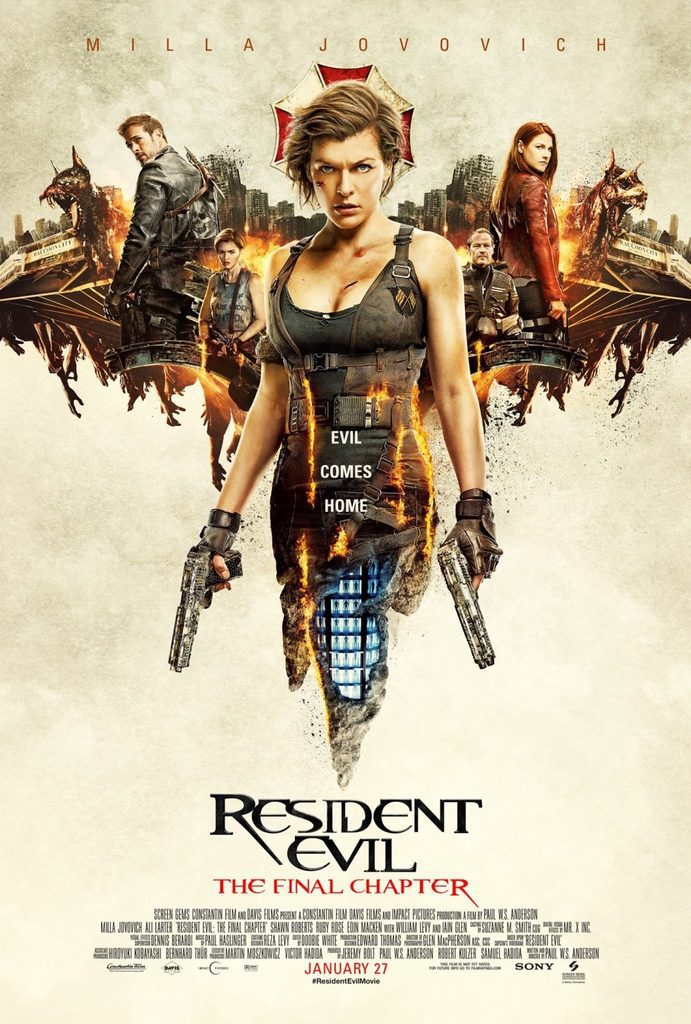
Billed as the series’ grand send-off, The Final Chapter sent Alice back to a ruined Raccoon City to recover an antidote capable of saving what’s left of humanity, while Umbrella’s forces close in for one last confrontation. It finally dug into the series lore properly, revealing how Umbrella founder Dr. James Marcus developed the T-virus while trying to save his dying daughter Alicia, and it brought several of the franchise’s recurring characters together for one final stand. Despite that ambition, it came across as a chaotic, hard-to-follow conclusion to a story that had spent years contradicting its own cliffhangers, closing out the Anderson-Jovovich era on a fittingly messy note.
Resident Evil: Welcome to Raccoon City (2021)
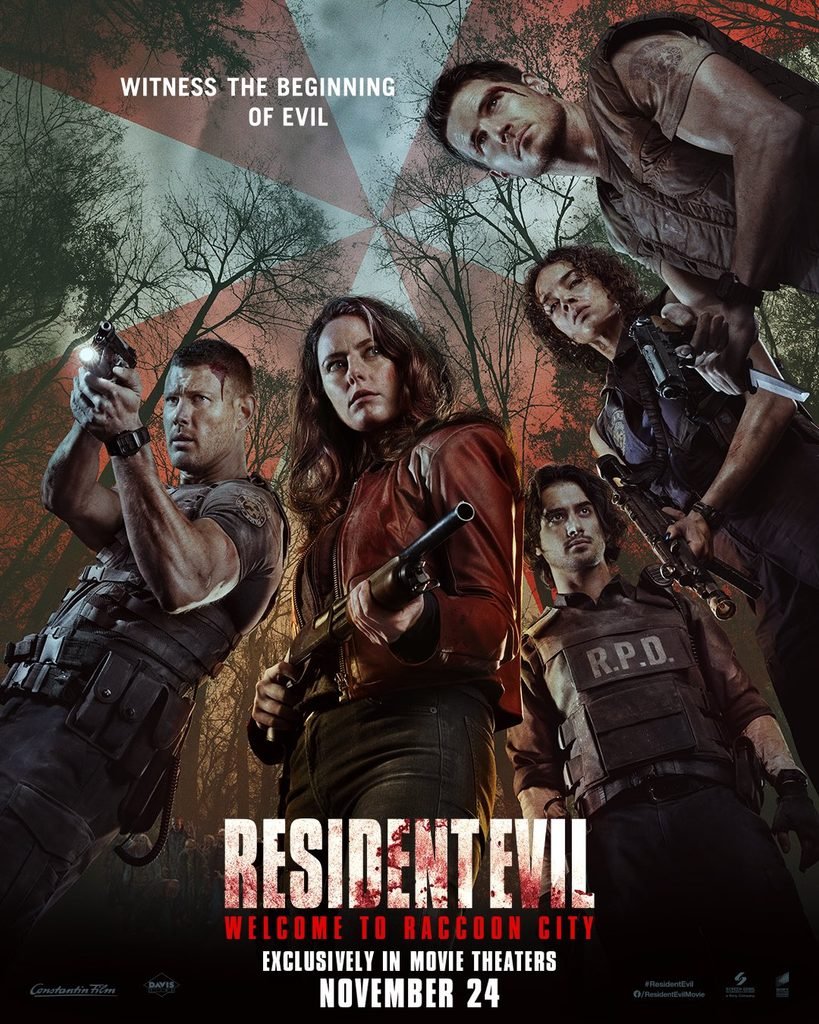
After the Anderson era wrapped, Johannes Roberts rebooted the franchise entirely with Welcome to Raccoon City, ditching Alice altogether and adapting the plots of the first two games far more directly than any prior film had bothered to. Kaya Scodelario and Hannah John-Kamen played Claire Redfield and Jill Valentine, navigating a dying Midwestern city and the horrors buried beneath it, giving fans the most overtly game-faithful live-action film the series had produced up to that point, right down to recognizable locations, creatures, and puzzle references from the original titles. The execution didn’t land as well with reviewers, but its audience score was considerably warmer, appreciating the effort and the nostalgia even if the film itself didn’t fully come together.
Resident Evil (TV Series, 2022)
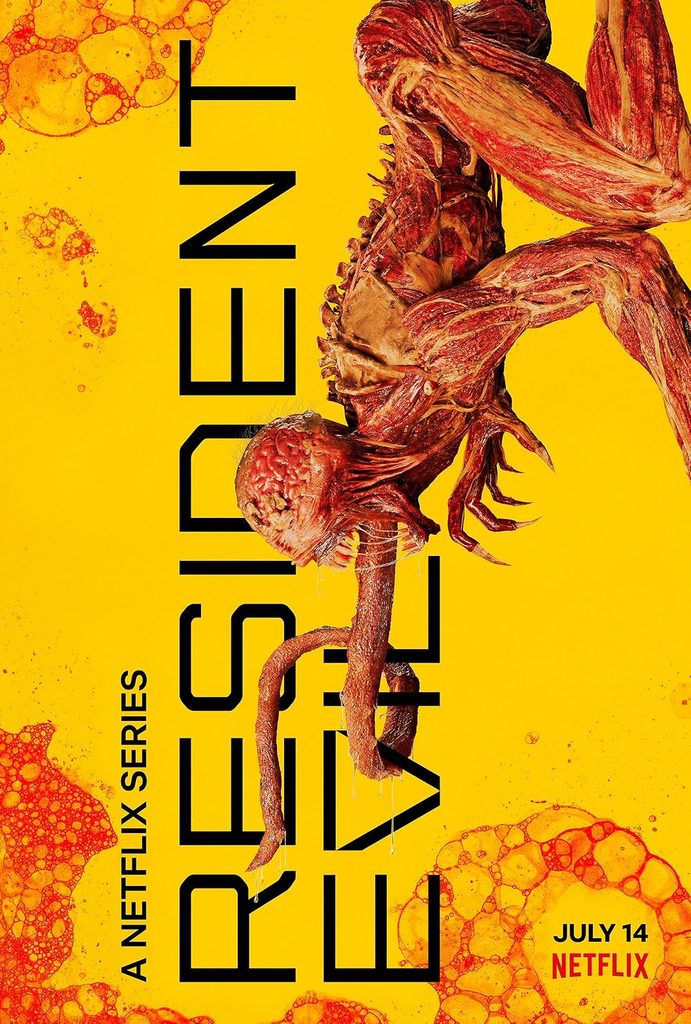
Netflix took its own swing at the franchise in 2022 with a live-action series split across two timelines, following teenage sisters Jade and Billie Wesker in a corporate-controlled New Raccoon City, and an older Jade in 2036 navigating a near-total zombie apocalypse. Rather than adapting a familiar storyline, the show used Umbrella’s lore as a connective tissue, leaning more into teen drama than survival horror, a choice that alienated much of its built-in fanbase almost immediately. Its initial Netflix momentum faded quickly, with the series falling out of the platform’s Top 10 after roughly three weeks, and the response ended up sharply divided, with the show landing a middling critical score of 54% and a genuinely poor audience rating of 26%. Netflix cancelled it after one season, cutting off several unresolved cliffhangers and marking what many consider one of the franchise’s lowest points on screen.
Final Thoughts
As noted earlier, most of these movies have been viewed by fans as B-level entertainment, but a fair few of them, campy chaos and all, are still genuinely fun to revisit. And while Zach Cregger’s version brings a new, creative energy to the franchise, it may not be the literal, all-around faithful adaptation some fans have been waiting years for. What it does offer is a glimmer of hope that the series can finally combine its game-inspired identity with stronger horror filmmaking going forward.
