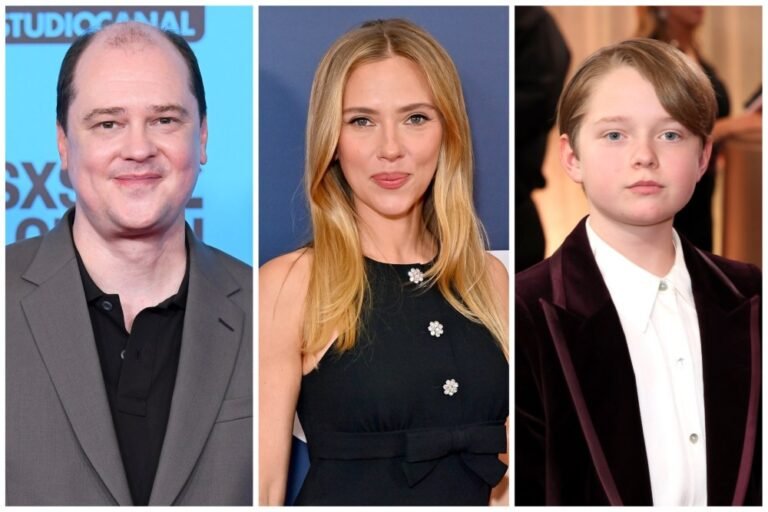
Mike Flanagan’s highly anticipated new chapter in The Exorcist franchise has reached a major milestone. The filmmaker announced that production on the movie has officially wrapped after roughly three months of filming in New York.
The update marks another important step forward for a project that horror fans have been closely watching ever since Flanagan signed on to write and direct a completely new story set within The Exorcist universe. Unlike recent entries in the franchise, the film is not a remake and is not connected to The Exorcist: Believer. Instead, Flanagan has described it as a fresh take that honors the legacy of the original while exploring new territory.
The upcoming film features an impressive cast led by Scarlett Johansson, alongside Diane Lane, Jacobi Jupe, Chiwetel Ejiofor, Laurence Fishburne, Sasha Calle, John Leguizamo, and several longtime Flanagan collaborators.
Flanagan has previously spoken about feeling both excited and intimidated by the challenge of tackling one of horror’s most iconic franchises. He has also suggested that the film could be the scariest project he has ever attempted, a bold statement coming from the creator of The Haunting of Hill House, Midnight Mass, and Doctor Sleep.
With filming now complete, the movie moves into post-production as it works toward its scheduled theatrical release on March 12, 2027. For horror fans eager to see Flanagan’s vision for The Exorcist, the countdown has officially begun.
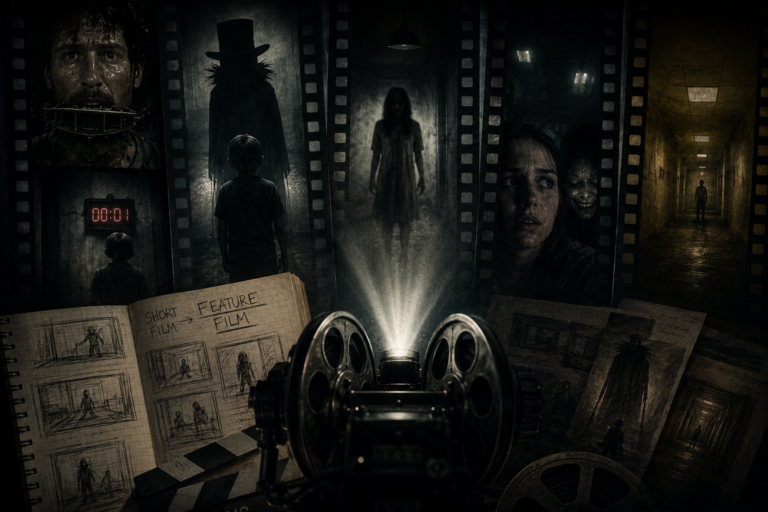
Not every horror classic begins as a feature film. Some start as short films made with limited budgets, small crews, and simple ideas, only to prove to be so resonant and effective that studios and filmmakers saw the potential for something much bigger.
Here, we have some of the best horror shorts that have successfully made the jump to feature-length films:
Saw (2003) | Feature: Saw (2004)
Leigh Whannell in Saw 2003
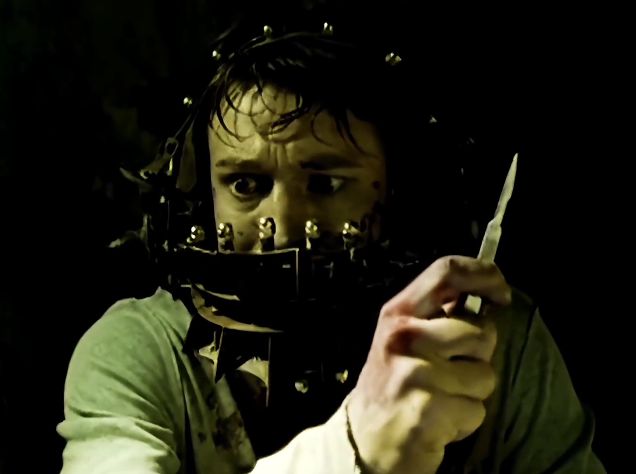
Before James Wan became one of horror’s most influential filmmakers, he and Leigh Whannell were trying to convince studios to take a chance on a screenplay they had been developing since 2001. They shot a nine-minute short film for roughly $5,000 to demonstrate what the concept could look like on screen.
The result was Saw (2003), a stripped-down exercise in tension. A man awakens with a deadly device locked to his head, racing against a ticking clock with no guarantee of survival. The short captures the relentless countdown dread that would later define the franchise, doing so with remarkable precision and confidence.
When Saw (2004) arrived a year later, it was produced in just 18 days inside an abandoned Los Angeles warehouse. Budget limitations shaped much of its visual style, from surveillance-like camera work to still photographs and fragmented editing. Those restrictions eventually became part of the franchise’s identity.
What makes the short so fascinating is how deliberate every moment feels. Every cut, camera angle, and movement serves a purpose. Looking back, it is easy to see why studios immediately recognized its potential. The short contained the DNA of a franchise that would go on to become one of horror’s most successful series.
Monster (2005) | Feature: The Babadook (2014)
Nearly a decade before The Babadook became one of modern horror’s most celebrated films, Jennifer Kent introduced audiences to a simpler version of the same nightmare in Monster.
The short follows a mother and child who believe a terrifying presence is lurking inside their home. What makes it effective is that the horror does not come from wondering whether the creature exists. Everyone already knows it does.
Kent builds tension through certainty. The creature is in the wardrobe. It is watching from the hallway. The audience shares that knowledge with the characters, creating a sense of dread that grows with every passing moment.
The feature adaptation expanded those ideas into a deeper exploration of grief, trauma, and motherhood. Yet Monster remains remarkably effective because of its simplicity. It trusts atmosphere, performance, and visual storytelling to do the heavy lifting without overexplaining itself.
Lights Out (2013) | Feature: Lights Out (2016)
Lights Out 2013 poster
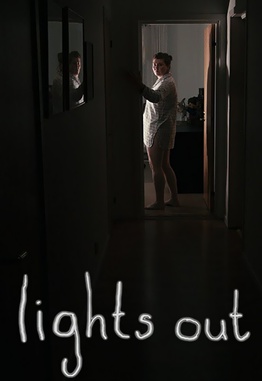
Couples David F. Sandberg and Lotta Losten made Lights Out (2013) for the Bloody Cuts Horror Challenge, and Sandberg walked away with the best director prize. The short follows a woman who notices a figure standing in the darkness. When the lights come on, it disappears. When they go off, it returns.
That simple concept became an internet sensation because it taps into a fear almost everyone understands. Sandberg wastes no time building mythology or explaining the threat. The short exists solely to deliver a terrifying idea with maximum efficiency.
Its success eventually attracted James Wan, who helped bring the concept to the big screen. While Lights Out (2016)introduced new characters and a larger story, the original short remains a masterclass in horror short filmmaking.
Laura Hasn’t Slept (2020) | Feature: Smile (2022)
The relationship between Parker Finn’s Laura Hasn’t Slept and Smile is the kind that makes you appreciate the feature more after you see the short. Watching Laura Hasn’t Slept after seeing Smile feels like discovering the blueprint behind the feature’s most memorable moments.
The short centers on Laura, a woman haunted by disturbing nightmares and a growing sense that something is following her. Parker Finn keeps the focus tightly locked on her experience, allowing the dread to build naturally rather than relying on constant jump scares.
When Smile arrived two years later, it expanded the concept into a larger story about trauma, fear, and a supernatural entity passed from person to person. The feature became a major success, but much of its power can be traced back to the foundation established in the short.
Where the feature explores the wider mythology, Laura Hasn’t Slept stays trapped inside a single horrifying perspective. It allows viewers to experience the terror directly rather than observe it from a distance.
The short premiered at SXSW in 2020, winning the Special Jury Award for the Midnight Short category. That recognition eventually led to Paramount backing Finn’s feature adaptation. Watching it today makes it easy to understand why.
The Backrooms (YouTube Series, 2022) | Feature: Backrooms (2026)
Backrooms 2022 poster
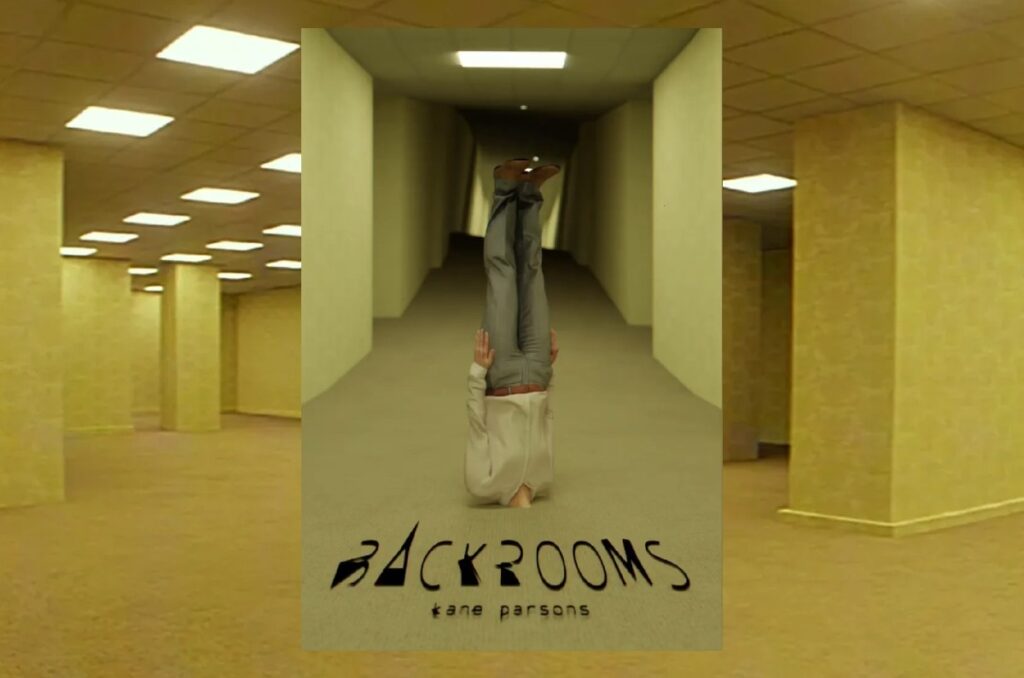
Before Kane Parsons became the youngest director in history to reach number one at the global box office. Before A24, James Wan, Shawn Levy and Osgood Perkins arrived to give the Backrooms a cinematic form, it was already a world unto itself.
Parsons’ The Backrooms is a 24-episode YouTube series short with tens of millions of views and a devoted community built around the creeping internet mythology of liminal spaces.
The series follows the fictional Async Research Institute as it investigates the strange anomalies hidden within the Backrooms. Through fragmented storytelling and unsettling imagery, it gradually expands the mythology while maintaining an atmosphere of uncertainty.
The 2026 feature adaptation explores the concept on a larger scale, but the original series remains impressive because it never feels like a simple proof of concept. It stands on its own.
The endless corridors, and constant feeling that something is lurking just beyond view create a type of dread that few projects manage to sustain. Even without a feature attached to it, The Backrooms would still be one of the most influential horror shorts of the decade.
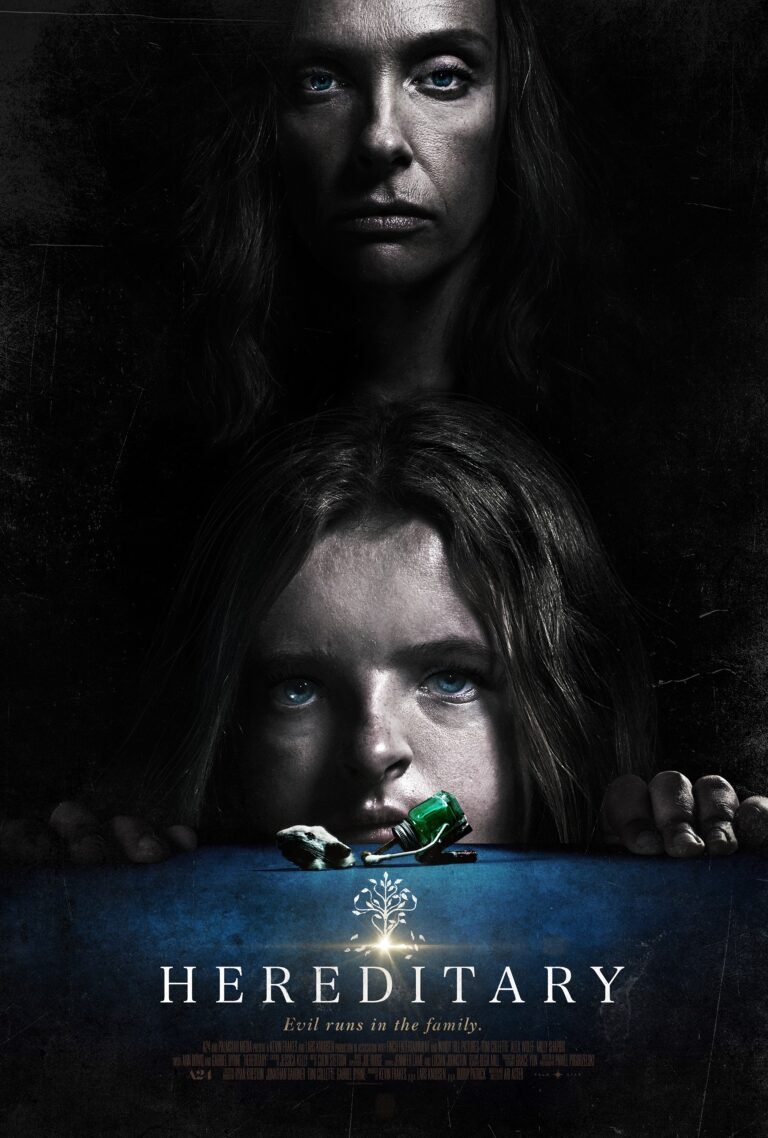
Nearly a decade after Hereditary became one of the defining horror films of the modern era, writer-director Ari Aster has revealed that the story may not be finished after all.
During a recent Q&A screening of Hereditary at the American Cinematheque’s Bleak Week event in Los Angeles, Aster disclosed that he has already written a prequel script set in the film’s unsettling world. The surprising revelation immediately sparked excitement among horror fans, many of whom still consider Hereditary his masterpiece.
However, Aster also made it clear that the project is far from a sure thing.
According to the filmmaker, he has never found the right moment to move forward with the script. Because the story is designed as a prequel rather than a sequel, Aster admitted he remains uncertain about where the project fits into his career and whether it will ever be made.
Released in 2018, Hereditary starred Toni Collette as Annie Graham, a grieving mother whose family becomes entangled in a terrifying supernatural conspiracy. The film earned widespread acclaim and helped establish Aster as one of horror’s most influential modern filmmakers.
Since then, Aster has expanded his filmography with projects such as Midsommar, Beau Is Afraid, and the recent thriller Eddington. Even so, Hereditary continues to cast a long shadow over his career, with many fans still eager to revisit its mythology and the sinister cult operating behind the scenes.
For now, the prequel remains a fascinating “what if” rather than an official production. Still, the fact that a script already exists is enough to keep hope alive that audiences may one day return to the terrifying world of Hereditary.
What started as a small independent horror film has now become the biggest horror success story of the year.
Obsession, the supernatural horror sensation directed by YouTube creator-turned-filmmaker Curry Barker, has officially become the highest-grossing horror movie of 2026. The film has now earned approximately $224.8 million worldwide, surpassing every other horror release this year and cementing itself as one of the most unexpected box office triumphs in recent memory.
The achievement is even more remarkable considering the film’s reported production budget was only around $1 million. Since its theatrical debut in May, Obsession has continued to defy expectations with exceptional word-of-mouth, strong repeat viewership, and impressive staying power at the box office. Industry analysts have pointed to its unusual box office legs as a major factor behind its success, with the film continuing to attract audiences weeks after release.
The story follows Bear, a young man whose wish for his longtime friend Nikki to fall in love with him unleashes terrifying supernatural consequences. Blending romance, psychological horror, and dark fantasy, the film struck a chord with younger audiences and quickly evolved from a niche genre release into a genuine cultural phenomenon.
Obsession has also become the highest-grossing film in the history of Focus Features, surpassing previous records for the studio while proving that original horror remains one of the most powerful forces in modern cinema.
In a year dominated by franchise sequels and established brands, Obsession stands out as something increasingly rare: an original horror movie that captured the imagination of audiences worldwide. Its success, alongside fellow breakout hit Backrooms, signals that moviegoers are still eager to embrace fresh ideas when the storytelling is strong enough.
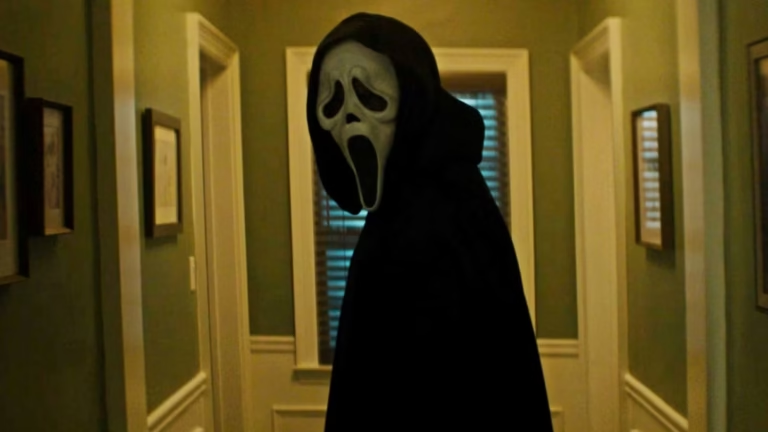
The Ghostface mask has always been more than a costume. For nearly three decades, it has represented one of horror’s most enduring franchises. The series continues to evolve while remaining rooted in the same question: who is behind the mask? With Scream 7, the series returns to familiar territory. It blends legacy characters with a new generation of victims. The sequel aims to honor the past while pushing the story forward.
As with any long-running franchise, balancing nostalgia and innovation is a difficult task. Fortunately, Scream 7 gets much of that balance right. Rather than attempting to reinvent the formula entirely, the film focuses on refining what has always worked best. Suspense, mystery, and the emotional scars left behind by violence.
The story begins when a new wave of Ghostface attacks strikes Woodsboro. The killings echo the murders that first terrorized the town decades ago. The anniversary timing of the killings forces surviving veterans back into the spotlight. Meanwhile, a younger group of teenagers finds themselves caught in a nightmare they only know through stories, documentaries, and the ever-growing mythology surrounding the Ghostface murders.
What follows is a tense game of survival that unfolds across two generations. The returning characters bring experience and emotional baggage. The newcomers provide fresh perspectives and uncertainty. This contrast gives the film an emotional core that elevates it beyond a standard slasher. The mystery is carefully layered. Clues and red herrings appear throughout the runtime while making effective use of the franchise’s history without becoming entirely dependent on it.
Director Kevin Williamson understands what makes Scream effective. The suspense feels personal. Rather than relying only on elaborate kill scenes, the film builds tension through atmosphere and anticipation. Several sequences capture the unpredictability that made the original film memorable. Ghostface once again feels like a genuine threat.
What Works ✅
A strong balance between legacy and progression: Scream 7 successfully embraces the franchise’s history while introducing enough new ideas to justify its existence as more than a simple nostalgia exercise.
Meaningful use of returning characters: The veteran survivors are integrated naturally into the story, adding emotional weight rather than serving as superficial callbacks.
Thoughtful themes about trauma and legacy: The film explores how tragedy becomes mythology and how survivors continue to live with events that have shaped their entire lives.
Effective suspense and tension: Several sequences are built around anticipation rather than shock value, creating some of the film’s strongest moments.
A more intimidating Ghostface: The killer feels dangerous, unpredictable, and genuinely threatening throughout much of the film, helping restore the fear factor that defines the franchise.
Where It Falls Short ❌
An overreliance on nostalgia: While many references to previous films are enjoyable, some callbacks feel excessive and occasionally slow the narrative momentum.
Uneven development of new characters: A few members of the younger cast lack the depth needed to make their storylines particularly memorable.
A finale that doesn’t fully pay off the mystery: The reveal is effective on a surface level, but it lacks the impact and thematic strength of the franchise’s best endings.
Familiar franchise beats: Longtime fans may find parts of the story predictable, as several plot developments follow well-established patterns.
Missed opportunities for bigger risks: The film plays things relatively safe, choosing to preserve the formula rather than significantly challenge audience expectations.
Final Verdict ⚖️: 3.5/5
Scream 7 is a solid and entertaining continuation of a franchise that has remained remarkably resilient over the years. While it doesn’t reach the heights of the original films, it succeeds by delivering strong suspense, engaging performances, and a mystery that keeps viewers invested until the final act.
Its reliance on nostalgia and its somewhat underwhelming payoff prevent it from becoming one of the series’ finest entries. Still, longtime fans will find plenty to enjoy. More importantly, Scream 7 proves that Ghostface remains one of horror’s most recognizable and effective villains. The rules may not have changed much, but the franchise still knows how to make audiences answer when the phone rings.
If you missed one of this spring’s strangest horror releases in theaters, your second chance is arriving soon.
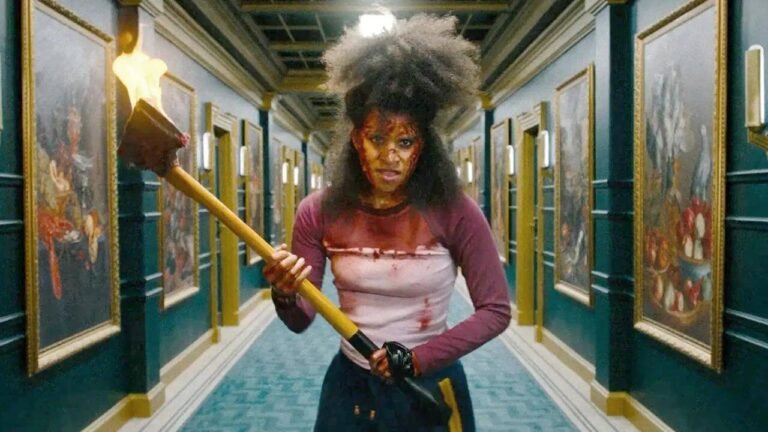
They Will Kill You, the horror-comedy starring Zazie Beetz, is set to make its streaming debut on HBO Max on June 12, 2026, less than three months after its theatrical release. The film first opened in theaters on March 27, 2026, following its premiere at SXSW earlier that month.
Directed by Kirill Sokolov, the film follows Asia Reaves, an ex-convict who takes a housekeeping job at a mysterious luxury high-rise in New York City. What begins as a fresh start quickly turns into a nightmare when she discovers the building is home to a deadly cult and a long history of disappearances.
One of the movie’s biggest draws is its cast. Alongside Beetz, the film features Myha’la, Tom Felton, Heather Graham, Paterson Joseph, and Patricia Arquette. Produced by Andy and Barbara Muschietti’s horror label Nocturna, They Will Kill You blends supernatural horror, action, and dark comedy into a chaotic survival story that has earned a growing cult following since its theatrical release.
The HBO Max arrival comes during a busy month for horror fans on the platform, which is also adding several genre titles throughout June.
For viewers who enjoy horror with a wicked sense of humor, cult conspiracies, and plenty of blood-soaked mayhem, They Will Kill You may be one of the more interesting streaming additions of the month.
The 2026 Fantasia International Film Festival has unveiled its second wave of programming, and one title is already generating major attention, the season finale of Apple TV+’s Cape Fear.
In a rare move for a television series, the finale episode will receive its world premiere at Fantasia Fest, giving festival audiences the chance to see the conclusion before many viewers have finished the season’s weekly rollout. The series itself premieres on June 5, 2026, while Fantasia runs from July 16 through August 2 in Montreal, Canada.
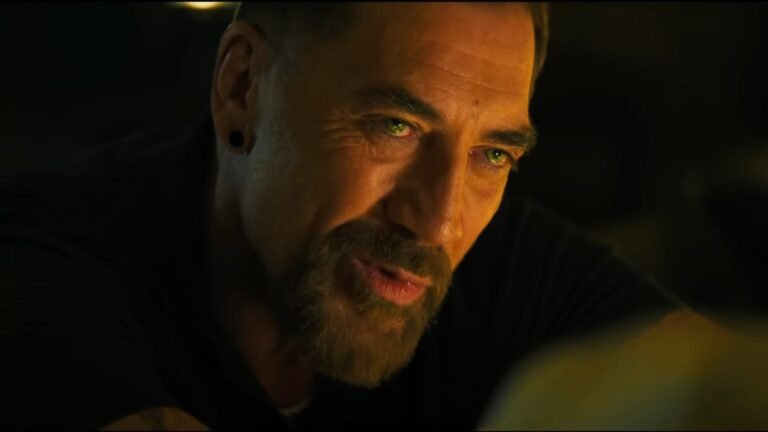
Created by Nick Antosca and executive produced by Martin Scorsese and Steven Spielberg, Cape Fear reimagines the classic story of Max Cady, the dangerous ex-convict who becomes obsessed with a family he believes wronged him. The series stars Javier Bardem as Cady alongside Amy Adams and Patrick Wilson.
The festival announcement is a significant vote of confidence in the show. Fantasia has long been one of the world’s most respected genre festivals, regularly showcasing some of the year’s biggest horror, thriller, and fantasy titles. Giving Cape Fear a premiere slot for its finale suggests Apple TV+ believes the series is building toward something audiences will be talking about.
Beyond Cape Fear, Fantasia’s latest lineup includes a wide range of horror and genre projects from around the world, continuing the festival’s reputation as a launchpad for bold and unconventional storytelling.
For thriller fans, though, the biggest draw may be the opportunity to experience the final chapter of Cape Fear with a packed festival crowd. If the series delivers on its premise and pedigree, Fantasia attendees could witness one of the year’s most talked-about endings before almost anyone else.