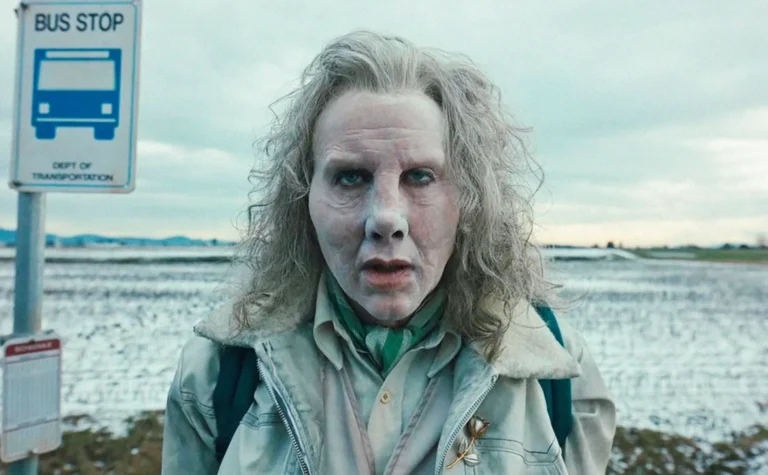
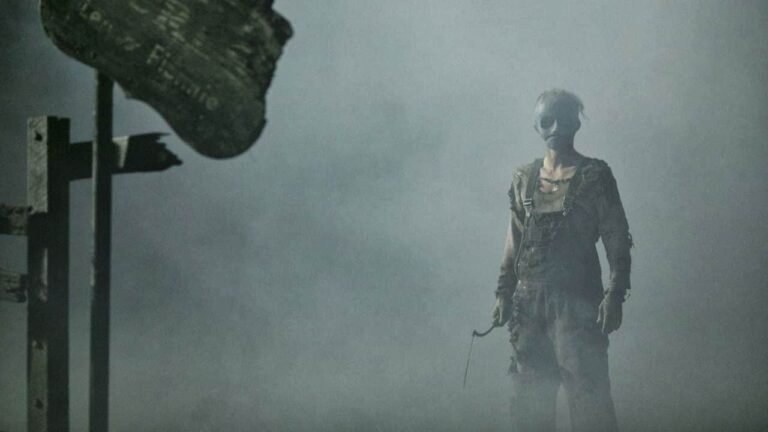
A major modern horror success is already expanding into a larger universe. A new film set in the world of Longlegs is officially in development, with Nicolas Cage and director Osgood Perkins both returning.
The upcoming project will not be a direct sequel, but rather a new story set within the same universe, continuing the dark mythology introduced in the 2024 hit.
The original Longlegs became the highest-grossing indie horror film of 2024, making a follow-up almost inevitable. However, instead of continuing the same narrative, the filmmakers are taking a broader approach, expanding the world rather than repeating it.
One of the most notable changes is the shift in distribution, with the new film moving from Neon to Paramount Pictures, signaling increased studio confidence in the franchise’s potential.
Osgood Perkins has already written the script and will return to direct, ensuring continuity in tone and style. Cage is also set to star and produce, maintaining the creative partnership that helped define the original film’s eerie, psychological edge.
While plot details remain under wraps, the announcement confirms that Longlegs is evolving into a larger horror universe, following the trend of expanding successful standalone films into interconnected stories.
With the original film’s success and the creative team returning, this new project is already shaping up to be one of the most anticipated upcoming horror developments.
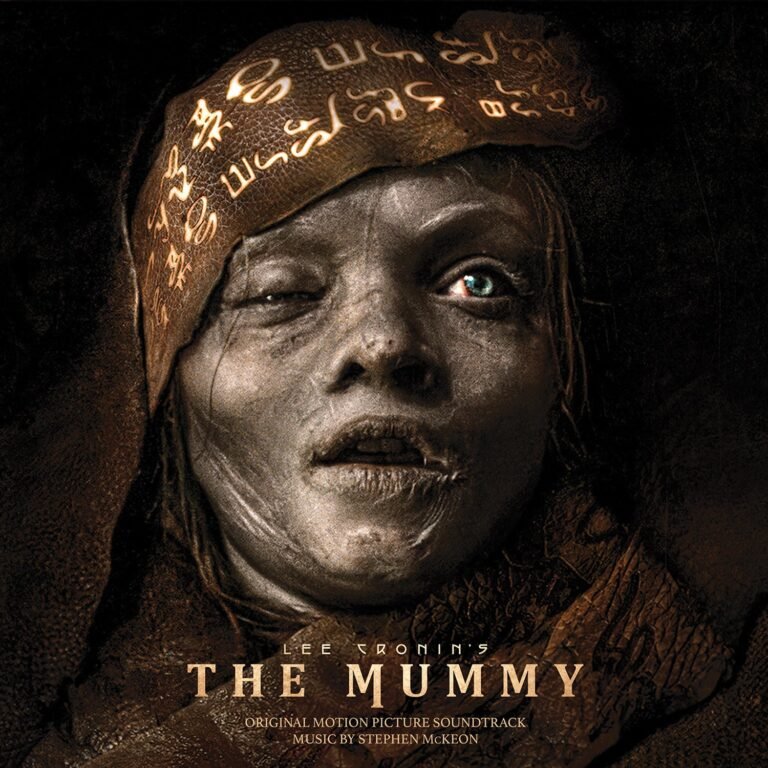
A classic monster has officially returned to the big screen. The new horror reimagining The Mummy, directed by Lee Cronin (Evil Dead Rise), was released in theaters on April 17, 2026, marking a bold shift from the franchise’s traditional adventure roots into full-scale horror.
Unlike previous versions, this film leans heavily into supernatural terror and possession horror, offering a much darker and more disturbing take on the iconic character. The story follows a journalist whose young daughter disappears in the desert, only to return eight years later, triggering a terrifying chain of events that turns a family reunion into a nightmare.
The film stars Jack Reynor, Laia Costa, May Calamawy, and Natalie Grace, with production backed by major horror players Blumhouse and Atomic Monster, alongside Warner Bros. Pictures as distributor.
Director Lee Cronin has described the film as a complete reinvention of the Mummy myth, blending elements of possession horror with Egyptian-inspired themes. Early coverage notes that the film prioritizes visceral scares, gore, and psychological intensity over the action-adventure tone seen in earlier adaptations.
The movie also received an R rating for strong disturbing violent content and gore, reinforcing its position as one of the more extreme studio horror releases of the year.
With its theatrical release now underway, The Mummy stands as a major spring horror entry, representing a clear attempt to reposition the legendary monster for modern audiences through a darker, more uncompromising lens.
A popular horror game is making the jump to the big screen. The hit Roblox title 99 Nights in the Forest is officially being developed into a feature film at 20th Century Studios.
The studio secured the rights in a competitive bidding situation, signaling strong confidence in the project’s potential as a horror franchise.
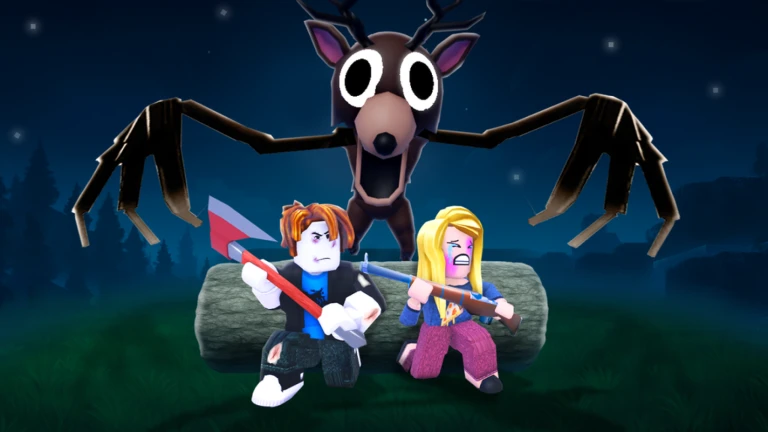
The original game, developed by Grandma’s Favourite Games, places players inside a haunted forest, where they must build a camp and survive against terrifying threats, including a monstrous deer and cult-like enemies, while searching for missing children.
Since its release, the game has exploded in popularity, becoming one of the most-played Roblox titles of all time, with billions of visits and millions of peak players. This massive built-in audience is likely a key reason behind the push for a film adaptation.
At this stage, no writer or director has been attached, but the game’s creators, Alec Kieft, Matthew Hufton, and Cameron Angland, will serve as executive producers, helping guide the adaptation’s vision.
The project continues a growing trend of video game–to–horror film adaptations, especially those rooted in viral or community-driven experiences. With its survival mechanics and eerie setting, 99 Nights in the Forest could translate into a tense, atmospheric horror film if executed well.
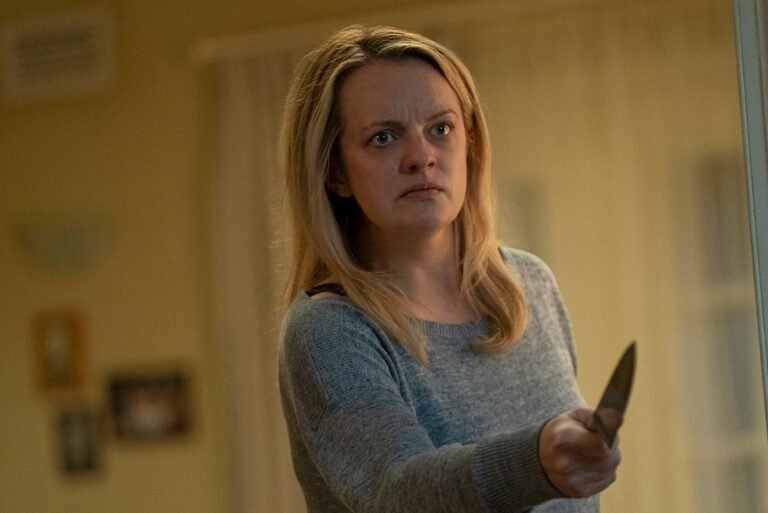
Ghosts are frightening because they represent the unknown, spirits from beyond that can’t be seen or explained. But The Invisible Man 2020, directed by Leigh Whannell, offers a different kind of fear. Instead of something supernatural, the danger here comes from a very real person.
The film imagines what would happen if someone dangerous could move around without being seen, turning everyday spaces into places filled with tension.
This modern take on the classic Invisible Man transforms the story into a grounded psychological thriller. Rather than relying on monsters or ghosts, the movie builds fear from silence, uncertainty, and the feeling that someone might be watching at all times. It’s a slow-burning but intense experience that quickly pulls viewers into its unsettling world.
The film wastes no time setting the tone. It opens with Cecilia Kass escaping in the middle of the night from the home of her controlling boyfriend, Adrian Griffin. The sequence is tense and almost entirely silent, yet it communicates everything about the danger she is trying to escape. Without heavy dialogue, the film makes it clear that Adrian is someone capable of causing real harm.
Soon after, Cecilia learns that Adrian has supposedly died and left her a large inheritance. On the surface, it appears to be the end of her nightmare. However, strange things begin to happen. Objects move unexpectedly. A stove turns on by itself. A blanket dips as if someone invisible is sitting on it. These subtle moments slowly build unease.
Cecilia becomes convinced that Adrian is still alive and somehow invisible. From that point, the movie turns into a tense game of cat and mouse. The camera often lingers on empty spaces, making viewers scan every corner of the screen.
Even when nothing is happening, the possibility that something might happen keeps the tension high. The audience is drawn into Cecilia’s paranoia, sharing her fear that danger could appear at any moment.
What Works ✅
Elisabeth Moss delivers a powerful and believable performance, carrying the film with emotional depth.
The use of empty space in the cinematography creates constant tension and keeps viewers on edge.
The story’s grounded approach makes the concept feel more realistic and unsettling.
The slow build-up of suspense is effective, allowing fear to grow naturally.
A few shocking set pieces, especially a memorable restaurant scene, raise the stakes dramatically.
The film balances psychological tension with moments of intense action.
Where It Falls Short ❌
The science behind the invisibility suit requires some suspension of disbelief.
Cecilia’s friends and family turning against her happens a bit too quickly.
The third act leans more toward action, reducing some of the earlier psychological tension.
A few twists near the end feel slightly stretched.
Final Verdict ⚖️4.5/5
The Invisible Man is a tense and well-crafted thriller that refreshes a classic idea with a modern perspective. By focusing on fear that comes from not knowing what’s there, the film creates a deeply unsettling experience.
It’s the kind of movie that makes empty rooms feel suspicious and quiet moments feel dangerous. Instead of relying on loud scares, it builds tension through atmosphere and performance. For fans of smart, suspense-driven horror, this is a film that’s definitely worth watching.
A sequel to the cult horror film Behind the Mask: The Rise of Leslie Vernon has been officially announced nearly two decades after the original’s release.
Behind the Mask II: The Return of Leslie Vernon was revealed during a 20th anniversary screening of the 2006 film, where director Scott Glosserman and writer David J. Stieve confirmed that development on the follow-up is now underway.
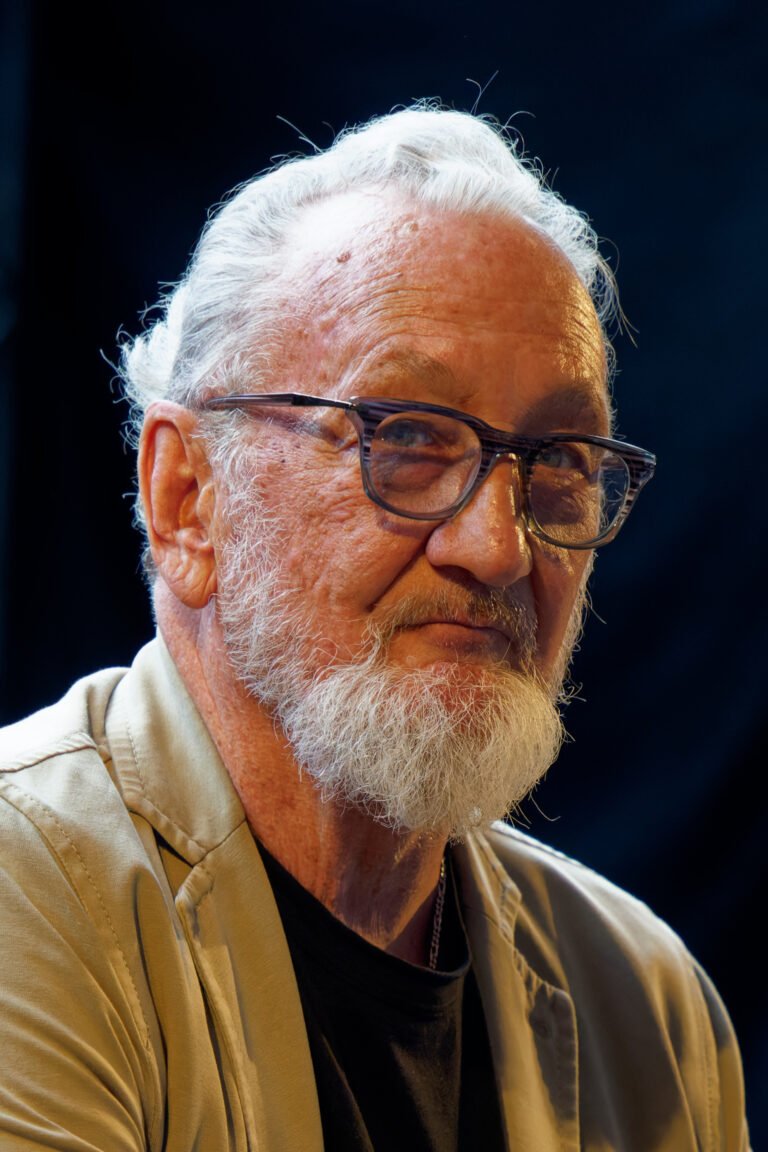
The sequel will reunite key members of the original creative team, with Glosserman returning to direct and Stieve back as writer. Nathan Baesel is set to reprise his role as Leslie Vernon, alongside Angela Goethals, while Robert Englund will also return as Doc Halloran, a character who played a mentor-like role in the original film.
The filmmakers also announced plans to launch a Kickstarter campaign to help support production and expand the scope of the sequel, offering fans an opportunity to be directly involved in bringing the project to life.
Released in 2006, Behind the Mask: The Rise of Leslie Vernon gained a strong cult following for its unique approach to the slasher genre. Framed as a mockumentary, the film followed an aspiring serial killer who allowed a documentary crew to chronicle his preparation for a planned killing spree, blending horror with dark humor and genre deconstruction.
The upcoming sequel will revisit that world with its original cast and creators returning, marking the first continuation of the story since the original film’s debut.
Further details, including additional casting, story information, and a release timeline, have not yet been announced.
A long-awaited cult horror sequel is finally becoming a reality. Behind the Mask II: The Return of Leslie Vernon is officially moving forward, with horror legend Robert Englund confirmed to reprise his role.
The sequel brings back key cast members from the 2006 original, including Nathan Baesel as Leslie Vernon and Angela Goethals, alongside Englund returning as Doc Halloran.
Director Scott Glosserman and writer David J. Stieve are also returning, ensuring continuity with the original film, which has developed a strong cult following over the years.
The project will be supported by a Kickstarter campaign, though the film is confirmed to be happening regardless. The crowdfunding effort is intended to expand the budget and give fans a chance to directly participate in the sequel’s production.
While a specific release date has not yet been announced, the film is currently targeting a 2027 release window, marking a nearly two-decade gap since the original Behind the Mask: The Rise of Leslie Vernon.
The return of Englund, best known for playing Freddy Krueger, adds significant weight to the project, making it one of the most exciting cult horror revivals currently in development.
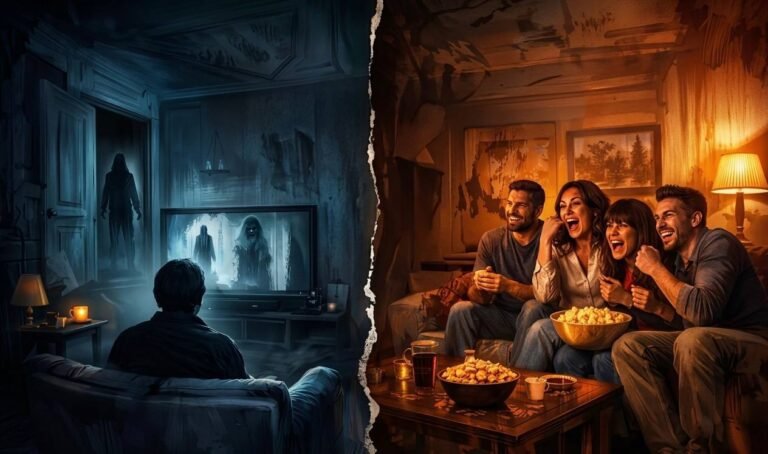
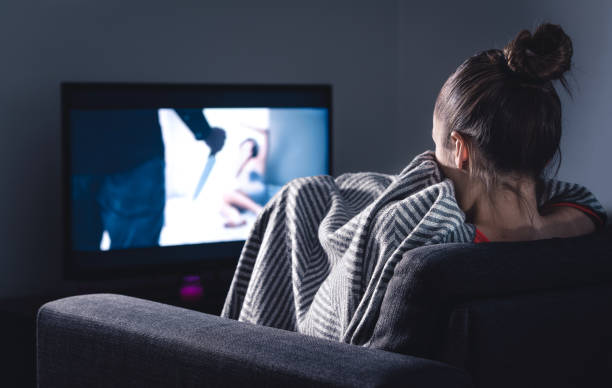
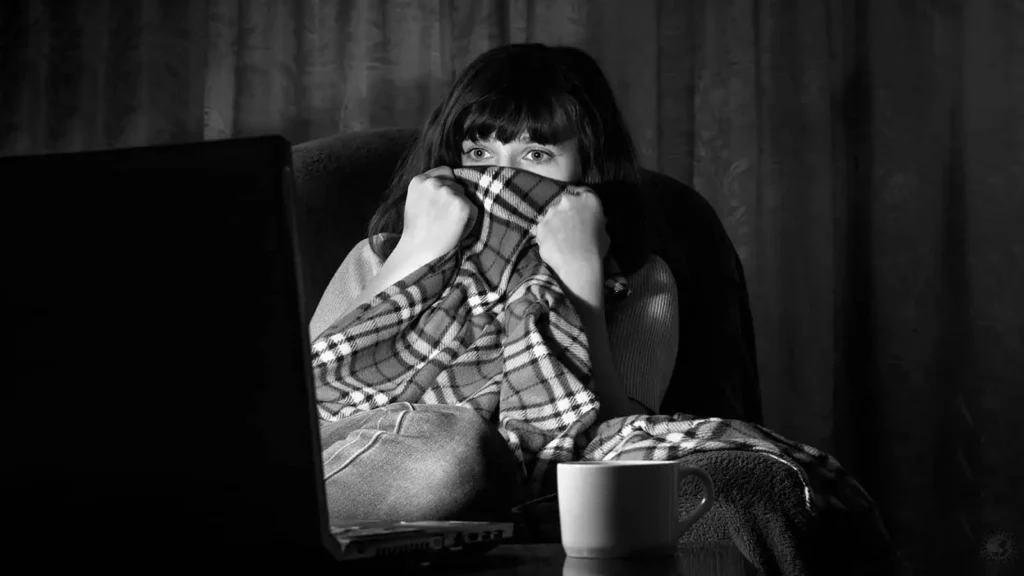
You know that feeling when a floorboard creaks in an empty house? During the day, it’s just the wood settling, but at 2:00 AM, with a horror movie flickering on the screen and no one in the chair next to you, that same sound feels like a footstep. Why is it that the movie you laughed through with friends yesterday is now making you afraid of your own hallway? It’s not just the film, it’s the fact that you’re the only witness.
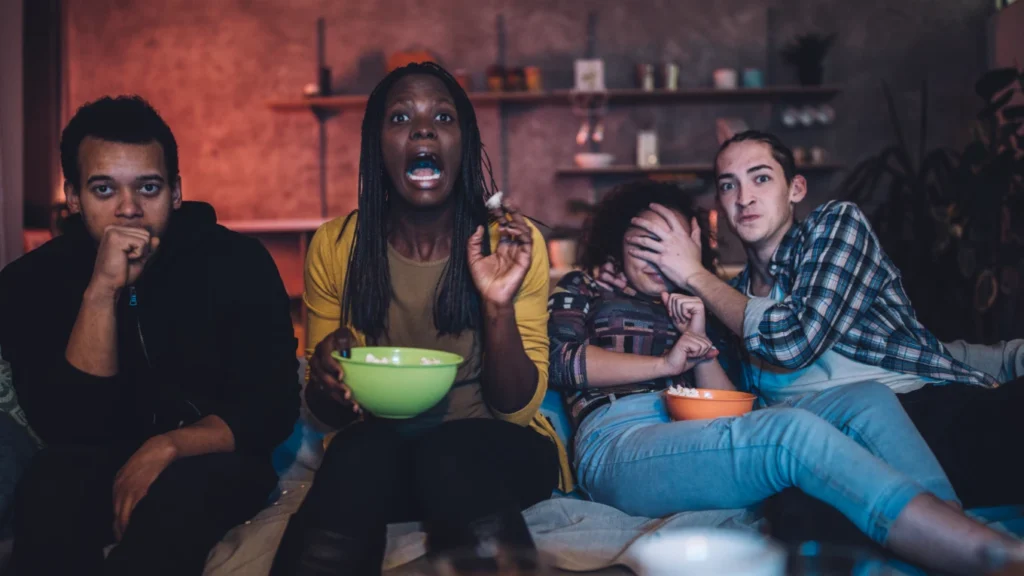
Now imagine the same movie with friends. Someone jokes during the tense scene, someone grabs snacks, and the jump scare turns into laughter within seconds. The movie has not changed. The room has.
Why does the same sequence of pixels and audio frequencies produce two entirely different biological and psychological states? This is the core of the horror experience. It is not just about what is on the screen, but how our environment acts as the “Third Teacher” of fear.
The Science Behind Fear.
Source: Facebook
To understand why watching horror movies alone can feel like a survival exercise, we need to look at the amygdala, an almond-shaped cluster of neurons deep within the brain that acts as your internal threat detector. It doesn’t care about cinematography or great acting; its only concern is keeping you alive.
Your brain knows the movie is not real, but your body does not always get the message. The amygdala, the part of the brain that reacts to threats, still treats sudden sounds, shadows and silence as warning signs. But in a social setting, your prefrontal cortex (the logical part of your brain) receives steady “all-clear” signals from the people around you. A friend’s bored expression or casual laughter reassures you, helping your brain remain in a state of controlled fear rather than full panic.
In a solo setting, those de-escalation cues disappear. Without a “social mirror” to reflect safety back to you, the amygdala’s alarm bell rings louder and lingers longer. This heightened state, known as hypervigilance, causes your brain to reinterpret harmless ambient sounds, like the house settling, the wind, or a neighbor’s footsteps, and assign them threatening intent. That’s the cost of total immersion.
The Science of Safety in Numbers
Source: Your Tango
Psychologists refer to this as “social buffering,” the way the presence of others naturally dampens our stress response. It’s an evolutionary inheritance from our ancestors: on the savannah, being alone made you vulnerable, while being part of a group signaled strength and safety.
When you watch a film with friends, you experience what’s called emotional contagion, the way we pick up on and mirror the emotions of those around us. If the person next to you isn’t screaming, your brain takes that as a sign that the “threat” on the screen isn’t real enough to trigger a full fight-or-flight response. Even laughter helps; it acts like a pressure release, breaking the movie’s spell and grounding you back in the safety of your living room.
For the solo viewer, there is no pressure-release valve to ease the tension. You stay fully immersed in the nightmare, with no external signals to pull you out or soften the experience. This is why solo horror feels heavier and more intense because you are carrying the full weight of the film’s tension on your own, without any shared relief.
First time here? Start with our quick LikeHorror guide — scary picks, reviews, videos, challenges, indie horror and the best ways to explore the site. Start Exploring →
The Ordeal Cinema: Watching Horror As A Personal Test
There is a sub-category of horror known as “ordeal cinema.” These aren’t your typical “fun” slashers; they are psychologically intense, emotionally draining films like Hereditary or The Witch. Interestingly, many fans of this sub-genre prefer to watch them alone.
Why? Because the experience feels deeply personal and private. Watching a disturbing film with someone else can become performative; you may find yourself thinking about their reactions or trying to appear “tough” instead of fully engaging with the film. In contrast, watching alone removes that layer of self-awareness and allows for a more direct, unfiltered confrontation with your own fears.
It is a form of exposure therapy; by choosing to sit through something deeply unsettling on your own, you gradually build tolerance to fear. And when the credits finally roll, there’s a powerful sense of relief and a surge of dopamine that comes from having endured the experience. At that point, it feels like you survived something.
Source: Power of Positivity
Choosing Your Horror Experience
There’s no single “right” way to watch horror, only different experiences depending on what you’re after.
Watch with friends if you want a high-energy, communal ritual. This is the “Rollercoaster” experience. It’s about the loud reactions, the screams, and the shared relief when the tension breaks.
Watch alone if you want the “Ordeal.” This path is for the true horror enthusiast, someone willing to test how much their psyche can handle. It’s about total immersion, heavy atmosphere, and the kind of lingering dread that follows you long after the credits roll.
Final Thoughts.
Next time you go to hit play on a new horror release, ask yourself: do I want to be entertained, or do I want to be changed?
If you want to laugh and talk about it afterward, call a friend. But if you want to feel the true, cold finger of fear on your neck, the kind that makes you keep the lights on until dawn, wait until everyone else has gone to bed.
The most terrifying thing about horror isn’t what’s lurking under the bed on the screen. It’s the realization that, in the dark, your brain is its own worst enemy. Are you brave enough to face it alone?
So which side are you on: horror alone in the dark, or horror with friends and snacks?
Want more horror worth saving? Explore the best of LikeHorror — top picks, reviews, videos, fun posts and scary movie guides in one place. Explore Highlights →