


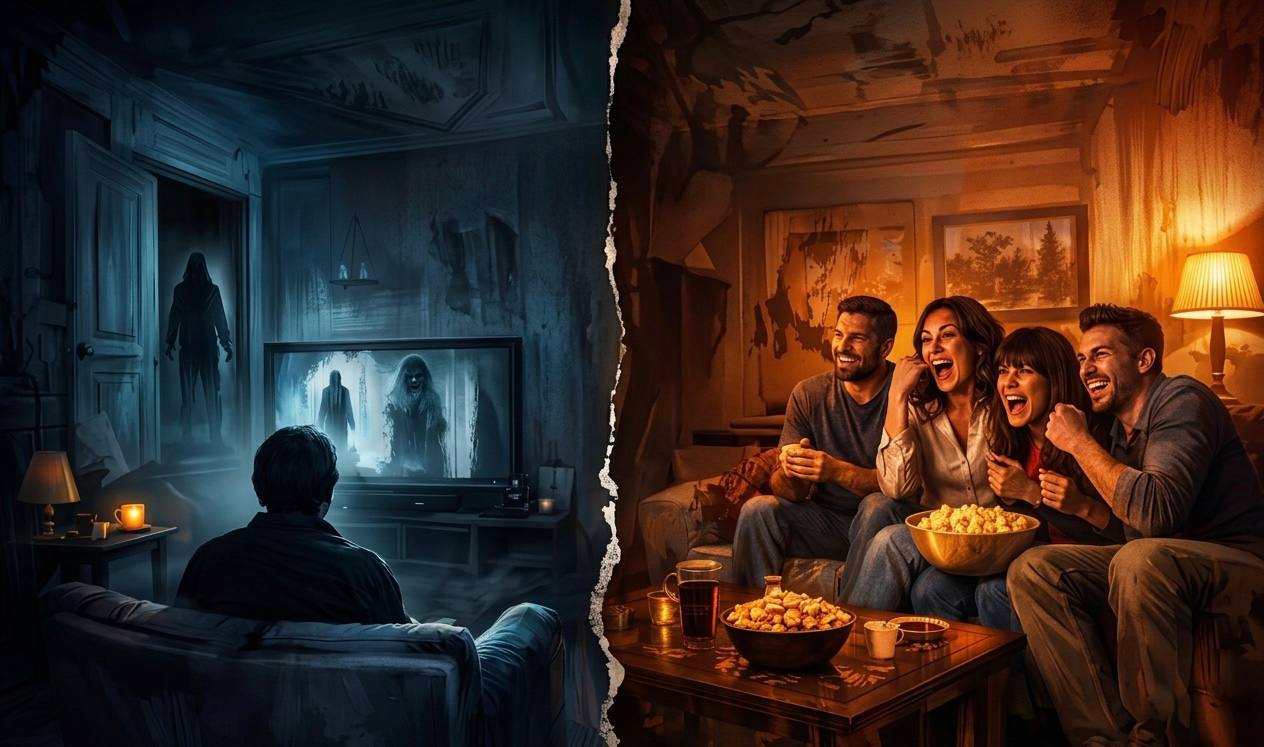
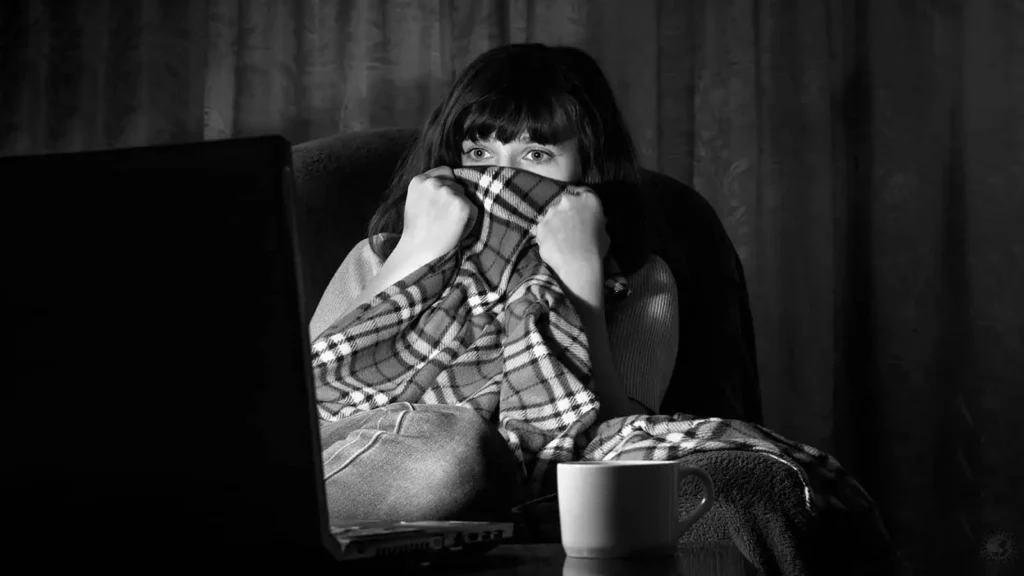
You know that feeling when a floorboard creaks in an empty house? During the day, it’s just the wood settling, but at 2:00 AM, with a horror movie flickering on the screen and no one in the chair next to you, that same sound feels like a footstep. Why is it that the movie you laughed through with friends yesterday is now making you afraid of your own hallway? It’s not just the film, it’s the fact that you’re the only witness.
Now imagine the same movie with friends. Someone jokes during the tense scene, someone grabs snacks, and the jump scare turns into laughter within seconds. The movie has not changed. The room has.
Why does the same sequence of pixels and audio frequencies produce two entirely different biological and psychological states? This is the core of the horror experience. It is not just about what is on the screen, but how our environment acts as the “Third Teacher” of fear.
The Science Behind Fear.
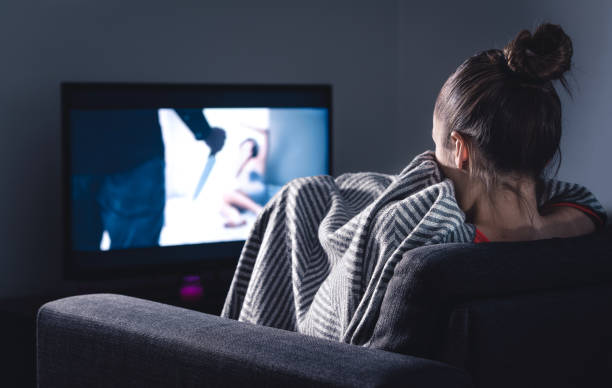
To understand why watching horror movies alone can feel like a survival exercise, we need to look at the amygdala, an almond-shaped cluster of neurons deep within the brain that acts as your internal threat detector. It doesn’t care about cinematography or great acting; its only concern is keeping you alive.
Your brain knows the movie is not real, but your body does not always get the message. The amygdala, the part of the brain that reacts to threats, still treats sudden sounds, shadows and silence as warning signs. But in a social setting, your prefrontal cortex (the logical part of your brain) receives steady “all-clear” signals from the people around you. A friend’s bored expression or casual laughter reassures you, helping your brain remain in a state of controlled fear rather than full panic.
In a solo setting, those de-escalation cues disappear. Without a “social mirror” to reflect safety back to you, the amygdala’s alarm bell rings louder and lingers longer. This heightened state, known as hypervigilance, causes your brain to reinterpret harmless ambient sounds, like the house settling, the wind, or a neighbor’s footsteps, and assign them threatening intent. That’s the cost of total immersion.
The Science of Safety in Numbers
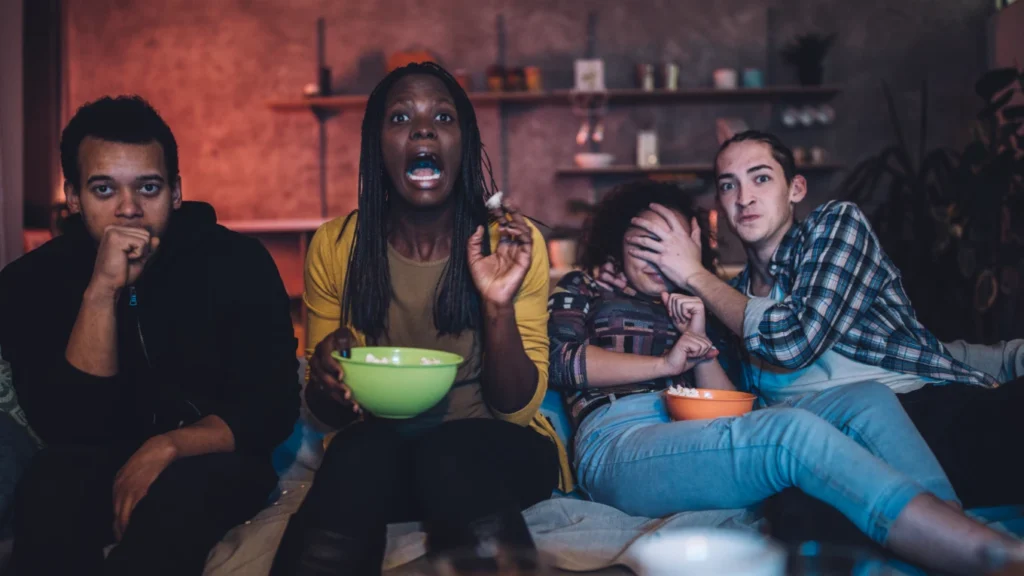
Psychologists refer to this as “social buffering,” the way the presence of others naturally dampens our stress response. It’s an evolutionary inheritance from our ancestors: on the savannah, being alone made you vulnerable, while being part of a group signaled strength and safety.
When you watch a film with friends, you experience what’s called emotional contagion, the way we pick up on and mirror the emotions of those around us. If the person next to you isn’t screaming, your brain takes that as a sign that the “threat” on the screen isn’t real enough to trigger a full fight-or-flight response. Even laughter helps; it acts like a pressure release, breaking the movie’s spell and grounding you back in the safety of your living room.
For the solo viewer, there is no pressure-release valve to ease the tension. You stay fully immersed in the nightmare, with no external signals to pull you out or soften the experience. This is why solo horror feels heavier and more intense because you are carrying the full weight of the film’s tension on your own, without any shared relief.
The Ordeal Cinema: Watching Horror As A Personal Test
There is a sub-category of horror known as “ordeal cinema.” These aren’t your typical “fun” slashers; they are psychologically intense, emotionally draining films like Hereditary or The Witch. Interestingly, many fans of this sub-genre prefer to watch them alone.
Why? Because the experience feels deeply personal and private. Watching a disturbing film with someone else can become performative; you may find yourself thinking about their reactions or trying to appear “tough” instead of fully engaging with the film. In contrast, watching alone removes that layer of self-awareness and allows for a more direct, unfiltered confrontation with your own fears.
It is a form of exposure therapy; by choosing to sit through something deeply unsettling on your own, you gradually build tolerance to fear. And when the credits finally roll, there’s a powerful sense of relief and a surge of dopamine that comes from having endured the experience. At that point, it feels like you survived something.
Choosing Your Horror Experience
There’s no single “right” way to watch horror, only different experiences depending on what you’re after.
- Watch with friends if you want a high-energy, communal ritual. This is the “Rollercoaster” experience. It’s about the loud reactions, the screams, and the shared relief when the tension breaks.
- Watch alone if you want the “Ordeal.” This path is for the true horror enthusiast, someone willing to test how much their psyche can handle. It’s about total immersion, heavy atmosphere, and the kind of lingering dread that follows you long after the credits roll.
Final Thoughts.
Next time you go to hit play on a new horror release, ask yourself: do I want to be entertained, or do I want to be changed?
If you want to laugh and talk about it afterward, call a friend. But if you want to feel the true, cold finger of fear on your neck, the kind that makes you keep the lights on until dawn, wait until everyone else has gone to bed.
The most terrifying thing about horror isn’t what’s lurking under the bed on the screen. It’s the realization that, in the dark, your brain is its own worst enemy. Are you brave enough to face it alone?
So which side are you on: horror alone in the dark, or horror with friends and snacks?
