


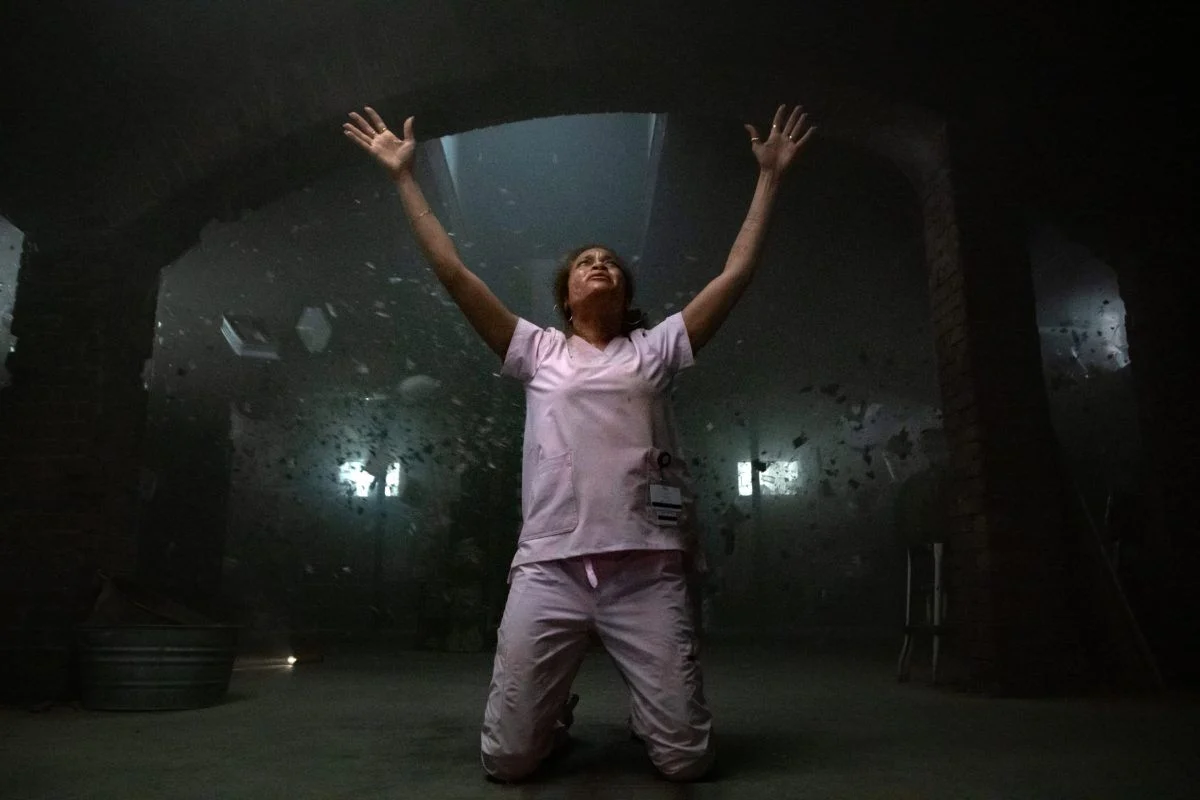
Most possession films begin with a demon; The Deliverance begins with something far more familiar, known as struggle.
Before anything supernatural takes hold, the film grounds itself in the harsh realities of poverty, addiction, and a failing system. Directed by Lee Daniels, this is not your typical exorcism story set in a quiet suburban home. Instead, it drags the genre into a worn-down household where the real fear isn’t just losing your soul, it’s losing your children.
At the centre is Ebony Jackson, a mother trying to rebuild her life while carrying the weight of unresolved trauma. She moves her family into a modest rental home in Indiana, hoping for a fresh start. But peace is hard to find. She clashes constantly with her deeply religious, cancer-stricken mother, Alberta, while also dealing with a skeptical social worker who watches her every move.
Things quickly spiral when her children begin to behave in disturbing ways, speaking in strange voices, acting violently, and showing signs that something is deeply wrong. But instead of seeing possession, authorities see neglect. To them, Ebony is simply a struggling mother losing control.
This is where the film finds its strongest tension. Ebony is forced to fight on two fronts. On one side are the literal demons haunting her home. On the other hand are the forces threatening to tear her family apart. As both pressures intensify, the story builds toward a desperate confrontation, one that forces Ebony to face not just external evil, but the generational pain she has tried to outrun.
✅ What Works
A grounded and unsettling premise:
The film’s biggest strength is its ability to anchor horror in reality. The fear of Child Protective Services and losing custody feels just as terrifying as any supernatural force, making the stakes feel immediate and personal.
Powerful central performance:
Andra Day delivers a raw and emotionally charged performance as Ebony. She is not written to be likable, but she feels real, with flaws, desperation, and sheer humanity. Her performance keeps the story grounded even when it begins to unravel.
Memorable supporting character:
Glenn Close’s portrayal of Alberta is intense and unpredictable. Her aggressive religious beliefs and larger-than-life presence bring energy to every scene, adding both tension and dark humour.
Strong first-half storytelling:
The film’s opening acts work best as a family drama. The slow build, combined with psychological tension, allows the horror to develop naturally instead of relying on cheap scares.
❌ Where It Falls Short
A messy tonal shift:
The film struggles to balance its grounded drama with supernatural horror. When it fully leans into exorcism territory, it abandons the realism that made the first half so effective.
Generic horror climax:
The final act relies heavily on CGI and familiar exorcism tropes. Instead of feeling like a natural escalation, it comes across as loud and predictable, weakening the emotional impact.
An overcrowded narrative:
The film attempts to tackle too many themes, including poverty, religion, generational trauma, addiction, and systemic failure. While all are important, they compete for attention, leaving parts of the story underdeveloped.
Underexplored supernatural elements:
Despite the buildup, the mechanics of the haunting are not fully fleshed out. The lack of clear rules or depth makes the horror feel rushed and less convincing.
⚖️ Final Verdict: 2.5/5
The Deliverance is an ambitious but uneven film that tries to do more than most possession stories. At its best, it is a gripping family drama rooted in real-world fears. At its worst, it falls back on familiar horror clichés, diluting its message.
While the performances give the film emotional weight, the inconsistent tone and rushed climax hold it back. It is a bold attempt to redefine the exorcism genre, but one that ultimately feels divided between two different films.
