


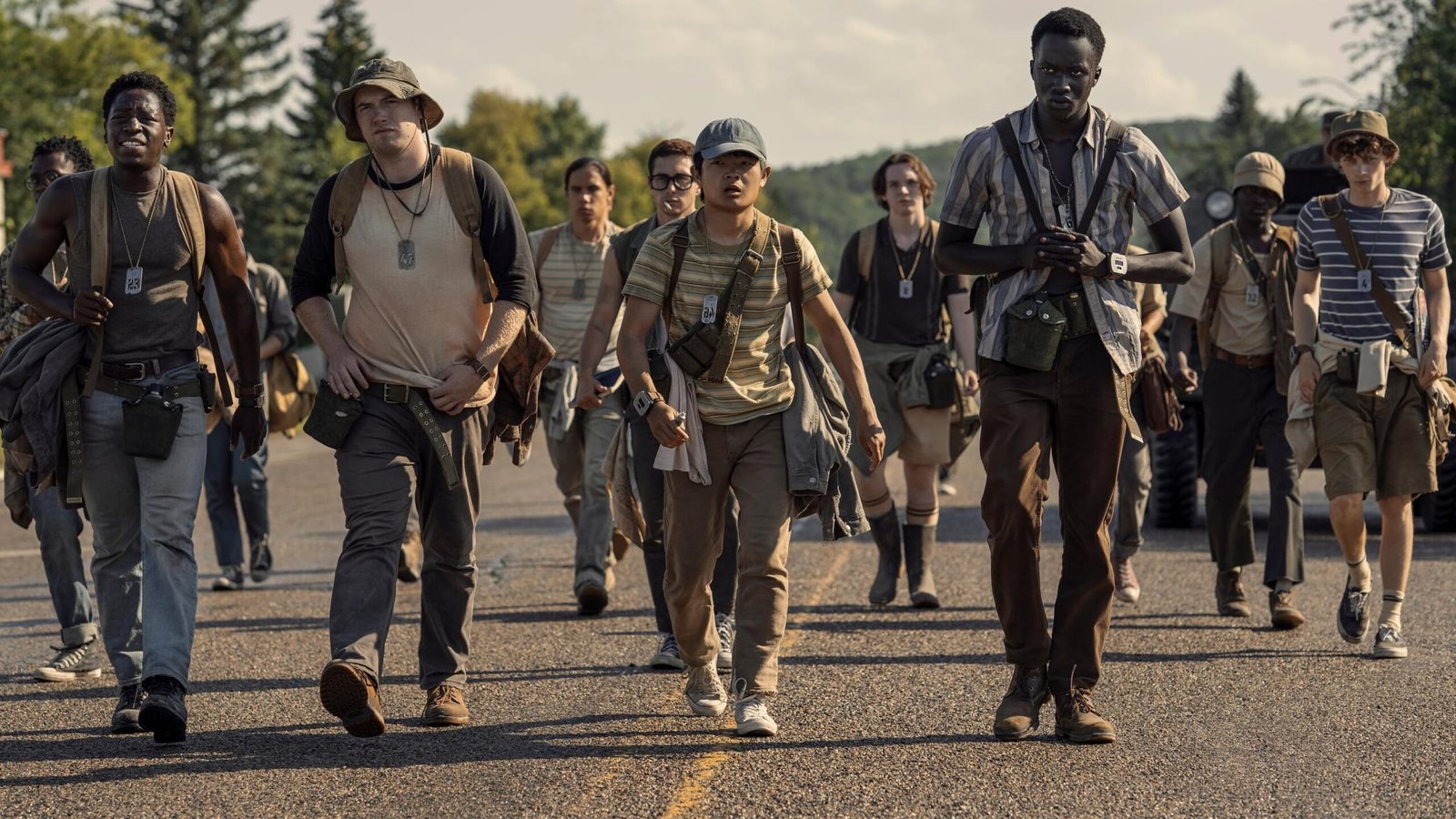
Most audiences imagine horror as something with a ghost, monster, or masked killers. The Long Walk finds terror in something much simpler: endurance. Based on the novel by Stephen King, the film turns a seemingly straightforward journey into a brutal test of survival, where every step matters and every mistake carries deadly consequences.
Rather than focusing on jump scares or supernatural threats, The Long Walk builds tension through exhaustion, fear, and the psychological strain of pushing forward when your body and mind are ready to give up. It is a slow-burning survival thriller that understands one of horror’s oldest truths: sometimes the scariest thing is knowing there is no escape.
The story follows a group of young contestants taking part in a deadly walking competition. The rules are simple but ruthless: keep moving forward or face the consequences. What begins as a test of endurance quickly becomes something much darker as fatigue, fear, and desperation begin to take hold.
As the miles stretch on, physical exhaustion becomes only part of the challenge. Friendships form, rivalries emerge, and each participant is forced to confront their own limits. The real battle is not against the road itself, but against the creeping realization that survival may require sacrifices none of them are prepared to make.
The film transforms an ordinary act, walking, into a source of relentless tension. Every conversation, stumble, and moment of hesitation carries weight, creating an atmosphere where danger feels constant even when very little is happening on screen.
✅ What Works
Atmosphere Over Spectacle: One of the film’s biggest strengths is its ability to create suspense without relying on traditional horror elements. The sound design plays a major role, turning footsteps, heavy breathing, and the empty stretch of road into sources of anxiety. The tension rarely lets up because the threat is always present.
String Visual Storytelling: The cinematography does an excellent job of emphasizing both the scale and isolation of the journey. Wide shots make the contestants appear insignificant against the endless landscape, while closer moments capture the growing exhaustion written across their faces. The result is a film that feels both expansive and claustrophobic at the same time.
Grounded Performances: The cast delivers believable performances that help sell the emotional weight of the story. Rather than relying on dramatic outbursts, the characters feel increasingly worn down by the experience, making their struggles feel authentic. As the competition progresses, their fear and desperation become impossible to ignore.
❌ Where It Falls Short
Slow Pacing May Test Some Viewers: The deliberate pace is central to the film’s identity, but it will not work for everyone. Certain sections in the middle feel repetitive, and viewers expecting frequent twists or action-heavy sequences may find the journey occasionally drags.
Too Much Mystery: The film benefits from leaving some questions unanswered, but it sometimes holds back a little too much information. By the final act, a clearer understanding of the larger circumstances surrounding the competition could have strengthened the emotional impact of the story.
Limited Narrative Variety: Because the premise is intentionally simple, the film occasionally struggles to introduce fresh developments during its runtime. While the character interactions help maintain interest, the structure can feel repetitive as the story progresses.
⚖️ Final Verdict: 4/5
The Long Walk is a tense, emotionally draining survival thriller that proves horror does not need monsters to be effective. By focusing on endurance, isolation, and the gradual collapse of hope, it creates a constant sense of unease that lingers long after the credits roll.
While its slow pacing and ambiguity may not appeal to every viewer, the strong performances, immersive atmosphere, and psychological tension make it a rewarding experience. It is a haunting reminder that sometimes the most frightening battles are the ones fought within ourselves.
