


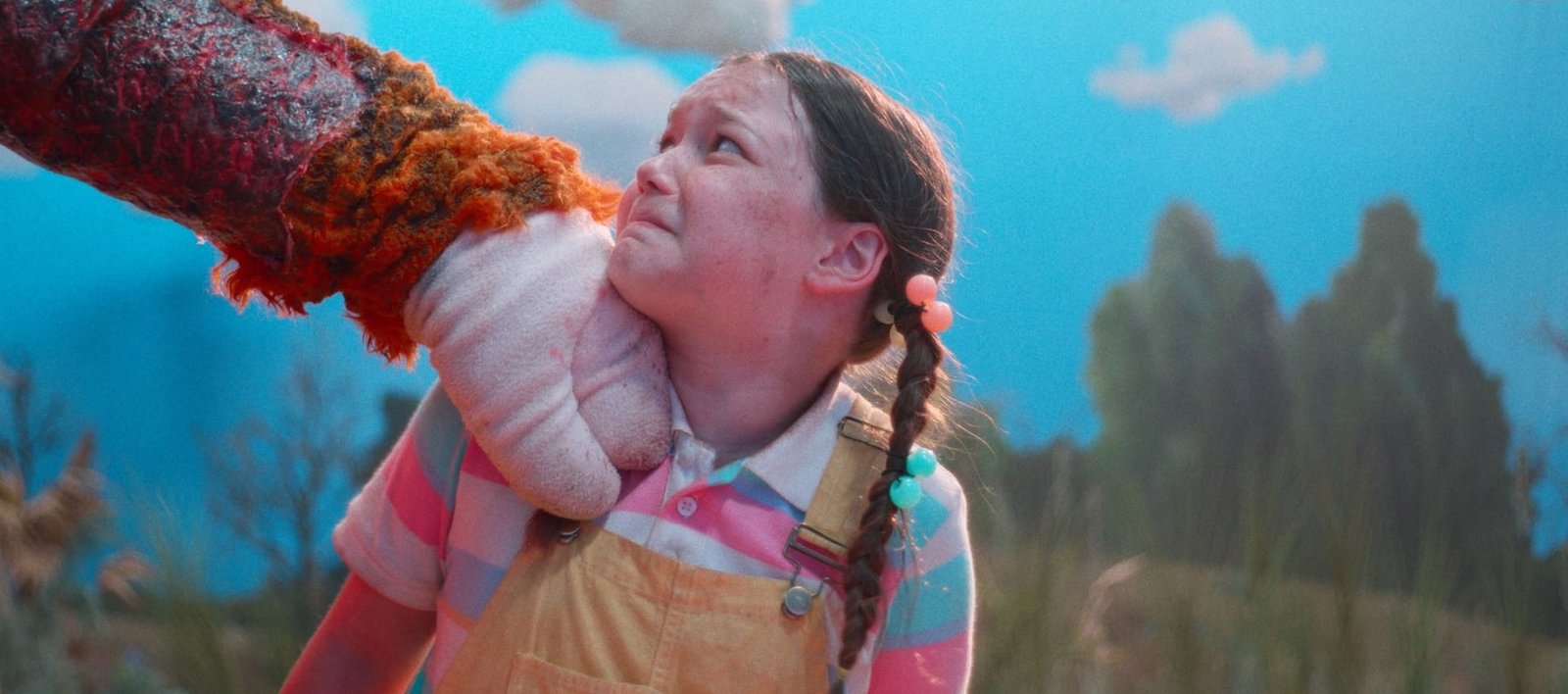
Children’s television is supposed to make kids feel safe, but Buddy turns that familiar comfort into something deeply disturbing. What begins as a cheerful, pastel-colored children’s show gradually descends into a nightmare filled with bizarre humor, sudden violence, and a mascot whose friendly personality hides something much darker. Directed by Casper Kelly, the creator behind the cult web series Too Many Cooks, the film brings the strange sensibility of his internet work to a feature-length horror comedy.
The story follows Grace, a mother desperately searching for her missing daughter, Freddy. Her search leads her into It’s Buddy!, a fictional children’s television program that resembles the educational shows of the 1990s. Inside this colorful world, children live under the watchful eye of Buddy, voiced by Keegan-Michael Key, an orange unicorn who presents himself as their cheerful and caring companion.
However, Buddy’s friendliness comes with a condition: everyone must adore him and follow his rules. Behind the cameras, his sunny personality gives way to something far more threatening. His childish temper turns the show’s bright soundstage into a dangerous place, leaving Grace to navigate a world where the line between entertainment and terror has all but disappeared.
What makes Buddy work is the contrast between its cheerful presentation and the disturbing behavior underneath. The film takes familiar elements of children’s programming and twists them into something unsettling, using absurd comedy and horror to explore the darker side of forced happiness and unquestioning obedience.
What Works ✅
Casper Kelly’s Unusual Blend of Comedy and Horror: Casper Kelly knows how to make something familiar feel completely wrong. Buddy captures the exaggerated cheerfulness of vintage children’s television, from its colorful sets to its enthusiastic characters, before gradually revealing the menace underneath.
The shift between comedy and horror is one of the film’s biggest strengths. A scene can begin with a silly song or an exaggerated performance before turning uncomfortable in ways that are difficult to predict. Although the contrast occasionally feels deliberately ridiculous, it gives the film a distinctive personality that separates it from more conventional mascot horror.
Strong Lead Performances: Cristin Milioti gives Grace an emotional grounding that helps the film work beyond its strange premise. Her determination to find Freddy gives the story a clear purpose, even as the world around her becomes increasingly absurd.
Keegan-Michael Key is equally effective as Buddy. His cheerful voice and exaggerated enthusiasm make the character entertaining at first, but those same qualities become threatening when his temper emerges. The performance captures the unsettling gap between Buddy’s public image and his behavior when he is no longer performing for an audience.
A Convincing Retro Television World: The production design does an excellent job recreating the look and feel of 1990s children’s programming. The colorful sets, artificial lighting, costumed characters, and puppets give It’s Buddy! a convincing identity as a television show from another era.
That familiar appearance makes the horror more effective. The environment looks designed to entertain and reassure children, yet its artificial cheerfulness gradually becomes part of what makes it disturbing. The supporting characters and unusual sidekicks also add to the film’s strange atmosphere, making the show’s world feel increasingly unpredictable.
Satire Beneath the Absurdity: Beneath the bizarre humor and violence, Buddy has something to say about conformity and the pressure to maintain a cheerful public image. Buddy’s demand for constant affection turns the usual expectations of children’s entertainment into something controlling.
Everyone is expected to smile, participate, and accept his behavior, even when it becomes clearly threatening. This gives the film’s central joke a sharper edge. Its horror comes not only from Buddy’s unpredictable temper but also from a world that treats his demands as normal.
Where It Falls Short ❌
Uneven Pacing: The central idea is strong, but the film occasionally struggles to sustain it across its full runtime. Some sequences repeat the same pattern of cheerful absurdity followed by disturbing behavior without adding much to the story.
The second act is where this becomes most noticeable. The strange atmosphere remains entertaining, but the narrative loses some momentum as it stretches the premise toward its conclusion.
A More Conventional Story Than Expected: Fans familiar with Kelly’s earlier internet work may expect Buddy to embrace even greater levels of surrealism and unpredictability. While the film retains plenty of bizarre humor, its feature-length structure follows a more recognizable narrative, with a clear central character, an emotional objective, and a more conventional progression toward the finale.
That structure gives the story direction, but it also limits some of the chaotic experimentation that makes Kelly’s shorter work so distinctive. The film’s strangest ideas are often more memorable than the familiar story connecting them.
⚖️ Final Verdict: 4/5
Buddy turns the cheerful world of children’s television into a wonderfully strange horror comedy. Casper Kelly combines absurd humor, unsettling imagery, and an effective retro aesthetic to create a mascot horror film with more personality than its premise initially suggests.
Cristin Milioti gives the story an emotional center, while Keegan-Michael Key makes Buddy both entertaining and genuinely threatening. The uneven pacing and more conventional narrative prevent the film from reaching its full potential, but its sharp satire and unusual sense of humor make it stand out.
Buddy is weird, darkly funny, and disturbing in all the right ways, proving that even the most cheerful television mascot can become a source of nightmare fuel.
