


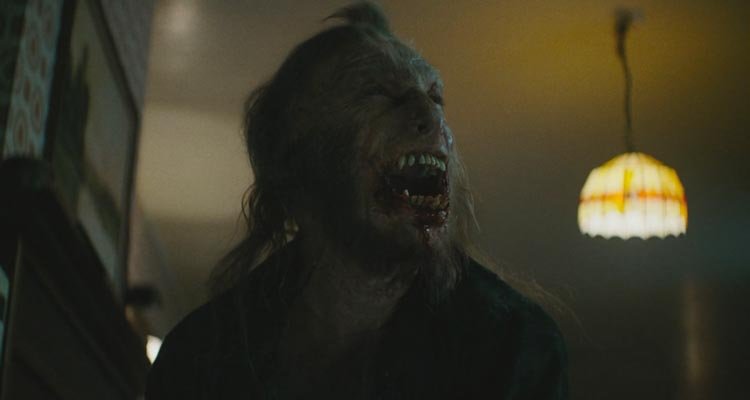
Werewolf movies haven’t completely disappeared, but they have taken a back seat in modern horror. With Wolf Man, director Leigh Whannell reminds audiences why the subgenre still has plenty to offer. Instead of treating lycanthropy as a supernatural gift, the film reimagines it as a terrifying disease that slowly destroys both the body and the mind.
Rather than focusing on an unstoppable monster, Wolf Man is more interested in the tragedy of transformation. It is a darker, more grounded take on the classic Universal monster that emphasizes fear, loss, and survival over spectacle.
The story follows a man whose quiet family life is shattered after he becomes infected by a mysterious creature. As the transformation begins, he struggles to hold onto his humanity while his wife and daughter fight to survive the growing threat inside their own home.
Wolf Man doesn’t celebrate the monster’s power, speed, or the myth of a full moon. Instead, it focuses on the emotional pain of watching someone slowly lose himself as he becomes something inhumane. Every passing hour brings another horrifying change, turning the family’s desperate search for safety into a hopeless fight against time.
✅ What Works
A Fresh Take on Werewolf Horror: One of the film’s biggest strengths is how it reinvents the werewolf myth. Rather than portraying the transformation as empowering, Wolf Man presents it as a horrifying illness that strips away a person’s identity. That approach makes the story feel more tragic and emotionally grounded.
Effective Body Horror: The transformation scenes are easily among the film’s highlights. Every physical change feels painful and disturbing, creating genuine discomfort without relying on excessive gore. The creature design also avoids the traditional oversized werewolf appearance, making the monster feel more primal and unsettling.
Strong Atmosphere: Leigh Whannell builds tension through silence, darkness, and uncertainty instead of constant action. The isolated setting and careful pacing create an uneasy atmosphere where danger always feels close, even during the quieter moments.
❌ Where It Falls Short
Weak Emotional Depth: Although the central family relationship drives the story, the emotional drama never feels as powerful as it should. The characters are likable enough, but their relationships rely on familiar ideas that prevent the film from reaching its full emotional potential.
Too Many Jump Scares: For a movie that excels at creating slow-building tension, it occasionally falls back on loud, predictable jump scares. These moments feel less effective than the psychological horror the film establishes elsewhere.
Familiar Story Structure: Once the transformation is fully underway, the narrative becomes fairly predictable. Much of the second half revolves around escaping and hiding, leaving little room for the story to explore its interesting ideas in greater depth. As a result, the finale feels more conventional than the opening promises.
⚖️ Final Verdict: 4/5
Wolf Man is a tense and unsettling reimagining of one of horror’s oldest monsters. By treating lycanthropy as a devastating disease instead of a supernatural power, the film gives the werewolf genre a fresh and genuinely disturbing perspective.
While the emotional story could have been stronger and the reliance on jump scares occasionally weakens the suspense, the atmosphere, body horror, and grounded approach make Wolf Man one of the more memorable horror films of 2025. It proves there is still plenty of life left in the werewolf genre when filmmakers are willing to take it in a new direction.
