


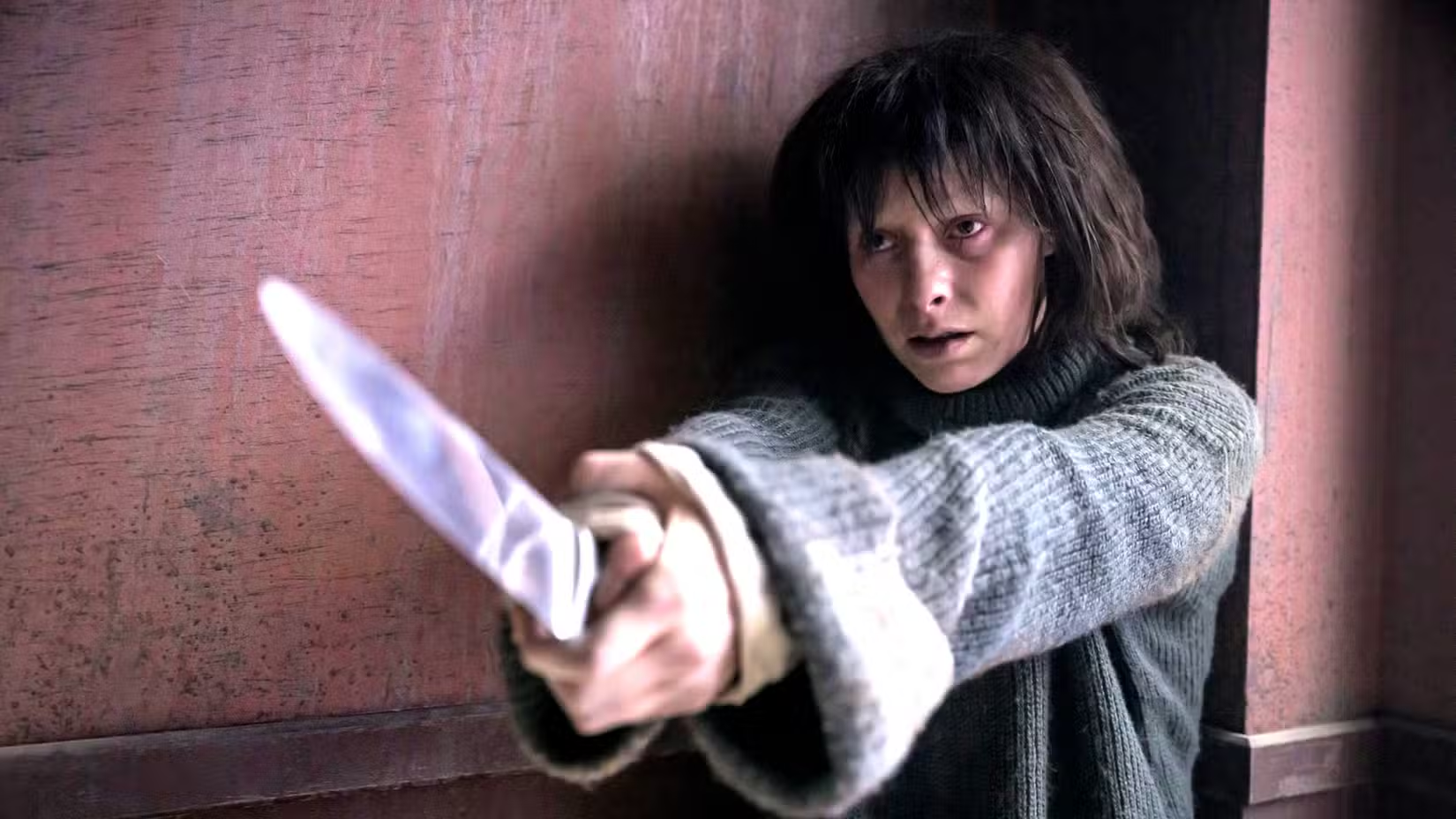
Return to Silent Hill brings Director Christophe Gans back to the franchise 20 years after his 2006 film, this time adapting Konami’s 2001 game Silent Hill 2. The film follows James Sunderland (Jeremy Irvine), who returns to Silent Hill after receiving a mysterious letter from Mary (Hannah Emily Anderson), the woman he loves and has lost. What begins as a search for someone important to him soon becomes a disturbing journey through a town filled with grotesque creatures and unsettling revelations.
As James moves deeper into Silent Hill, the line between memory and reality becomes increasingly difficult to recognise. Gans wants the town’s monsters and shifting reality to expose James’s buried truths, but the adaptation struggles to make that psychological journey as involving as its source.
What Works ✅
Silent Hill Still Has an Identity: Gans knows how to make Silent Hill feel like a place audiences should not want to enter. Fog-covered streets, decaying interiors, and oppressive shadows create isolation. The production design gives the town a distinctive nightmare texture, while the camera often frames James as a small figure swallowed by threatening spaces. These details bring the game’s visual language to the screen without explaining every image through dialogue.
Creature Design and Sound: The creature concepts are another strength. Their distorted forms make the town hostile, and some encounters have arresting visual quality. Akira Yamaoka’s score carries the games’ eerie identity, giving quieter scenes an unease dialogue cannot provide. Even when the story loses focus, sound and design offer glimpses of the dread the film is chasing.
Where It Falls Short ❌
It Copies the Game’s Structure Without Finding a Film Rhythm: The biggest problem is how Gans translates Silent Hill 2 into a feature film. The game builds tension through exploration, repetition, environmental clues, and the gradual discovery of James’s inner life. A film needs to shape those elements into a clear dramatic progression. Here, James moves from one disturbing location or encounter to another without enough momentum connecting them. It often feels like a sequence of game references and nightmare images rather than a story tightening around its protagonist.
James’s Emotional Journey Never Takes Hold: The film asks us to understand James through his grief and search for Mary, but it does not establish their relationship convincingly enough for his desperation to carry the story. Their past appears in fragments, yet offers too little shared history or emotional detail. Without a stronger sense of what James has lost, his refusal to leave the town feels less like heartbreaking devotion and more like a character following the next plot clue.
That weakness damages the horror too. The monsters should mean more than their frightening appearances, reflecting the guilt and buried truths James is avoiding. Too often, they function as grotesque obstacles rather than personal manifestations of his state of mind. The film presents the symbolism, but rarely makes the audience feel it.
The Supporting Characters Become Plot Devices: The people James encounters should challenge his assumptions and reveal different sides of Silent Hill. Instead, several mainly deliver information or introduce another mystery. Their stories lack room to become distinct, leaving the town populated by clues rather than people. Each encounter should deepen James’s understanding of himself.
Effects and Performances Undercut the Unease: The practical creature work and production design show imagination, but some visual effects look less convincing when creatures move or scenes become more elaborate. That inconsistency pulls viewers out of the nightmare. The performances are uneven too. Irvine gives James a troubled presence, but his repeated confusion and intense reactions become monotonous. At times, the dialogue and delivery lean so heavily into dreamlike strangeness that emotional exchanges feel artificial rather than unsettling.
⚖️ Verdict: 1.5/5
Return to Silent Hill has the fog, creatures, music, and visual imagination to make its world memorable. But it struggles to turn those elements into a coherent, emotionally involving film. Its adaptation mistakes recognisable imagery for psychological depth, while thin character work leaves James’s grief and guilt without enough weight. Gans has returned to the right town, but has not found a convincing way through it.
