


Undertone is a sound-driven horror film that turns grief, religious guilt, and motherhood into an unsettling supernatural experience, but does its storytelling live up to its atmosphere?
Directed by Ian Tuason, this A24 horror film turns a paranormal podcast into an unsettling experience, using mysterious audio recordings, disturbing silences, and the fear of the unknown to keep its audience on edge. However, beneath its unusual approach to horror is a deeply personal story about grief, religious guilt, motherhood, and the burden of caring for someone you are slowly losing. It’s an ambitious combination that gives the film plenty to explore, even if its storytelling doesn’t always keep up with its technical achievements.
The story follows Evy Babic (Nina Kiri), a paranormal podcast host who lives with her terminally ill mother (Michèle Duquet). While caring for her mother, Evy continues recording episodes with her long-distance co-host Justin (Adam DiMarco), who takes a more open-minded approach to supernatural occurrences than she does. Their usual discussions take an unsettling turn when they receive ten anonymous audio recordings documenting strange experiences involving a pregnant couple. As Evy and Justin investigate the sounds and attempt to uncover their meaning, the recordings begin to raise questions that hit increasingly close to home. What starts as another paranormal investigation soon becomes a frightening experience that challenges Evy’s skepticism and her understanding of the world around her.
What Works ✅
Sound Design That Makes Every Noise Matter: The biggest achievement in *Undertone* is its sound design. Tuason understands that horror doesn’t always need a visible threat to frighten an audience. Sometimes, an unexplained noise coming from another room can be more unsettling than seeing something standing directly in front of you. The film uses headphones, distorted recordings, distant voices, and carefully placed silences to create tension. Even ordinary household sounds become uncomfortable because the audience is constantly listening for something that might not be there. More importantly, the audio recordings aren’t just an excuse for scares. They are central to how the story unfolds, encouraging viewers to pay attention and interpret the sounds alongside the characters. It’s an effective filmmaking choice that gives Undertone a distinct identity.
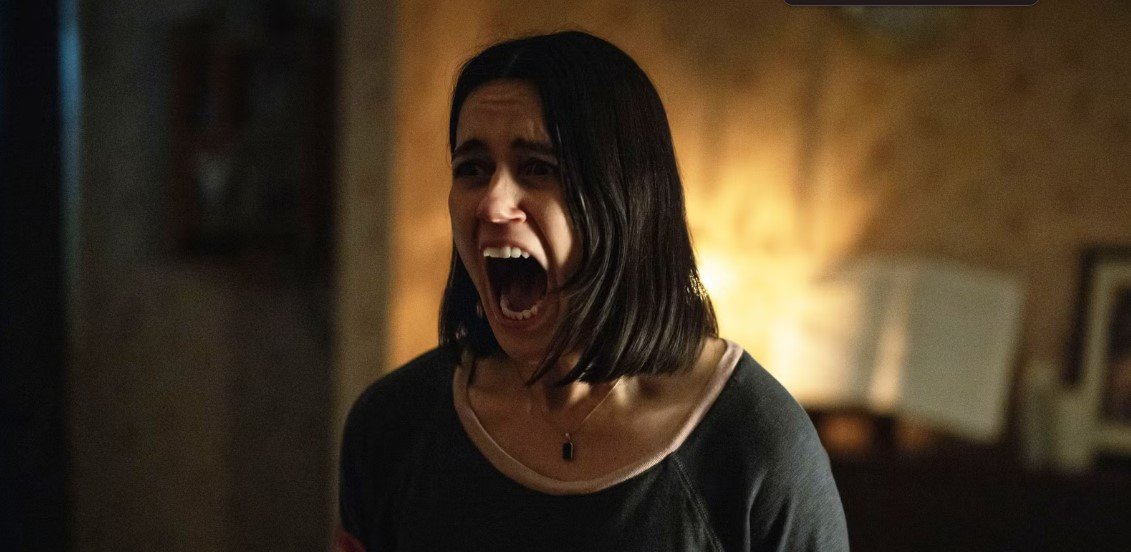
Nina Kiri Carries the Film: With much of the story centered on Evy, Nina Kiri has considerable responsibility for keeping the audience invested. Fortunately, she delivers a strong performance. Her character spends much of the film listening to recordings, communicating with Justin, and dealing with her mother’s condition. Kiri makes these quieter moments engaging through her expressions, reactions, and gradual changes in behaviour as the situation becomes more frightening. She also captures the exhaustion of someone struggling with the demands of caregiving while dealing with personal issues she has yet to resolve. It’s a performance that gives the film much of its emotional weight, particularly when the story offers little outside interaction to provide relief.
An Effective Use of Isolation: Limiting most of the story to Evy’s childhood home is another decision that works in the film’s favour. Rather than constantly changing locations to keep the audience interested, Tuason makes the house itself an important part of the horror. Its quiet rooms, narrow spaces, and ordinary domestic surroundings create an uncomfortable environment, especially when Evy is alone at night. The confined setting also reflects her personal circumstances. She is responsible for caring for her mother, and the house has become a place where her daily life revolves around that responsibility. This connection between location and character gives the film’s atmosphere a purpose beyond simply making its surroundings look frightening.
A Personal Story Beneath the Supernatural Horror: *Undertone* has more on its mind than paranormal activity. Its exploration of grief, motherhood, religious expectations, and caregiving gives the supernatural storyline an emotional foundation. The relationship between Evy and her dying mother is particularly important because it introduces a conflict that exists long before the mysterious recordings arrive. She loves her mother, but the responsibility of caring for her has become exhausting, creating feelings she struggles to confront. The recordings involving a pregnant couple also introduce another perspective on motherhood and family responsibility. Although the film doesn’t explore every aspect of these subjects equally well, its willingness to connect personal struggles with supernatural horror makes its story more interesting than a straightforward haunted-house premise.
Where It Falls Short ❌
The Slow Pacing Becomes Repetitive: The same restraint that makes *Undertone* effective also becomes one of its biggest weaknesses. The film spends considerable time with Evy listening to recordings, discussing their contents with Justin, and reacting to strange occurrences around the house. These moments initially build tension because the audience is trying to understand what she is hearing. However, the approach begins to lose its impact when similar sequences repeat without enough narrative development. Silence can create anticipation, but it cannot carry every scene. At certain points, the film takes too long to move its story forward, making its 94-minute runtime feel longer than necessary.
Too Many Themes Compete for Attention: Grief, religious guilt, motherhood, pregnancy, family responsibility, and faith are all important to the story, but *Undertone* struggles to give these subjects equal attention. Some of its emotional ideas are established clearly, only for the narrative to move towards another supernatural development before they receive enough exploration. The relationship between Evy’s personal struggles and the experiences documented in the recordings is interesting, but the screenplay doesn’t always connect these elements as convincingly as it should. As a result, some of the film’s most promising themes feel underdeveloped.
The Second Half Loses Some of Its Originality: One of the film’s biggest strengths is how it creates fear without relying on familiar horror techniques. Unfortunately, that approach becomes less distinctive as the story progresses. The introduction of more conventional supernatural elements and religious lore takes some attention away from the uncertainty that made the earlier sections effective. Instead of trusting its sound design and atmosphere to maintain the tension, the film occasionally leans on familiar horror conventions. These moments aren’t necessarily ineffective, but they make *Undertone* feel less original than it initially promises to be.
An Uneven Narrative Payoff: The film raises several interesting questions about the recordings, Evy’s personal circumstances, and the supernatural forces surrounding her. However, its attempts to bring these ideas together don’t always produce a satisfying result. Its preference for ambiguity is understandable, especially given how much the story relies on uncertainty, but leaving questions unanswered doesn’t automatically make a conclusion effective. The final stretch has some unsettling moments, yet the film could have done more to connect its emotional conflicts with its supernatural developments. By the conclusion, some of the earlier ideas feel less developed than they should.
⚖️Verdict 3/5
Undertone proves that a horror film doesn’t need constant visual scares to keep an audience uncomfortable. Ian Tuason makes impressive use of sound design, silence, and a confined setting to create an unsettling experience, while Nina Kiri delivers a performance that holds the story together. Its exploration of grief, caregiving, motherhood, and religious guilt also gives it an emotional foundation that separates it from conventional paranormal horror.
Unfortunately, slow pacing, underdeveloped themes, and a second half that leans too heavily on familiar supernatural elements prevent the film from reaching its full potential. Even so, Undertone remains a worthwhile horror experience, particularly for viewers who appreciate films that build fear through atmosphere rather than constant scares.
